


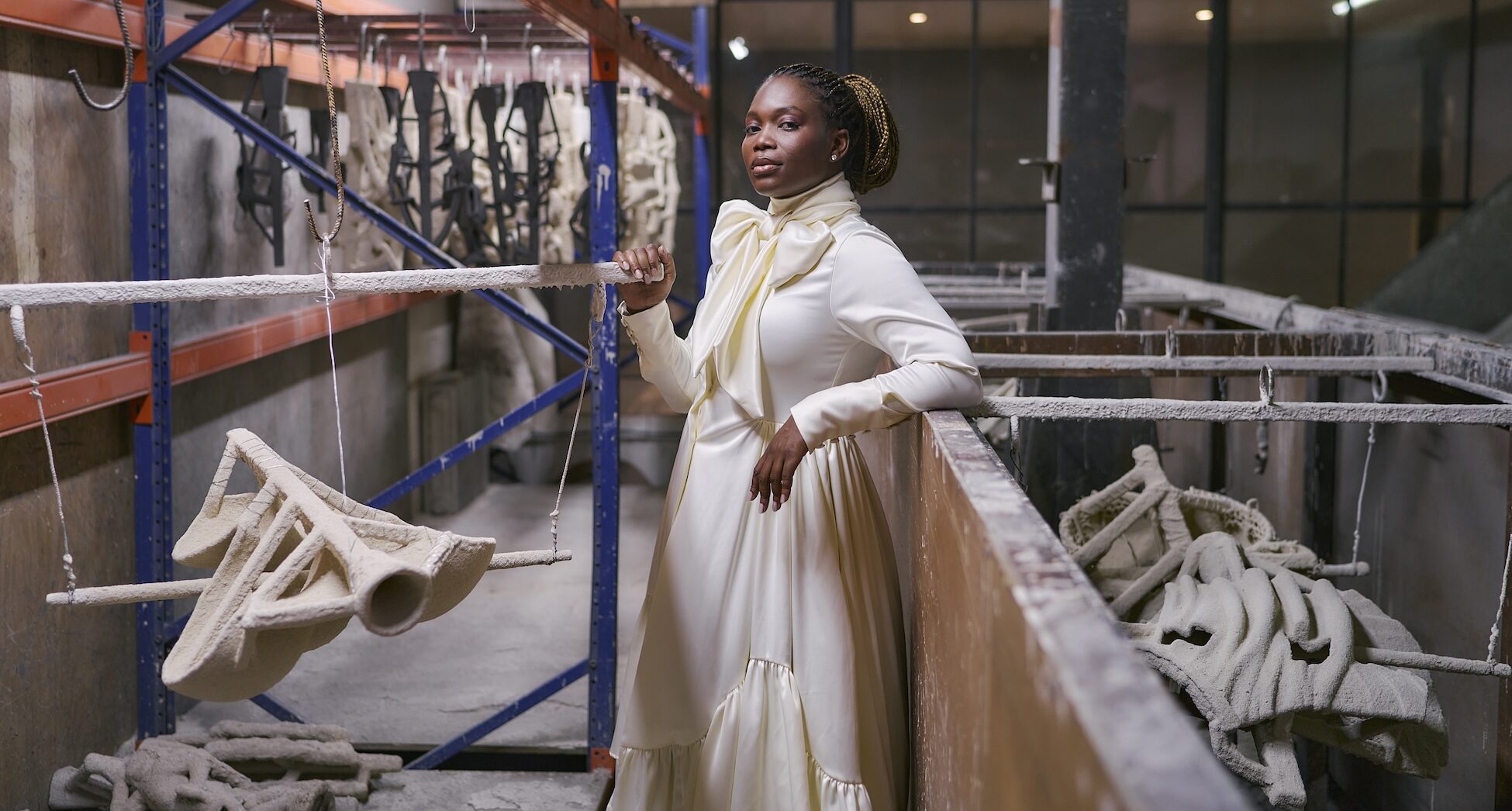

Two solo exhibitions by Zizipho Poswa and Justine Mahoney open at Southern Guild Cape Town on 12 February, just ahead of the 2026 Investec Cape Town Art Fair.
Running until 16 April, the shows present new bodies of work by Zizipho Poswa and Justine Mahoney, marking distinct but resonant developments in each artist’s practice.
Poswa’s exhibition, Imbeleko, is her fifth solo presentation with the gallery. The new body of work continues her long-standing engagement with clay, while turning inward toward the embodied experience of motherhood and matrilineal inheritance.

The title refers to an isiXhosa post-natal ritual that introduces a child to their ancestors. The ceremony involves the burial of the umbilical cord on ancestral ground, symbolically binding the child to a lineage of protection and guidance. For Poswa, the concept of imbeleko extends beyond metaphor. It becomes a way of thinking through how knowledge, care, and responsibility are carried and passed on through generations of women.
The sculptural works are made in earthenware and take on rotund, broadly anthropomorphic forms. Many appear to hold or support protruding structures, which Poswa describes as “the body that carries.” Displayed on waist-height plinths, the works echo the scale of the viewer’s own torso, encouraging a bodily rather than purely visual relationship.
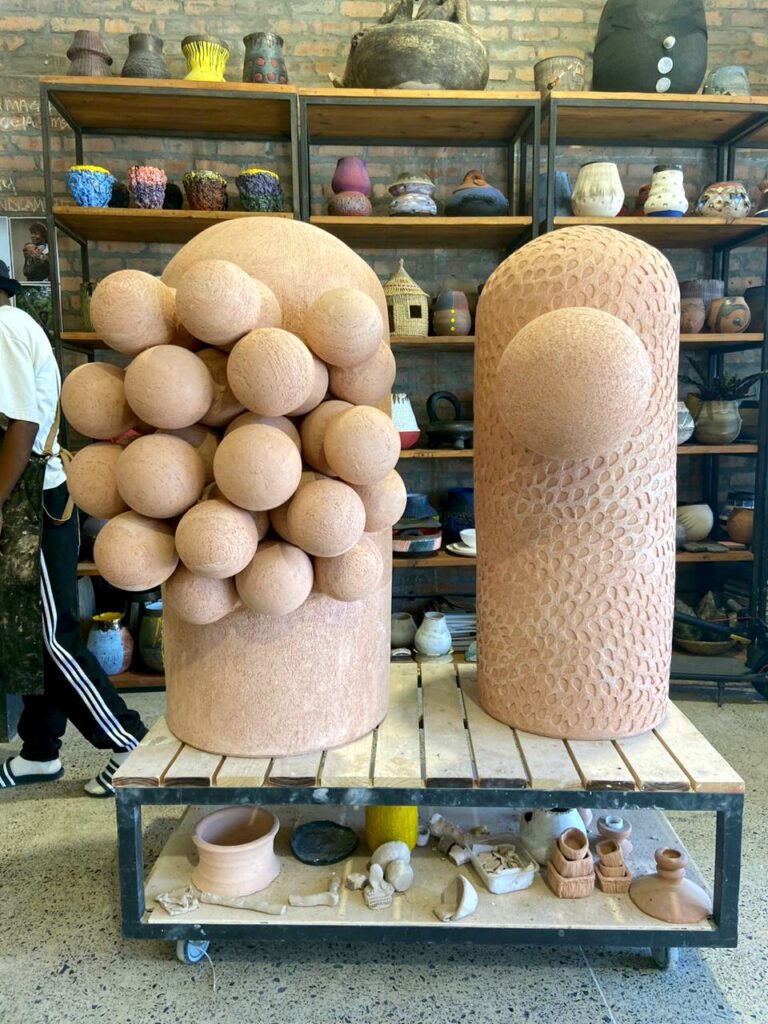
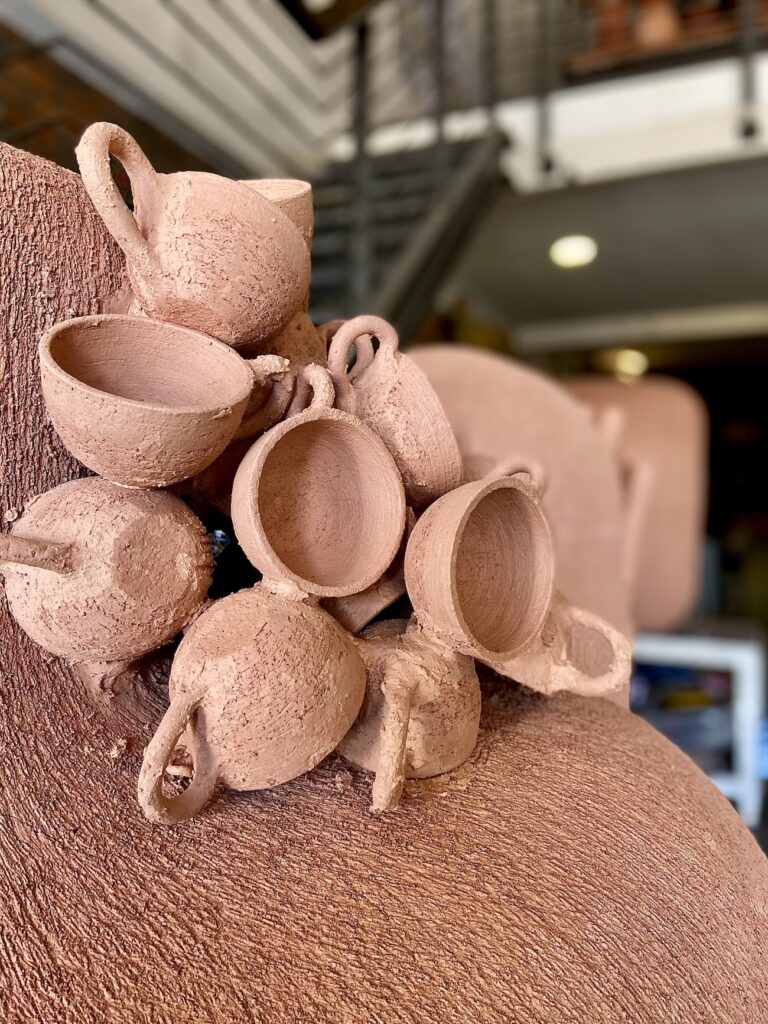
Throughout the series, motherhood is framed as both a gift and a shared responsibility. Poswa draws from personal experience, but the work resists isolation. Instead, it reflects a collective understanding of care within amaXhosa culture, where carrying is learned, inherited, and supported. The idea of umthwalo, the physical and symbolic load carried by women, returns here, but in a reconfigured form. Where earlier works positioned the load atop the body, in Imbeleko it is bound to the front, closer to the core.
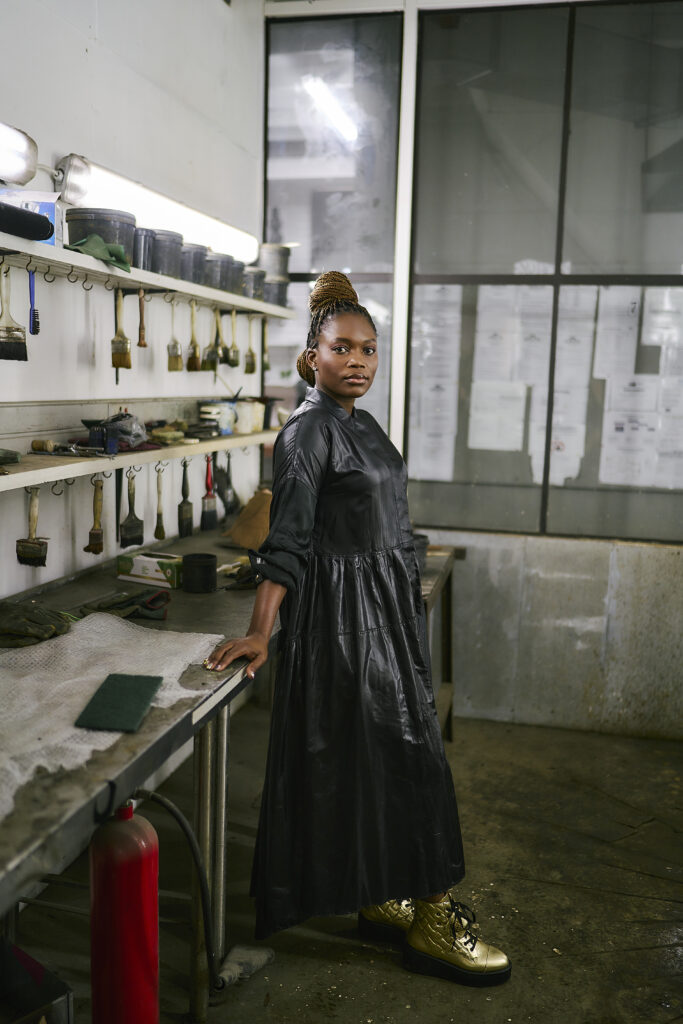
This shift signals a broader inflection in Poswa’s practice. While her earlier work often addressed outward expressions of cultural heritage, Imbeleko moves toward interiority. The focus rests on the conditions that make care, lineage, and continuity possible. The sculptures function less as symbols than as vessels of memory, holding physical, spiritual, and ancestral labour within their forms.
In parallel, Justine Mahoney’s Pareidolia introduces her first fully realised body of oil-on-canvas paintings. The exhibition marks a significant expansion of her visual language and follows an extended period of experimentation and material negotiation.
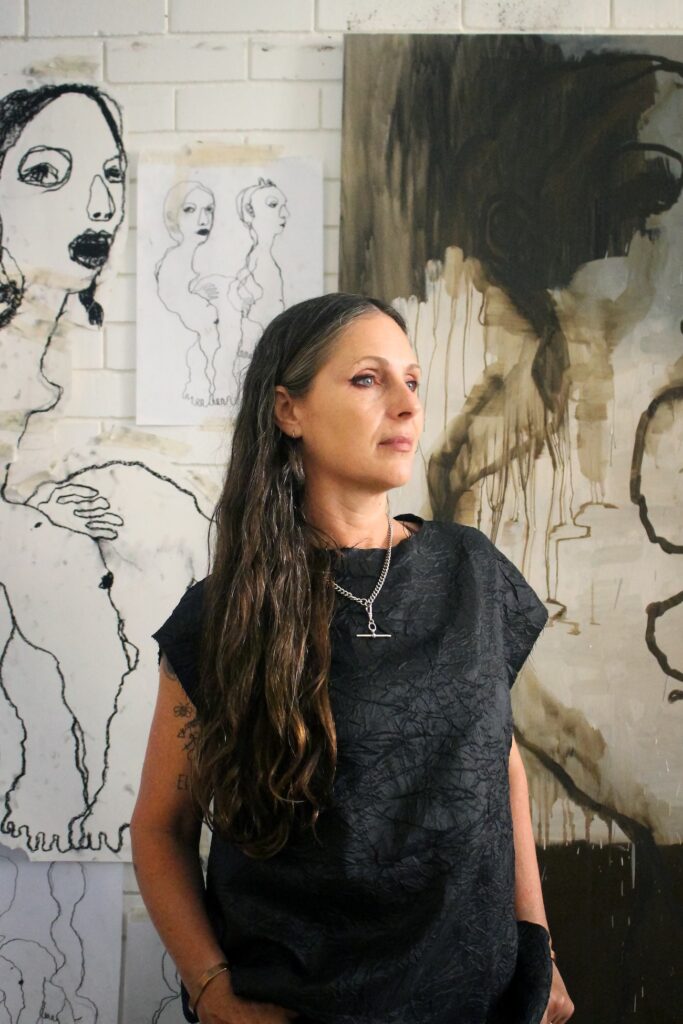
Mahoney’s practice has long unfolded in cycles, with each body of work marking a shift in method or thinking. For Pareidolia, she worked across all canvases simultaneously inside Southern Guild’s warehouse space, moving between preparatory charcoal studies and large-scale paintings. Figures were sketched, torn, layered, and reconstructed using masking tape, leaving visible traces of the artist’s hand.
The resulting paintings depict bodies in states of assembly and disintegration. Limbs dissolve into tendrils. Forms bleed into one another. Figures appear neither fixed nor dominant within their environments, but co-formed by them. Drawing from Jungian theory, post-humanist thought, and critiques of anthropocentrism, Mahoney rejects the idea of the human as a stable centre.
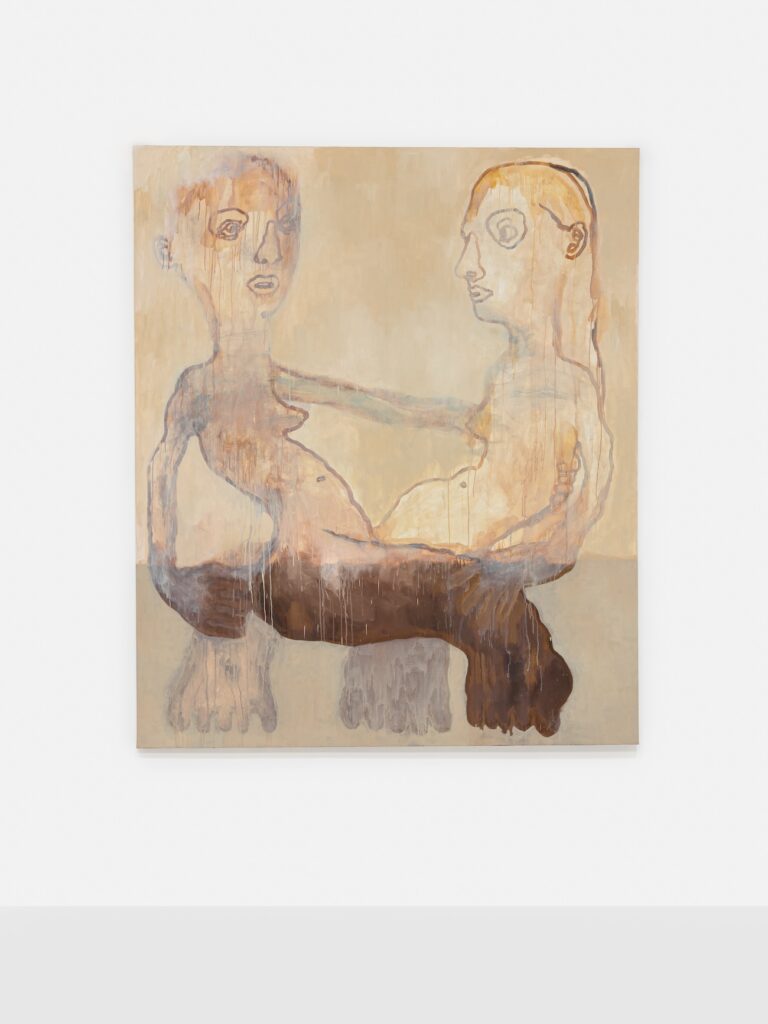
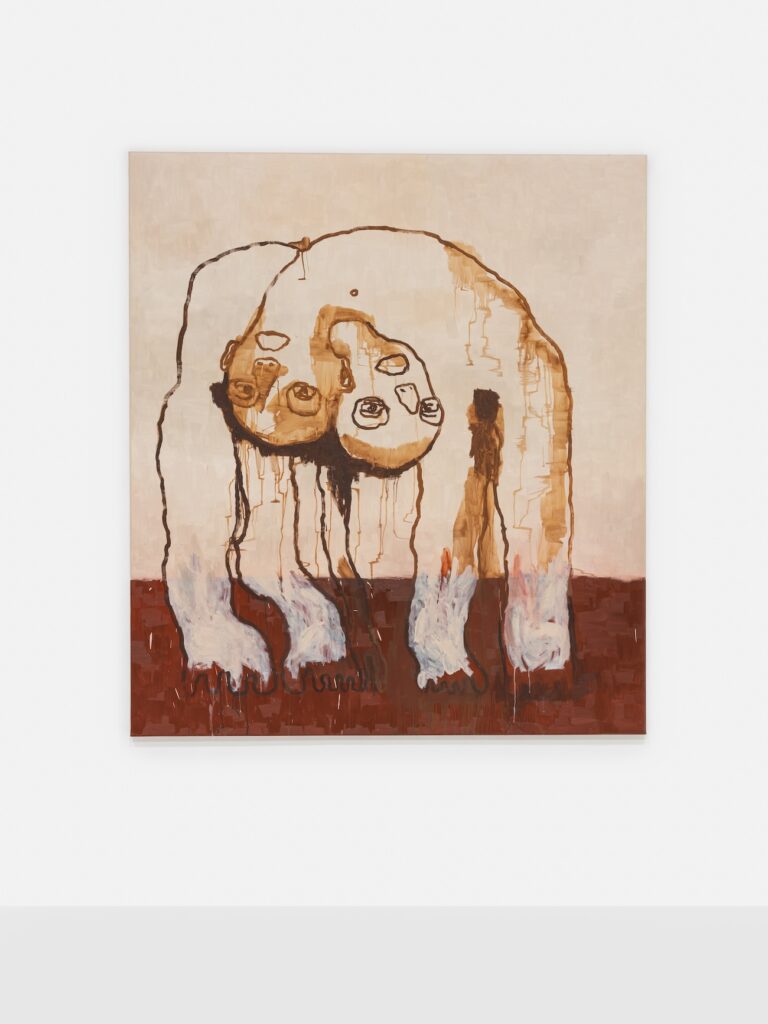
The title Pareidolia refers to the tendency to see familiar forms where none formally exist. In the paintings, bodies emerge from dual-toned fields that suggest sky and earth as emotional registers rather than landscapes. Colour is built slowly through layered processes, allowing figures to surface and recede.
Several works explore intimacy between paired bodies, echoing creation narratives in which worlds emerge through contact and rupture. In Sapientia (The Feminine Aspect of Wisdom), a diptych expands this idea, presenting a group of figures arranged in a composition that subtly references Madonna-and-child imagery.
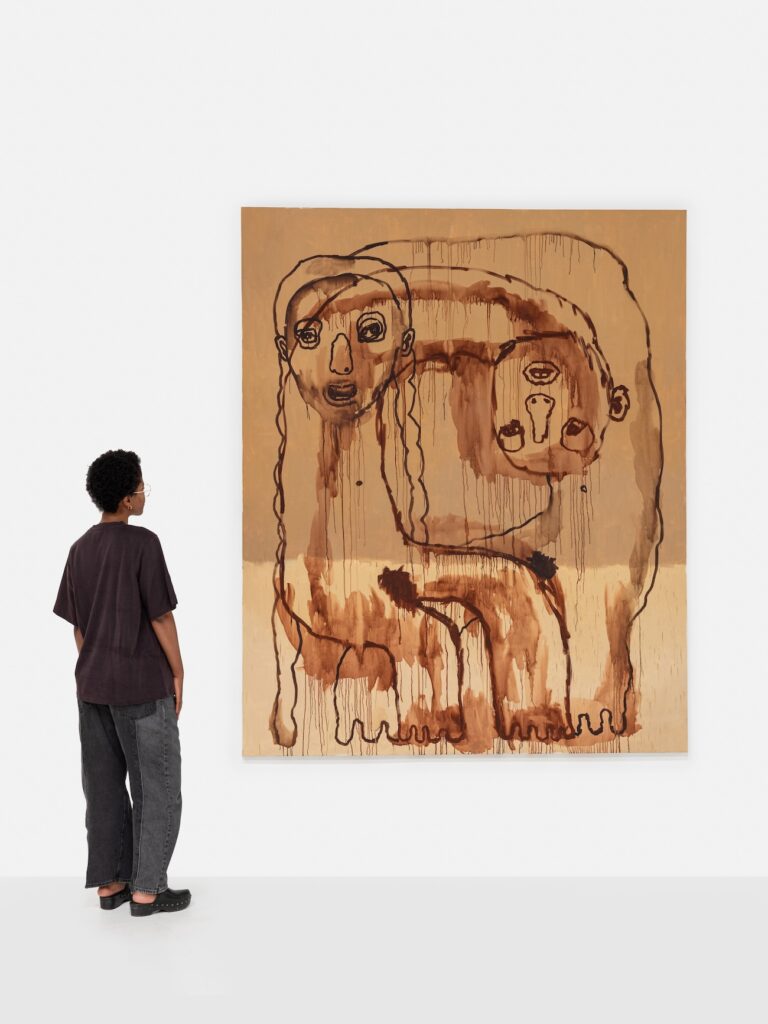
Mahoney’s figures are nude and gender-ambiguous, shaped by a refusal of fixed identity. Masculinity and femininity move through the work as energies rather than categories. The erotic operates as a connective force rather than spectacle, understood as a form of relational vitality that binds human and non-human life.
Seen together, Imbeleko and Pareidolia offer two distinct approaches to embodiment, lineage, and relation. One is grounded in clay and ancestral practice, the other in painting and speculative becoming. Both exhibitions open a space for thinking about how bodies carry meaning, memory, and connection, whether through inherited ritual or porous form.
The exhibitions open on 12 February at Southern Guild Cape Town, just days before the Investec Cape Town Art Fair begins on 19 February.
* Stay tuned to 10and5 for the latest art news.