


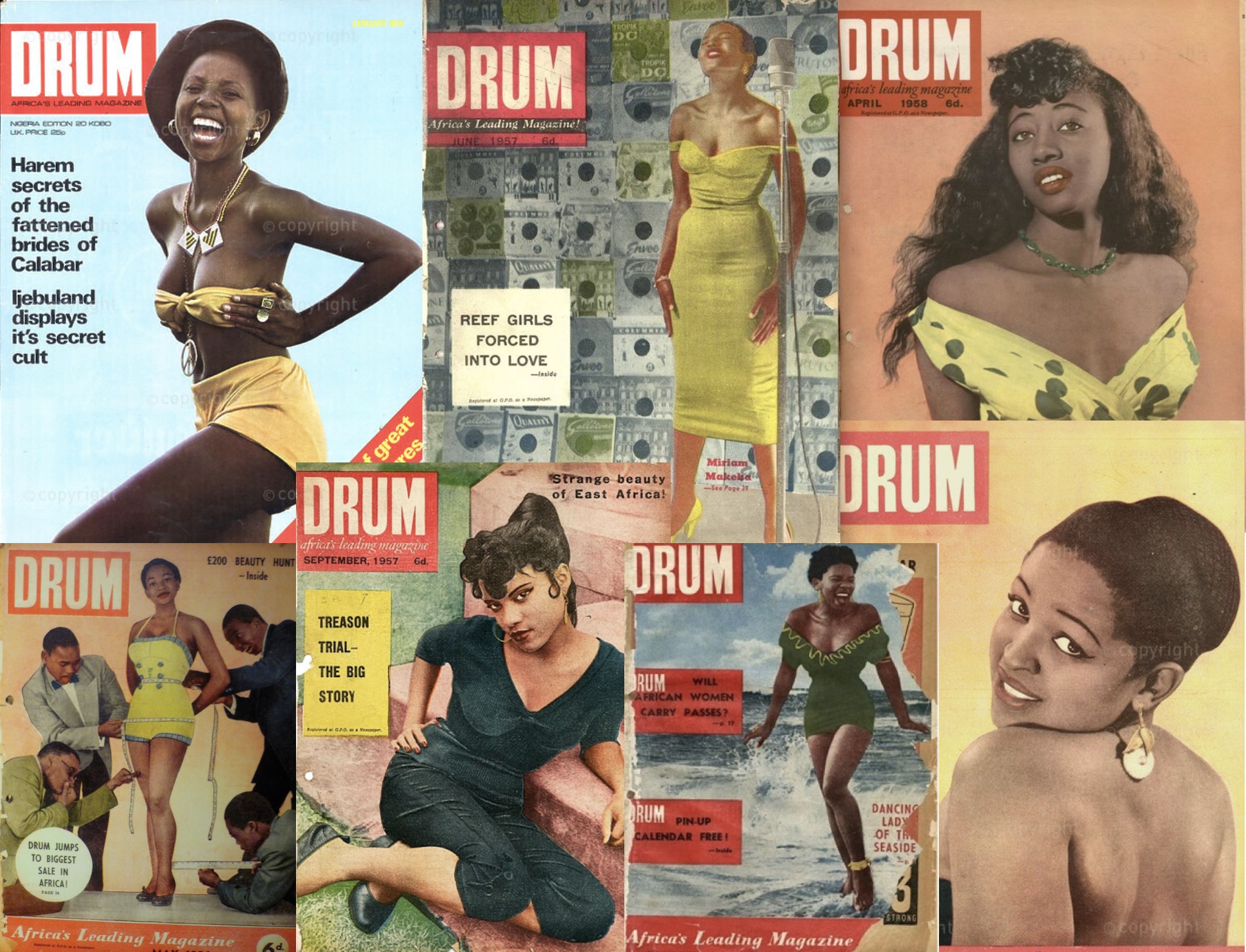

Words by Andile Masilela & 10and5 Editorial Team
Long before social media, viral moments and digital culture platforms, one South African magazine was documenting the sounds, faces, fashion and personalities shaping a generation. DRUM didn’t just report on culture. It helped define how a generation saw itself.
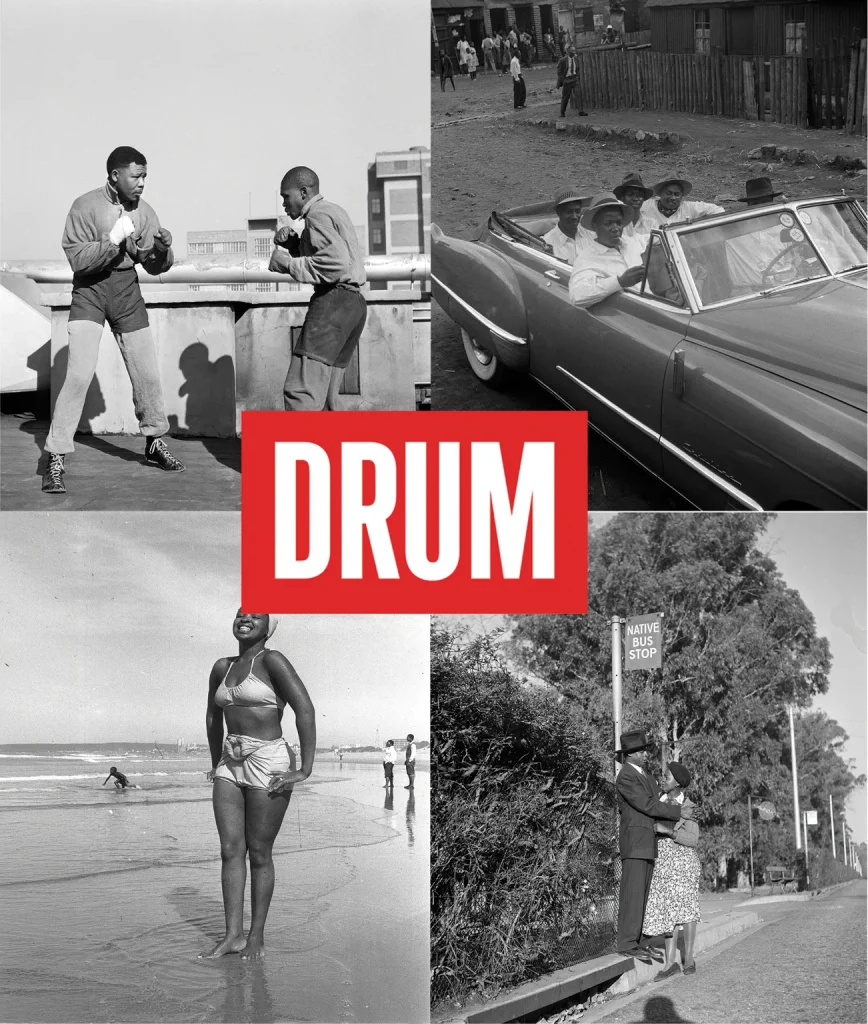
Credit: Drum Magazine Archives
There was a time when discovering what was happening in South African youth culture meant waiting for the next issue of a magazine. Before Instagram explore pages, TikTok trends and the endless scroll of digital media, there was DRUM. A publication that captured something extraordinary about the spirit of Black South Africa, documenting a generation finding its voice, identity and place in a country that was determined to restrict all three.
The Launch of DRUM Magazine 1951
Launched in 1951 as The African Drum before evolving into the publication we now know as DRUM, the magazine emerged during one of the most defining periods in South African history. Apartheid was tightening its grip, but in the streets of Johannesburg, particularly in Sophiatown, an entirely different story was unfolding.
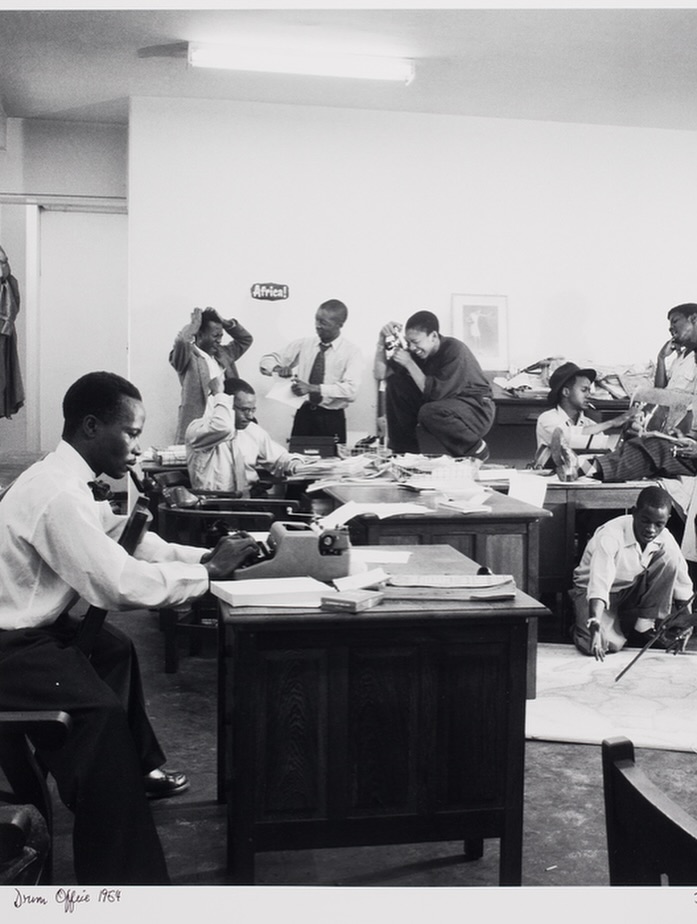
DRUM Magazine Staff, Headquarters, in Johannesburg, 1964 Credit: Drum Magazine Archives
A new urban culture was taking shape. Jazz clubs were filling up, musicians were finding their audiences, fashion was becoming a form of expression, and young Black South Africans were creating new identities through music, language, style and nightlife. There was an energy to this generation that couldn’t be contained by the political and social structures surrounding it.
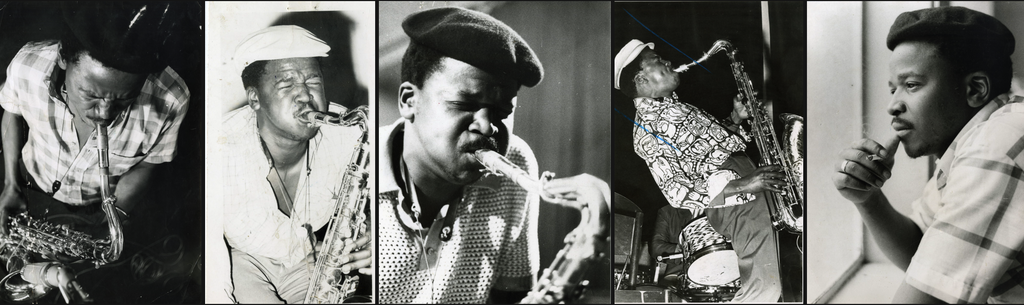
Credit: Drum Magazine Archives
Drum Magazine recognised this, Rather than simply documenting the political realities of the time, the publication turned its attention to the people living, creating and shaping culture within them. Its pages reflected a world of jazz musicians, writers, photographers, boxers, fashion, entertainment, relationships and everyday township life.
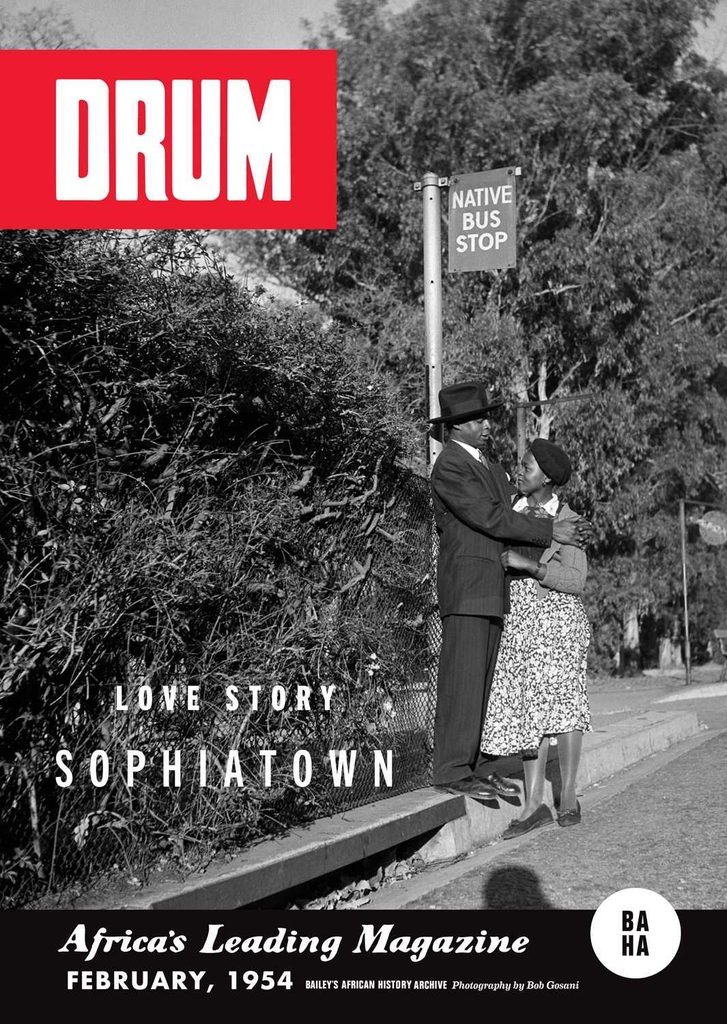
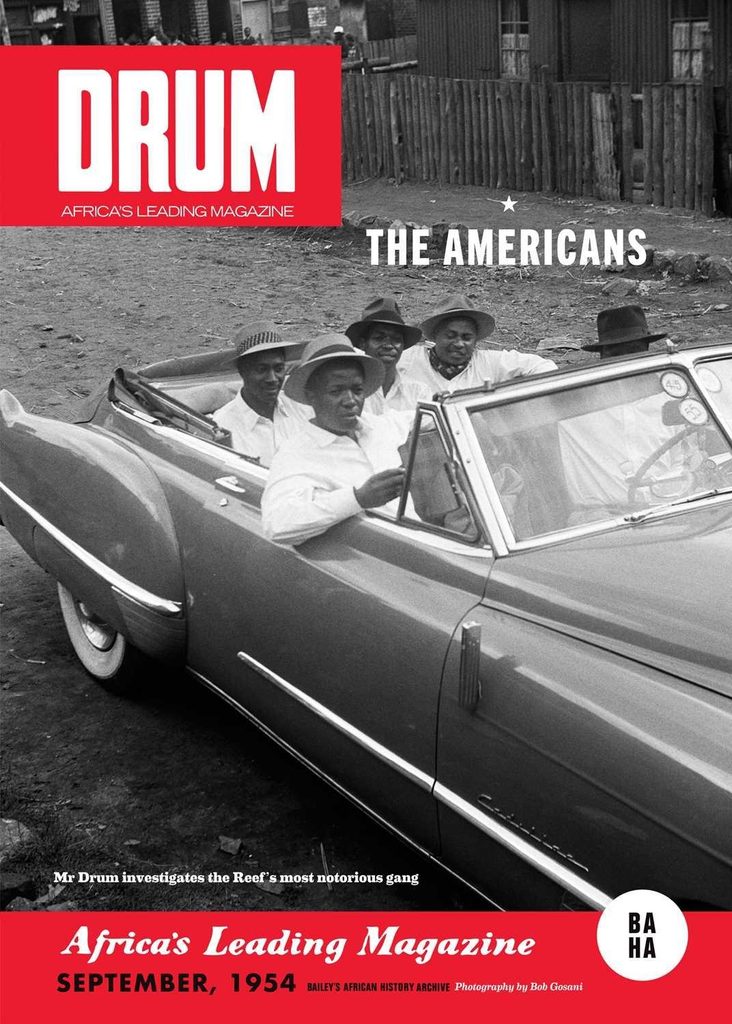
Credit: Drum Magazine Archives
It was also home to a remarkable generation of creative voices. Journalists and writers such as Henry Nxumalo, Can Themba, Todd Matshikiza, Casey Motsisi, Bloke Modisane, Arthur Maimane, Lewis Nkosi, Nat Nakasa and Es’kia Mphahlele helped establish DRUM’s distinctive editorial voice. Behind the lens, photographers including Jürgen Schadeberg, Bob Gosani, Peter Magubane, Ernest Cole and Alf Kumalo documented the people, places and moments that defined this era.
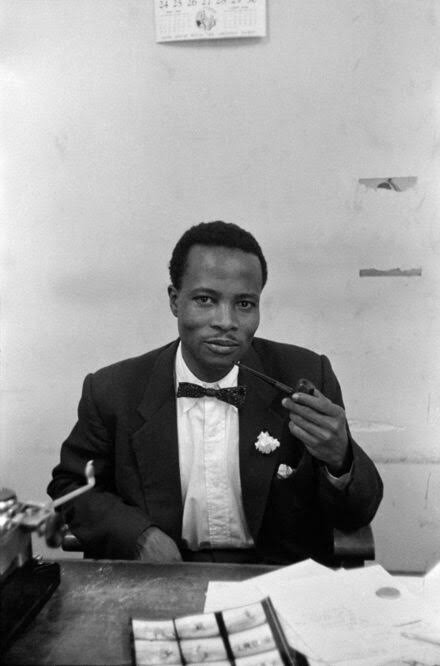
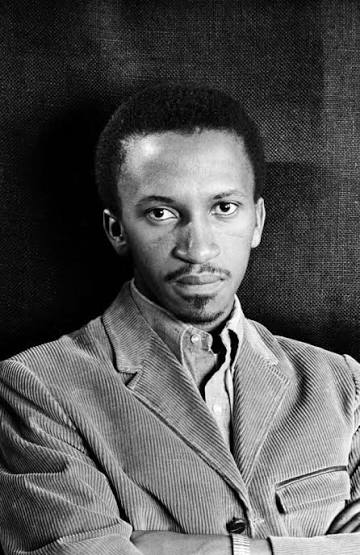
Credit: Drum Magazine Archives
Rather than simply documenting the political realities of the time, the publication turned its attention to the people living, creating and shaping culture within them. Its pages reflected a world of jazz musicians, writers, photographers, boxers, fashion, entertainment, relationships and everyday township life. It offered readers something particularly powerful: the opportunity to see themselves represented in a way that mainstream media rarely allowed.
A Generation Finding Its Voice
At the heart of DRUM‘s influence was its ability to recognise that Black South African life was about more than the struggle against apartheid. There were stories about ambition, love, success, style, music, friendship and the everyday experiences of people navigating an increasingly urban society. These stories mattered just as much because they captured the humanity of a generation that was constantly being defined by others.
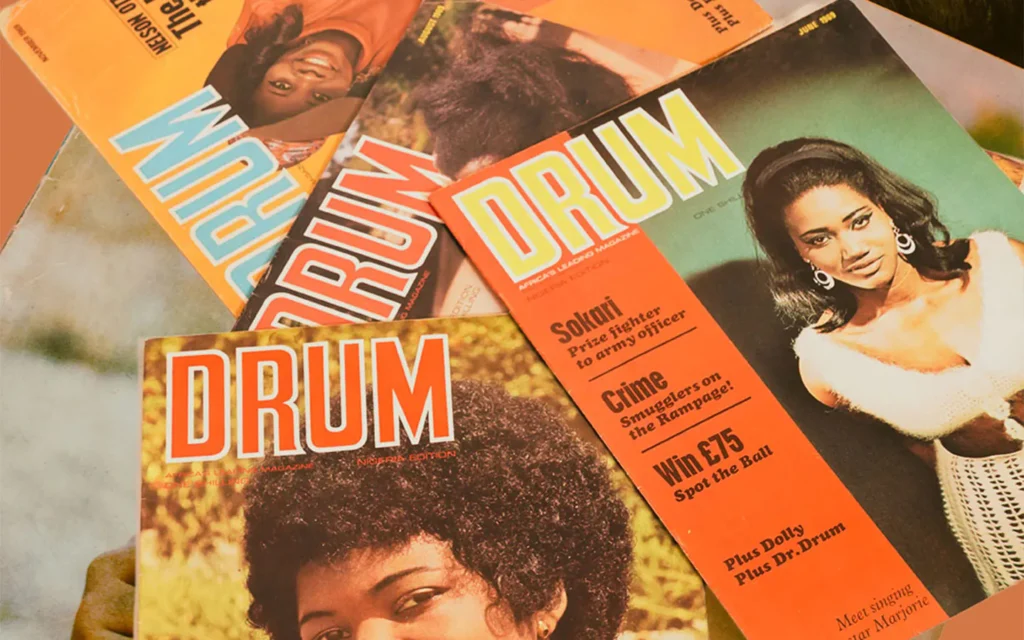
Credit: Drum Magazine Archives
The magazine became home to an extraordinary collection of writers and photographers, including Henry Nxumalo, Can Themba, Peter Magubane, Jürgen Schadeberg, Nat Nakasa and Todd Matshikiza. Together, they helped establish a distinctive editorial voice that was intelligent, fearless, visually compelling and deeply connected to the streets.
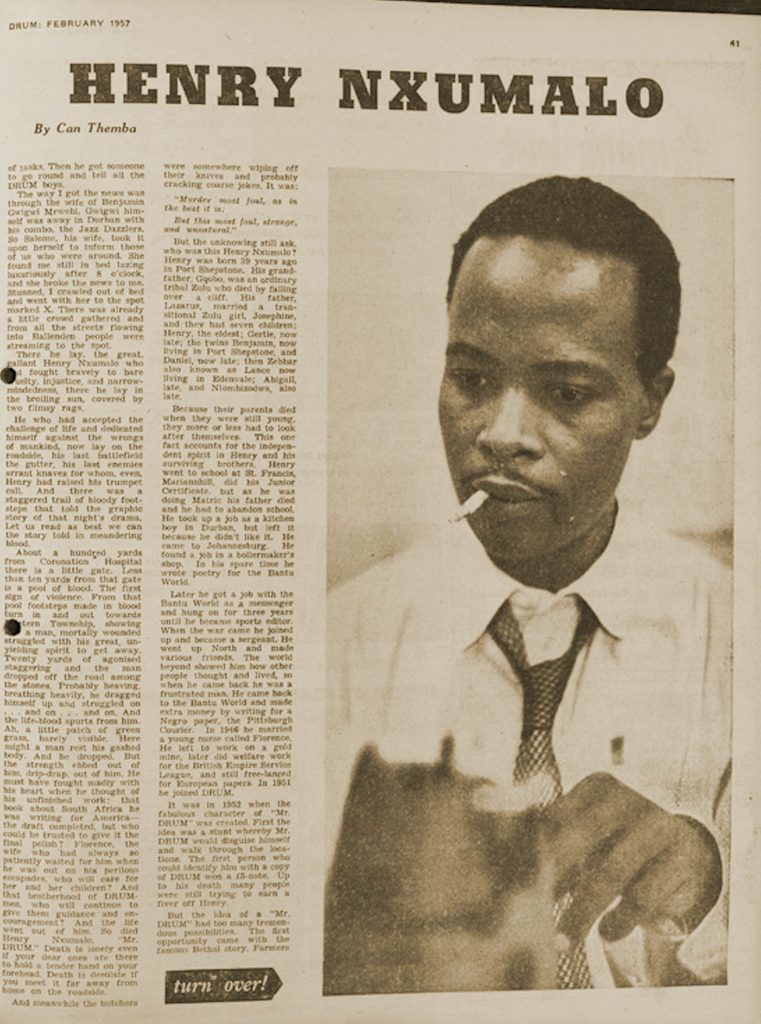
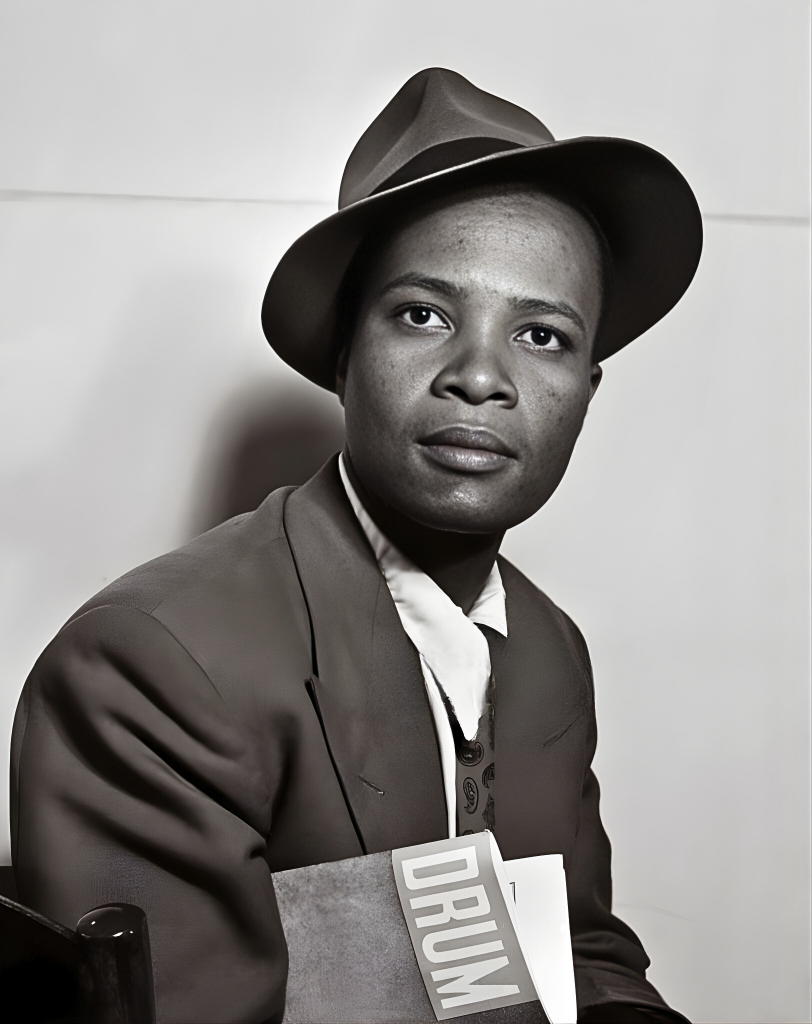
Credit: Henry Nxumalo, Mr ‘Drum’, Drum Magazine Archives
Henry Nxumalo, famously known as Mr Drum, became renowned for his investigative journalism, including his undercover reporting on the exploitation of farm workers. Can Themba brought the wit and complexity of township life into literature, while photographers such as Peter Magubane and Jürgen Schadeberg created an extraordinary visual record of the people and places defining the era.
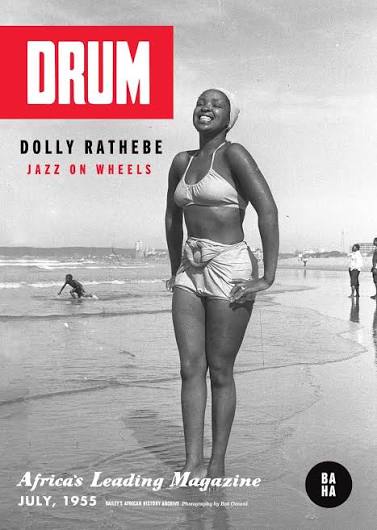
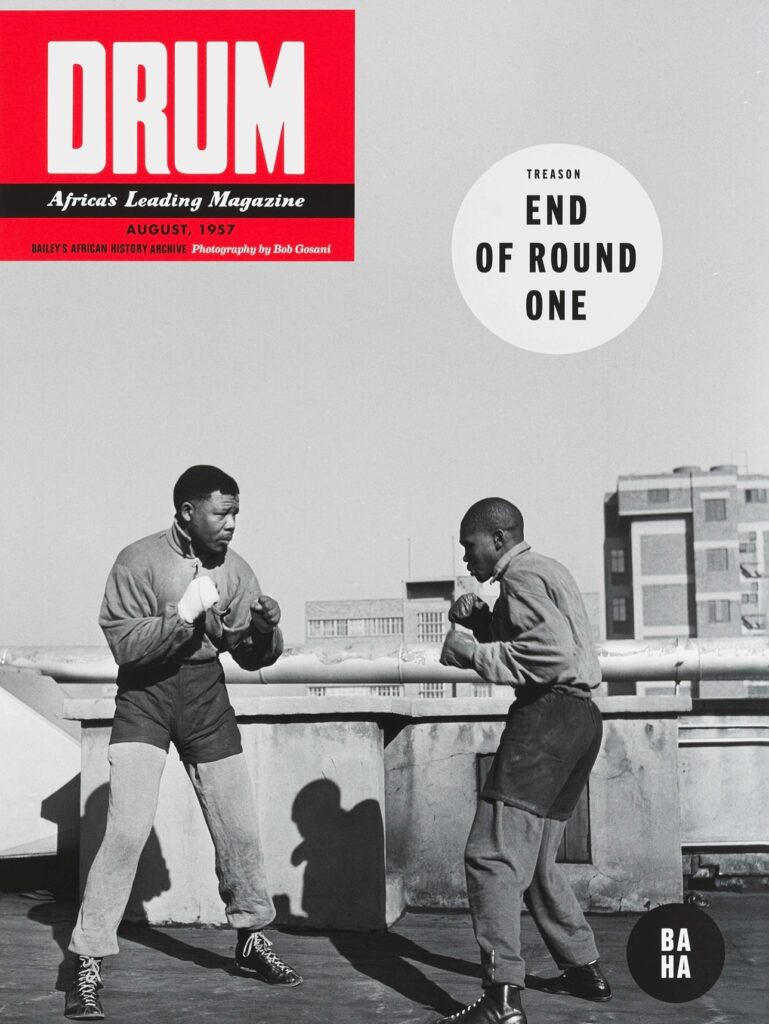
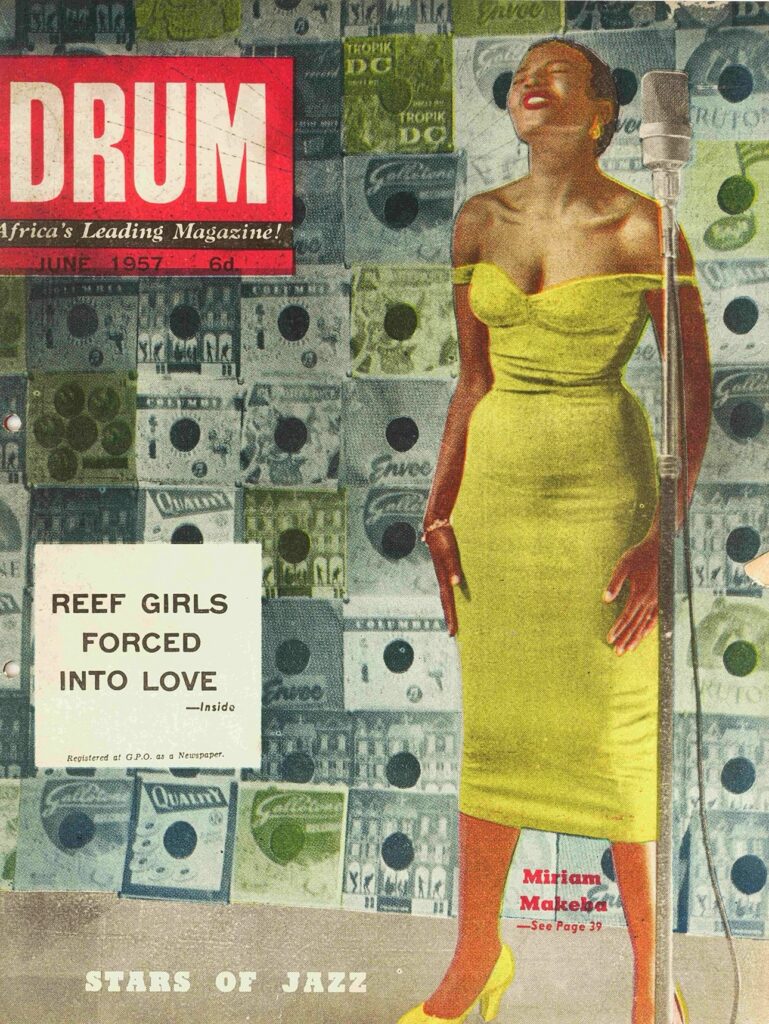
What emerged was more than a magazine. It was a cultural document. One that captured the personalities, environments and moments that would eventually become part of South Africa’s collective memory. The clothes people wore, the music they listened to, the places they gathered and the way they expressed themselves became part of an important historical record.
“Looking back at these photographs today, we’re not just looking at vintage imagery. We’re witnessing how a generation lived.“-Andile Masilela
More Than Pictures: Documenting The Culture
One of DRUM’s greatest contributions was its understanding of the power of visual storytelling. Its photography didn’t simply accompany articles. It helped tell the story of a generation. From the fashionable streets of Sophiatown to the energy of jazz clubs and the personalities occupying Johannesburg’s social scene, the magazine created a visual language that made Black urban culture visible.
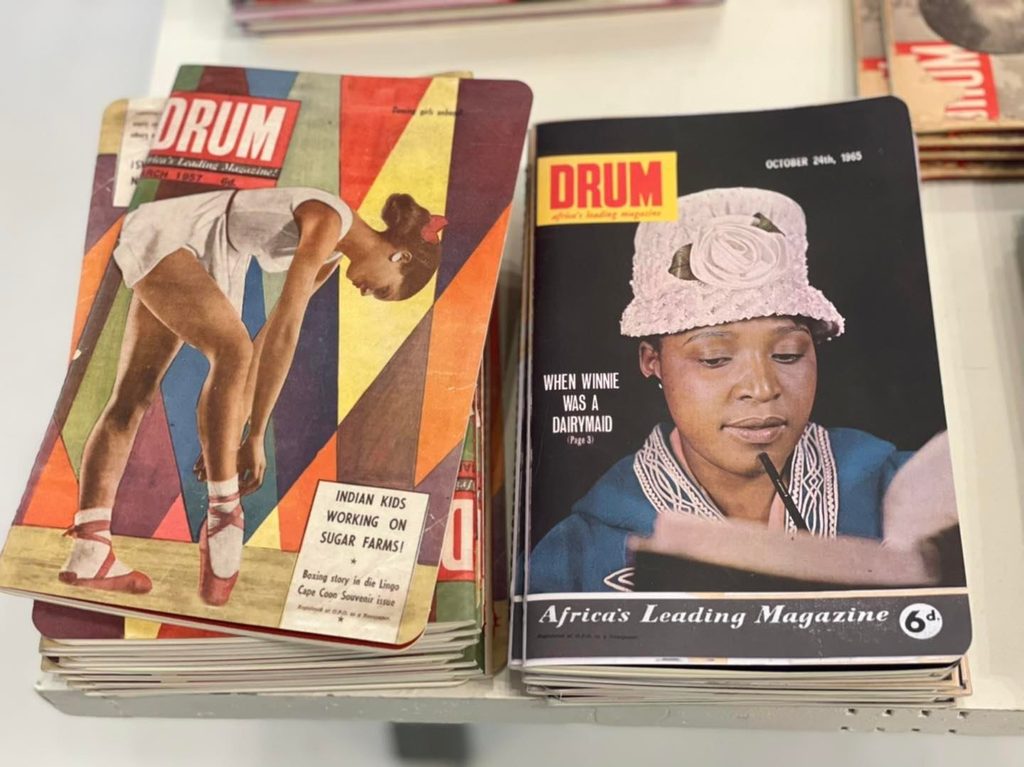
We’re seeing the beginnings of cultural movements in youth culture in South Africa [1951-1986], the evolution of style and the personalities who helped shape the country’s creative identity. Perhaps that’s what makes DRUM so relevant today. It understood that the seemingly ordinary moments of youth culture could become the defining references of an entire generation.
A Legacy That Continues
Its archives remain an important window into a period of South African history that might otherwise be understood very differently. Its photographs continue to inspire contemporary creatives, while its writers and journalists remain part of the country’s cultural and literary legacy.
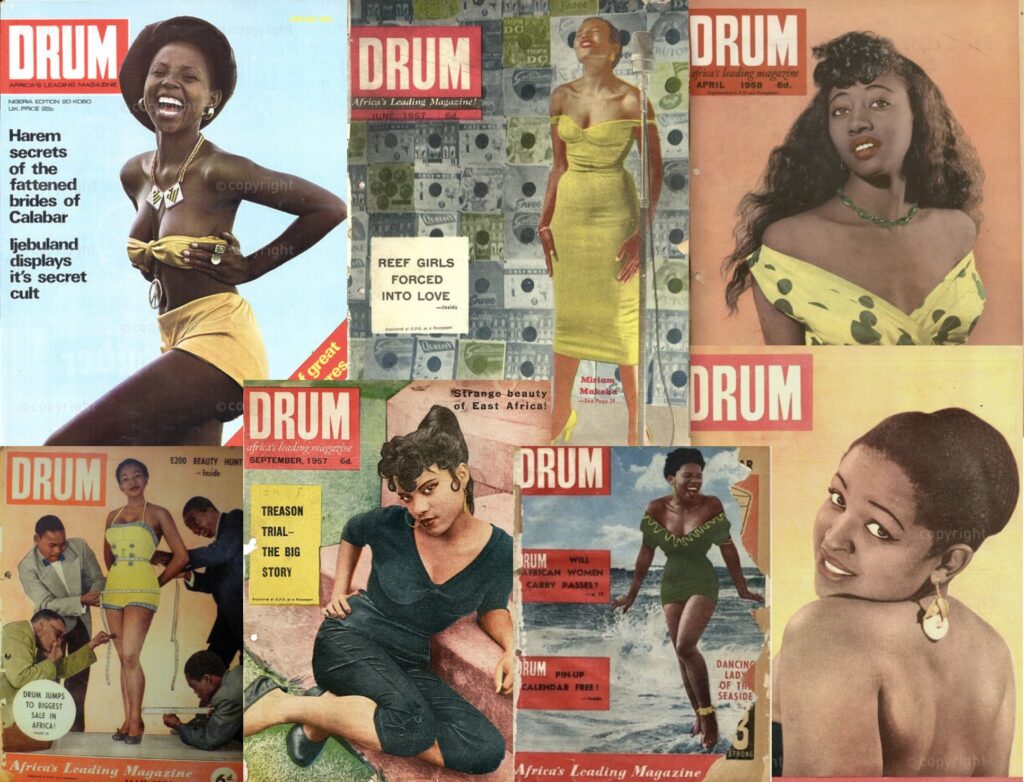
It demonstrated that a publication could become more than a source of information. It could become a meeting point for ideas, a platform for talent, a reflection of society and an archive of cultural memory. And that is perhaps the greatest lesson for anyone working in media today. The platforms may have changed. The cameras are smaller, distribution is faster and the audience is global. But the fundamental purpose remains the same: to recognise culture, give it a voice and make sure its stories are remembered.
About Andile Masilela – Managing Director, Between 10and5
Andile Masilela is a creative entrepreneur and media executive with a background spanning brand marketing, digital media, advertising and business development. As Managing Director of Between 10and5, he works at the intersection of creativity, culture and commerce, driving media partnerships, commercial strategy and opportunities that connect brands with South Africa’s creative community. Since beginning his career in 2015, he has built experience across the creative industries, with a particular interest in the role of media in shaping culture, amplifying voices and creating opportunities within the creative economy.