


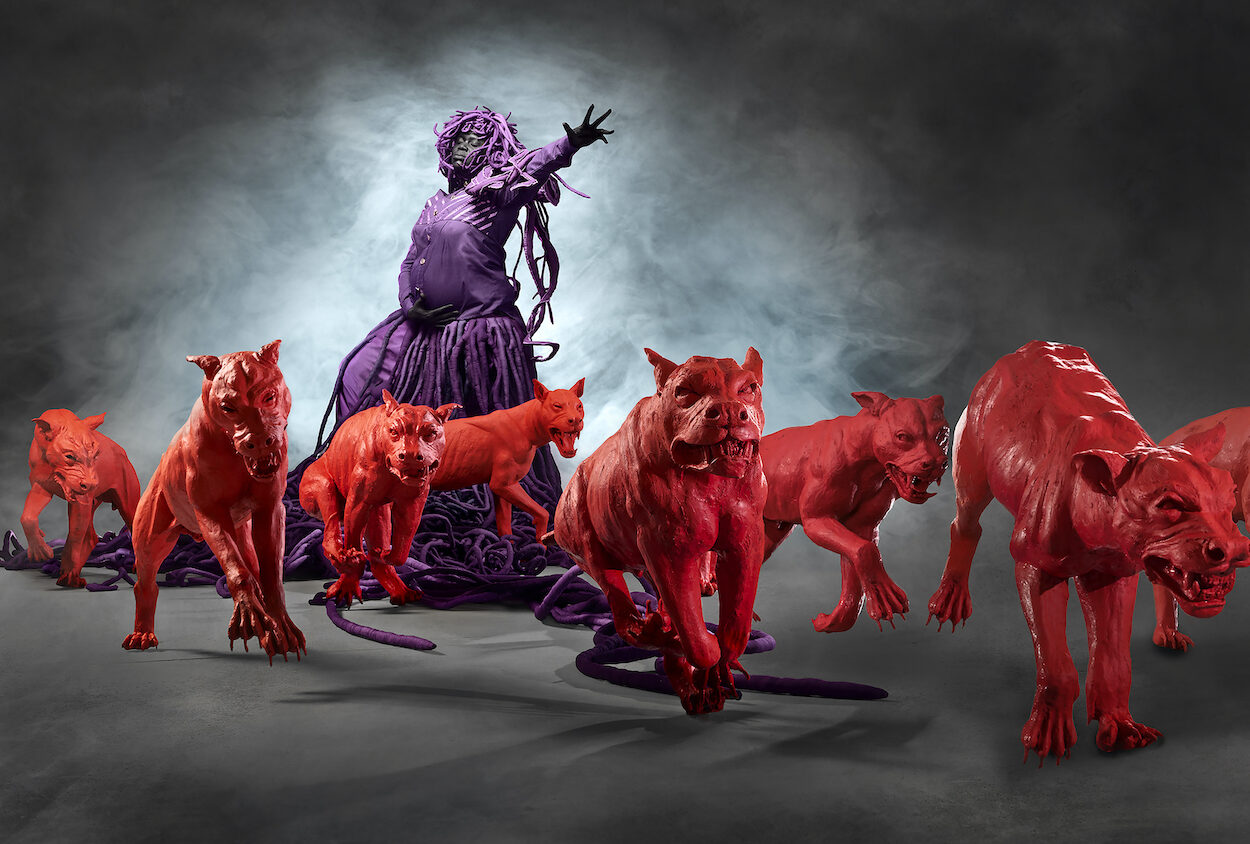

South African artist Mary Sibande talks about her evolving creative practice, mentorship and creating opportunities for emerging artists through Occupying the Gallery.
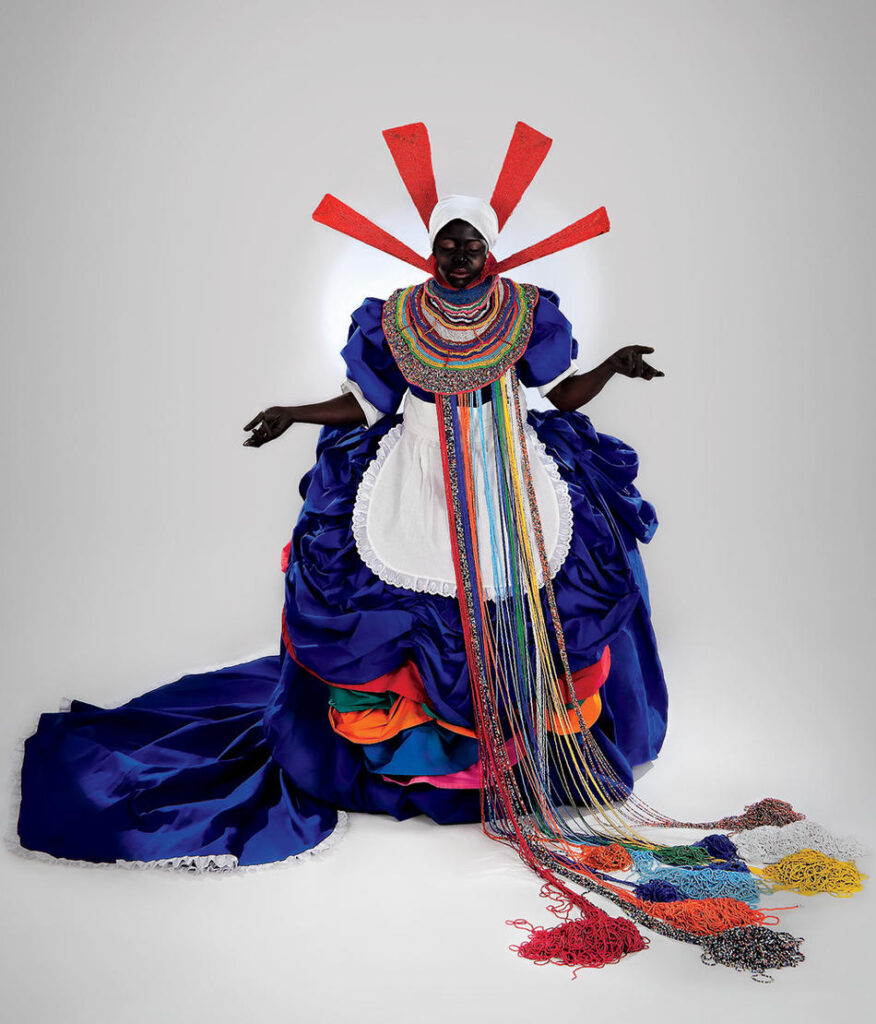
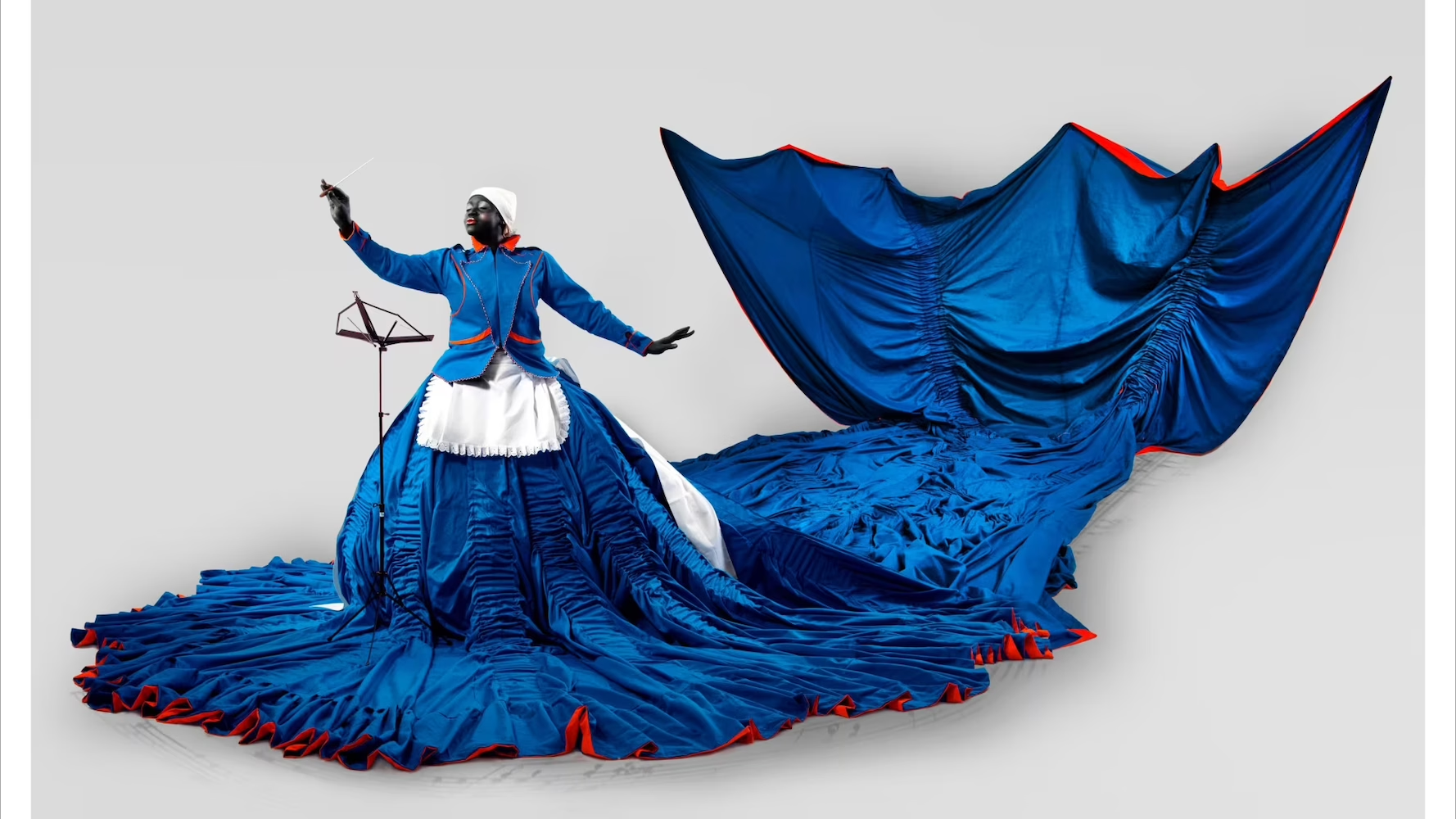
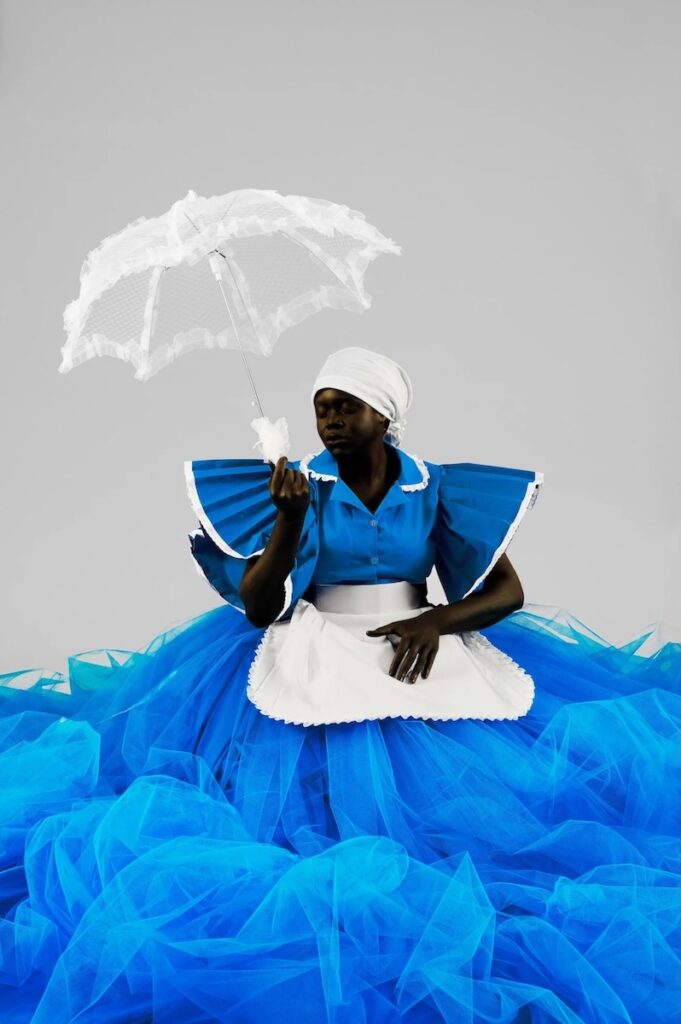
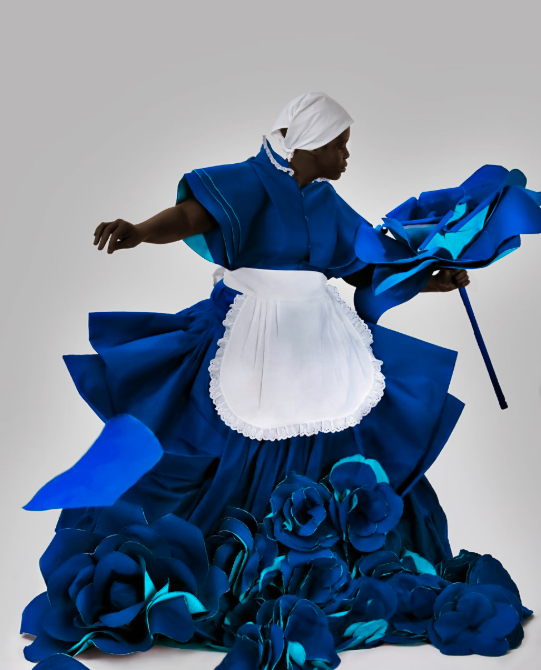
South African artist Mary Sibande has spent much of her career exploring identity, history and the experiences of Black women through her work. Best known for Sophie, her alter ego who takes the form of a domestic worker, Sibande has used sculpture, photography and performance to challenge familiar narratives around race, gender and labour.
But her practice continues to evolve. These days, she’s thinking more about rest, leisure and pleasure. What happens when Sophie no longer wants to work? What does freedom look like when it isn’t defined by struggle or responsibility?
Beyond her own artistic practice, Sibande is also interested in creating opportunities for other artists. Together with fellow South African artist Lawrence Lemaoana, she founded Occupying the Gallery (OTG), a Johannesburg-based platform dedicated to artist development, mentorship and creative exchange.
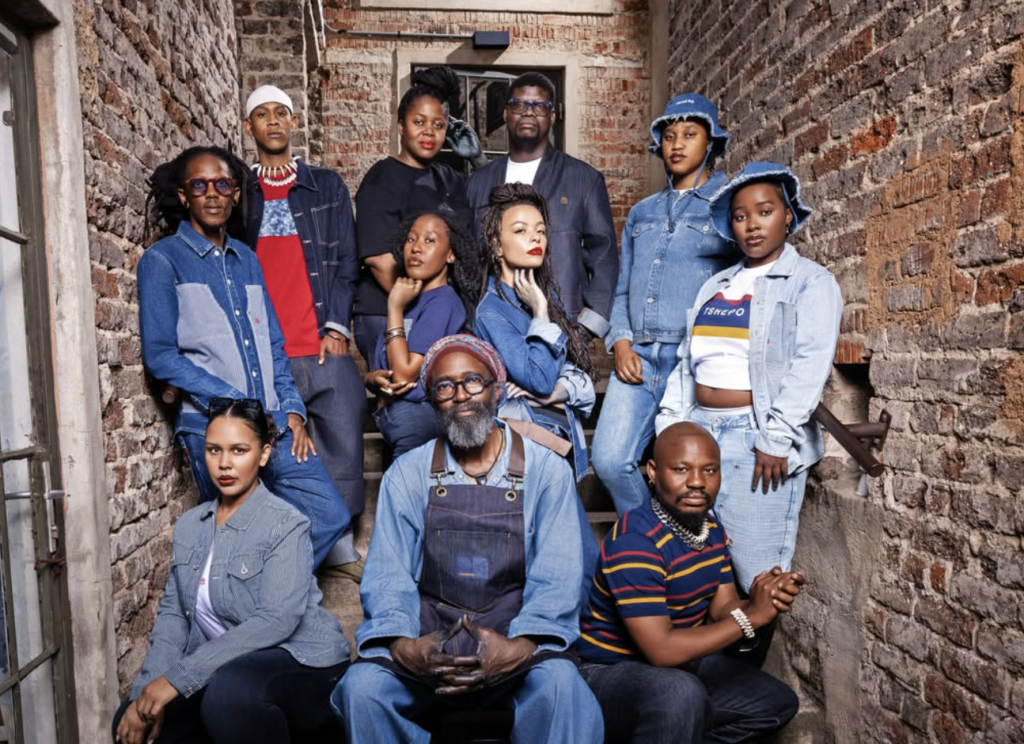
Rather than focusing on exhibitions and commercial outcomes, OTG brings emerging artists into working relationships with established practitioners, designers and makers. It’s a space where knowledge is shared through collaboration and experimentation.
One of its latest projects is a residency with Malian artist Aboubakar Fofana, whose practice centres on traditional indigo dyeing and the preservation of indigenous African knowledge. As part of the programme, Fofana lead a workshop at Victoria Yards in Johannesburg on 24 October, bringing together local creatives, denim makers and fashion practitioners.
We caught up with Sibande to talk about the thinking behind Occupying the Gallery, what established artists can offer the next generation, and how her own relationship with art has changed over the years.
What inspired you and Lawrence Lemaoana to start Occupying the Gallery?
Lawrence and I have been in the art world long enough to know how difficult it can be to navigate, especially when you’re starting out.
We wanted to create a space we wished we’d had as younger artists. Somewhere artists can experiment, make mistakes, exchange ideas and just be artists without constantly worrying about producing something to sell.
And I think that’s important. Not everything an artist makes has to end up on someone’s wall.
Occupying the Gallery is not in the business of selling art. We’re in the business of building community, nurturing artists and opening doors. We also wanted to question who gets to occupy these art spaces in the first place.
Occupying the Gallery is not in the business of selling art. We’re in the business of building community, nurturing artists and opening doors.
What do you think established artists owe the next generation, if anything?
I think if you’ve been fortunate enough to gain knowledge, experience and access, what are you doing with all of that? Are you just keeping it to yourself?
Sometimes all it takes is introducing someone to the right person or inviting them into a space they wouldn’t ordinarily have access to.
But I don’t think mentorship is about telling younger artists what to do. They must find their own voices, make their own mistakes and even challenge us.
We’re not here to create little versions of ourselves!
Why was Aboubakar Fofana the right artist to bring into this space? What drew you to his practice?
Lawrence and Aboubakar met in New York a few years ago and immediately connected. They met again last year in Berlin during a group exhibition, and that’s where the conversation picked up.
What interested us about Aboubakar was his commitment to preserving and sharing ancestral knowledge through natural indigo dyeing.
We’re living in a time when so much indigenous knowledge is being lost or overlooked, yet we have people like Aboubakar who have dedicated their lives to keeping it alive.
And for us, it wasn’t just about bringing someone to teach people how to dye fabric. There’s so much more to it. It’s about skills transfer, understanding where materials come from and the knowledge they carry.
We’ve also invited local denim makers and fashion designers because I’m interested in what happens when these traditional practices meet contemporary design.
That’s the exciting part. What can come out of these encounters?
How do you balance learning from another culture’s artistic traditions with respecting their history and context?
I think the first thing is to listen. You can’t just arrive, take a technique because it looks beautiful and ignore everything that comes with it.
There’s history, culture and knowledge behind these practices.
That’s why having Aboubakar here is important. We’re not just watching someone dye fabric. We’re learning from someone who carries that knowledge and understands where it comes from.
For me, cultural exchange should be a conversation, not an act of extraction.
You have to respect the people and the histories behind what you’re learning.
For me, cultural exchange should be a conversation, not an act of extraction.
What are you currently working on, and what ideas are you exploring in your practice?
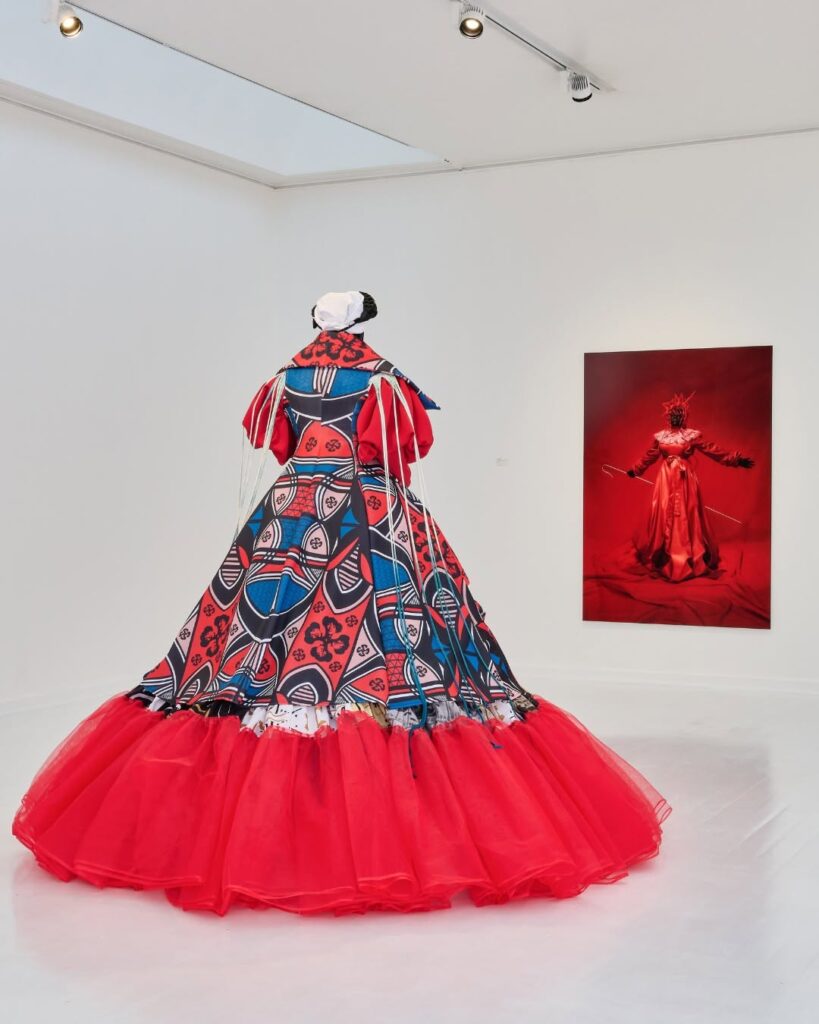
I’m thinking a lot about rest, leisure and pleasure at the moment.
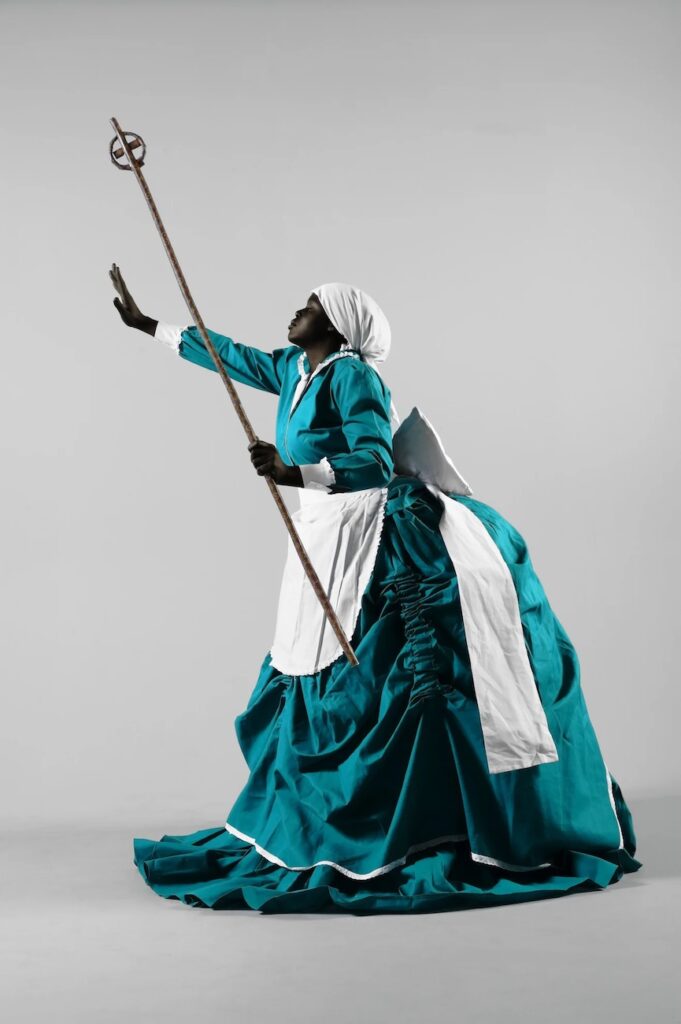
For years, Sophie has been associated with domestic labour and the expectations placed on Black women’s bodies. Sophie is my alter ego, a domestic worker figure I use to explore Black women’s histories and possibilities.
But I’m interested in what happens when she decides she’s had enough of all that.
What if she just wants to have fun? What if she wants to do absolutely nothing?
Why must her existence always be tied to labour, struggle or some kind of responsibility?
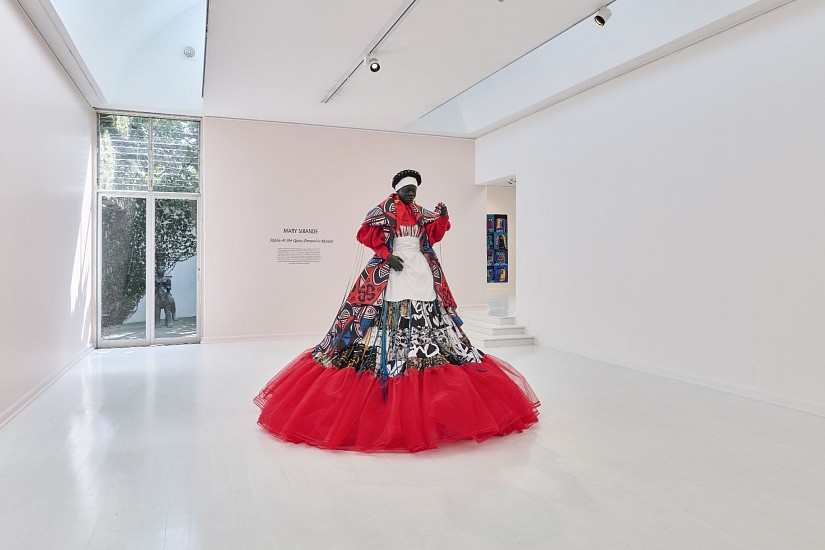
I’m exploring these questions through sculpture, photography, prints on paper, movement and humour.
There’s something quite radical about a body that has historically been expected to serve others deciding to simply enjoy itself.
There’s something quite radical about a body that has historically been expected to serve others deciding to simply enjoy itself.
Sophie is claiming her leisure, and I think she’s entitled to it!
Has your relationship with your work changed over the years? Are there things that interest you now that didn’t when you were starting out?
Of course! I think as you grow older, you start asking different questions.
When I started, I was very concerned with histories of domestic labour, identity and representation, particularly through the experiences of the women in my family.
Those histories haven’t disappeared from my work, but I’m no longer only interested in confronting them. I’m interested in what happens afterwards. What does freedom actually look like?
I’ve also become more playful. I enjoy humour, exaggeration and sometimes making things that are a little absurd.
I don’t think everything has to be so serious all the time, even when you’re dealing with serious subjects.
I’ve also become more playful. I enjoy humour, exaggeration and sometimes making things that are a little absurd.
What does your creative process look like today? Has it changed over the course of your career?
I’m still very much driven by imagination and curiosity.
Sometimes an image pops into my head, and I start thinking about how to make it exist in the real world. And then, of course, comes the difficult part of figuring out how on earth I’m going to make it!
I work with different materials and people who have specialised skills, so there’s a lot of experimentation and problem-solving involved.
What I enjoy is that the making process sometimes takes the idea somewhere I hadn’t anticipated.
I’ve learned not to control everything too much. Sometimes the material has other plans.
I’ve learned not to control everything too much. Sometimes the material has other plans.
When you start a new body of work, do you begin with a question, an image or something else?
Usually an image. I’m a very visual person.
I might imagine Sophie doing something completely unexpected, and then I start asking myself why that image interests me.
What does it mean? What is she trying to say? Or perhaps she’s not trying to say anything at all! Sometimes I don’t have the answers immediately, and that’s fine.
I like allowing the meaning to reveal itself as I work. I don’t think you always have to know exactly where an idea is going before you begin.
Your work has been interpreted in many different ways. How do you feel about the meanings people attach to it?
I actually enjoy it.
Once the work leaves my studio, it no longer belongs entirely to me in terms of how people understand it.
People bring their own histories and experiences to it, and sometimes they see things I never even thought about. And who am I to tell them they’re wrong?
Of course, I know what informed the work, but I don’t think art should come with an instruction manual telling people exactly what to think. I like that the work can have different meanings for different people. That’s what keeps the conversation going.
Looking back, what advice would you give your younger self at the start of your career?
I’d probably tell her to relax a little! Trust your instincts, make mistakes, experiment and don’t be in such a hurry to figure everything out.
I would also tell her that being an artist isn’t just about making artworks and having exhibitions. It’s about the people you meet, the relationships you build and what you do with the opportunities that come your way.
Looking at what Lawrence and I are doing with Occupying the Gallery now, I realise how important that is. And I’d tell her to enjoy herself. It’s a long journey, so you might as well have some fun along the way!
- Follow Occupying the Gallery on Instagram to get in touch and find out more about their upcoming events.