


A conversation with Ruzza Wazzi on ritual, tension and resisting resolution in his collaboration with Roger Ballen on AFRO SUPERHERO – CHAPTER III: PURPOSE OF ART.
Positioned between film, sound and performance, Purpose of Art is not a conventional release. Created by Ruzza Wazzi in collaboration with Roger Ballen, the work operates as what Wazzi calls a “psychological document”. It resists clarity, embraces tension and invites viewers into a more active encounter.
The film forms part of Wazzi’s ongoing AFRO SUPERHERO universe, an exploration of how myth is constructed and identity is shaped within contemporary African cities.
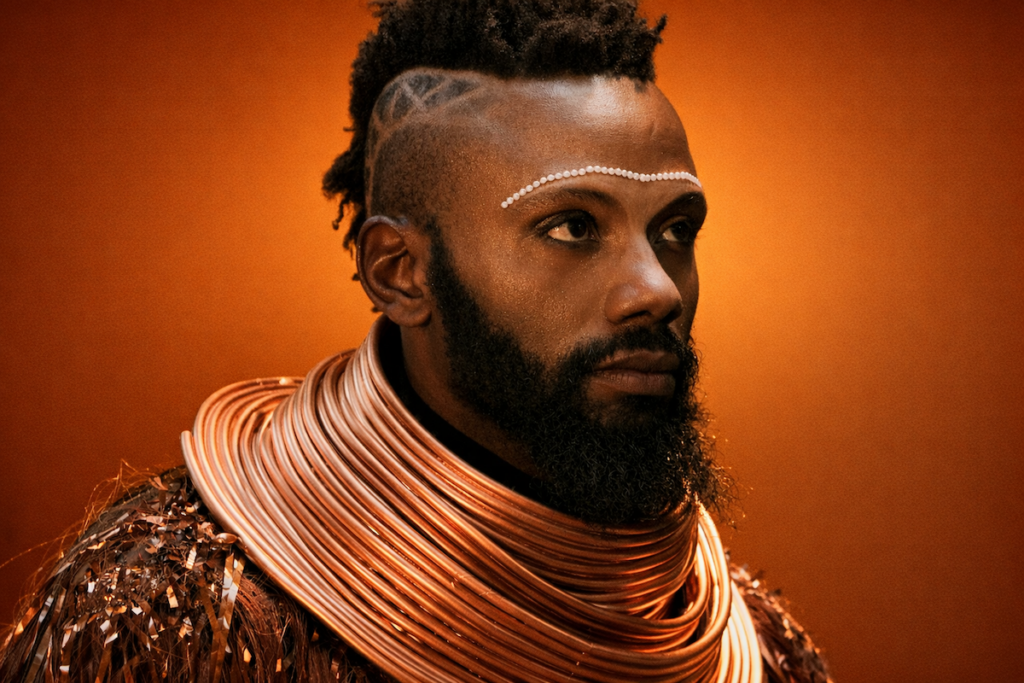
Between 10and5 spoke to Wazzi about resisting traditional formats, reworking Amapiano, and why discomfort is central to his practice.
“Purpose of Art” sits between film, music and performance. Why was it important for you to resist a traditional format?
Traditional formats resolve too quickly. They tell the audience where to stand. I feel that we are living in an AI movement, an anti-intellectual movement. Traditional formats tend to brainwash us into consuming without questioning. My work is here not to entertain, but to be an instrument that challenges us.
Purpose of Art is built to hold tension. It doesn’t guide interpretation; it creates a condition where interpretation becomes unstable.
That instability is the work.
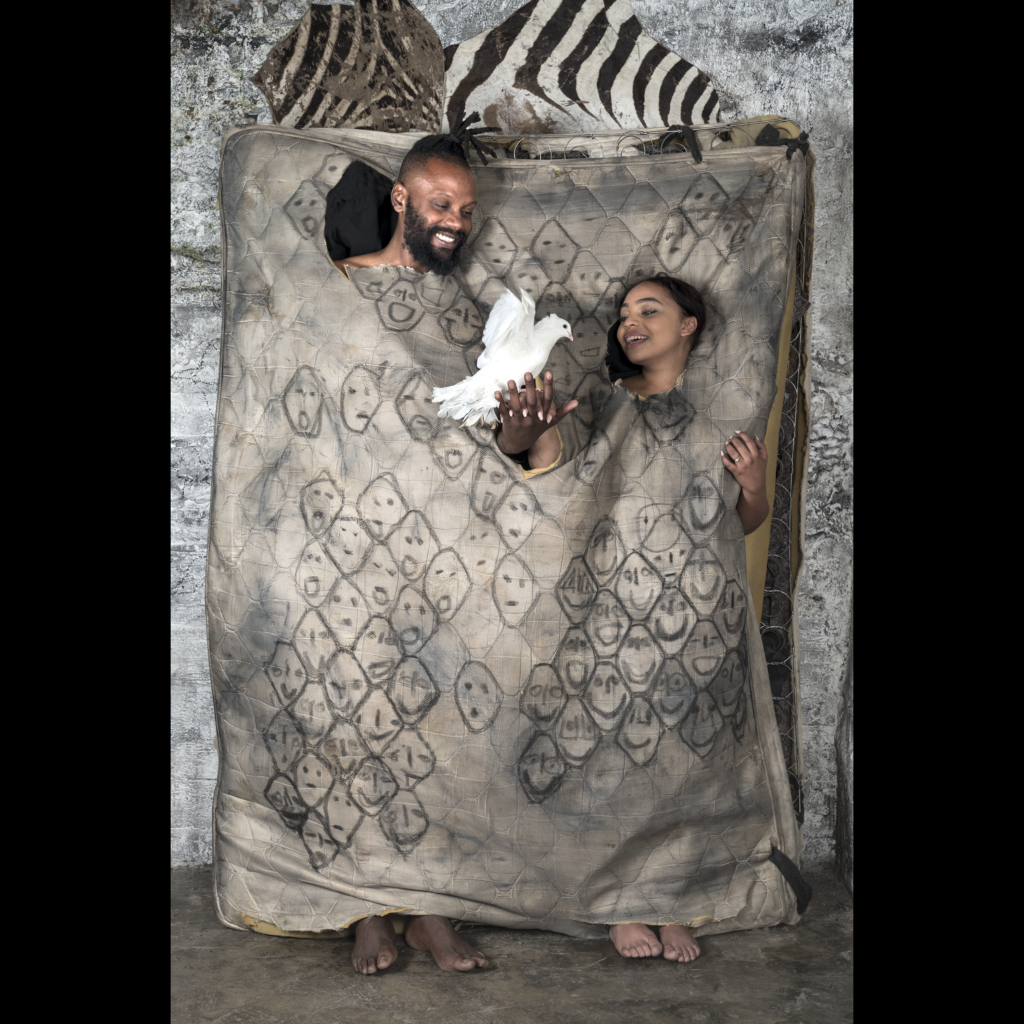
You describe the project as a “psychological document” rather than a music release. What does that distinction allow you to explore?
A music release is consumed.
A psychological document is examined.
This project is not expressing emotion. It is observing how identity is constructed, performed and controlled.
It treats sound, image and voice as evidence rather than entertainment.
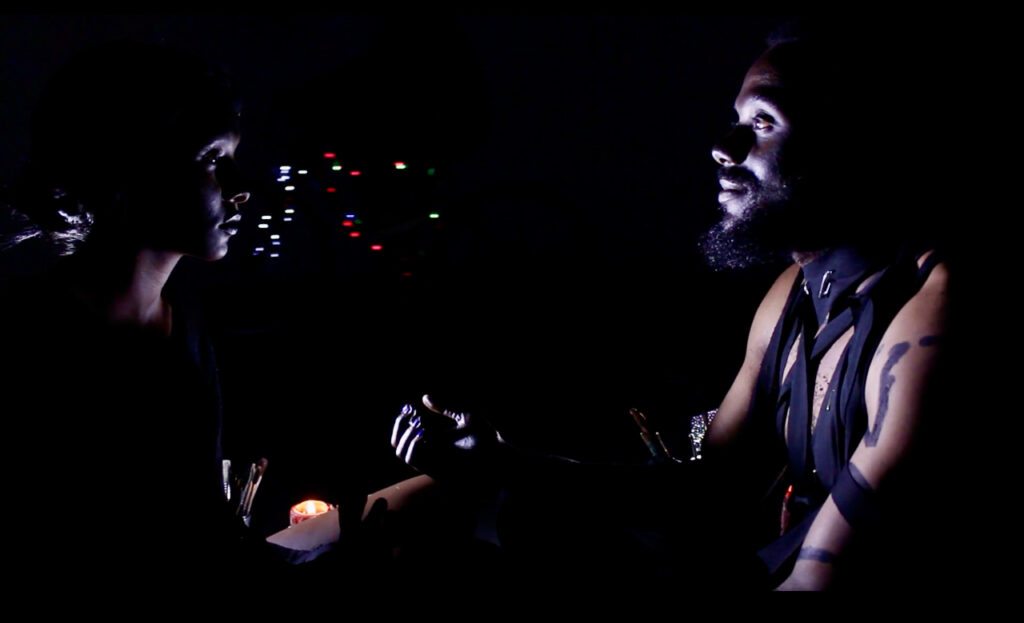
Amapiano is usually associated with energy and movement, but here it feels slowed down and introspective. What drew you to rework the genre in this way?
Amapiano is often experienced externally. Rhythm, movement, social energy.
I was interested in turning it inward.
Slowing it down reveals its structure. It becomes less about escape and more about confrontation.
Your collaboration with Roger Ballen feels less like illustration and more like tension. How did you approach building that relationship between sound and image?
Not as alignment, but as friction. This is a collision course emanating from our shared anomaly.
We weren’t trying to illustrate each other’s work. We were building a space where both languages could exist without resolving.
That tension is what gives the work its shape.
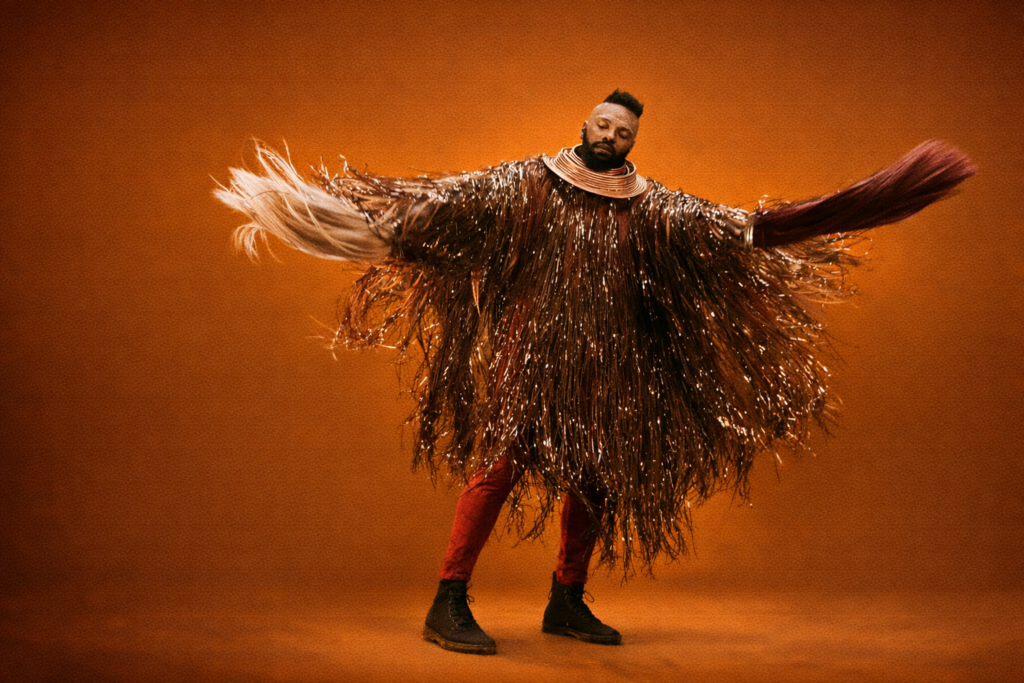
Roger’s spoken word doesn’t explain the work, it disrupts it. Why was that disruption important?
Because explanation stabilises meaning and robs the audience of the ability to think and feel for themselves. The work is not a problem to be solved.
His voice interrupts that process. It prevents the work from becoming legible too quickly. It forces the audience to stay inside the discomfort of not fully understanding. Words are more effective when used as signposts, not destinations.
The film engages with ritual and myth-making. What kinds of rituals or symbols were you most interested in exploring?
Rituals of control.
Rituals of identity construction.
The body under pressure.
The make-up we apply in the morning, in the form of thoughts happening to us involuntarily. Lack of awareness. Self-imposed deadlines. Confinement.
These are not symbolic in a decorative sense. They are functional within the environment of the work.
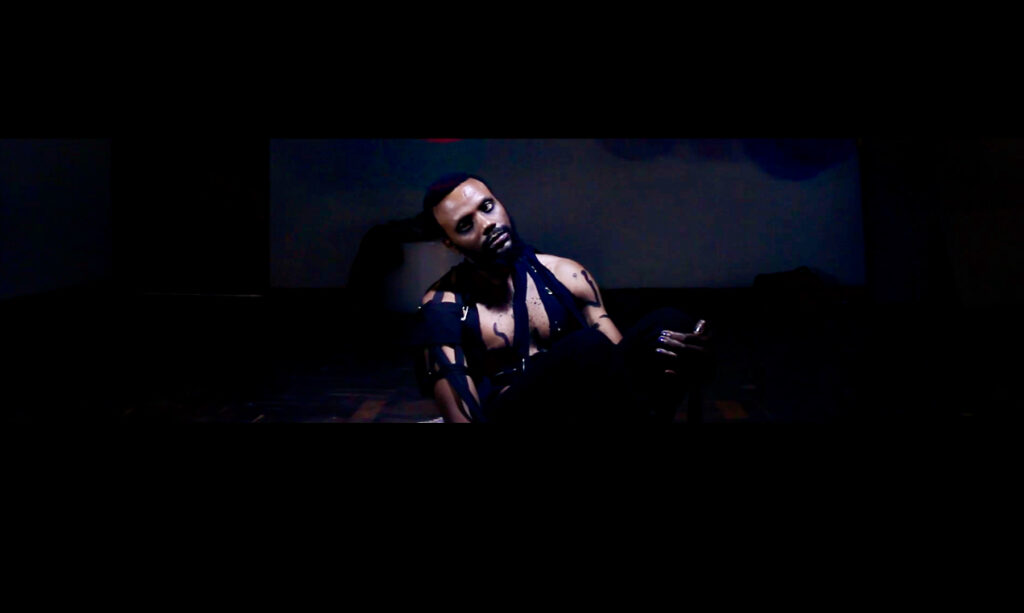
You position the film as a parallel narrative, not an extension. How should audiences approach watching it in relation to the music?
Not as hierarchy.
But as a mood of experience, rhythm, and psychological chamber.
The film is not illustrating the music, and the music is not supporting the film.
They operate in parallel, two systems observing the same condition from different angles.
This project forms part of your AFRO SUPERHERO universe. What does that world represent to you right now?
A framework for constructing contemporary myth.
Not fantasy, but a way of understanding how identity is shaped in modern African cities like Johannesburg.
It is an attempt to build something that holds cultural, psychological and cinematic weight over time.
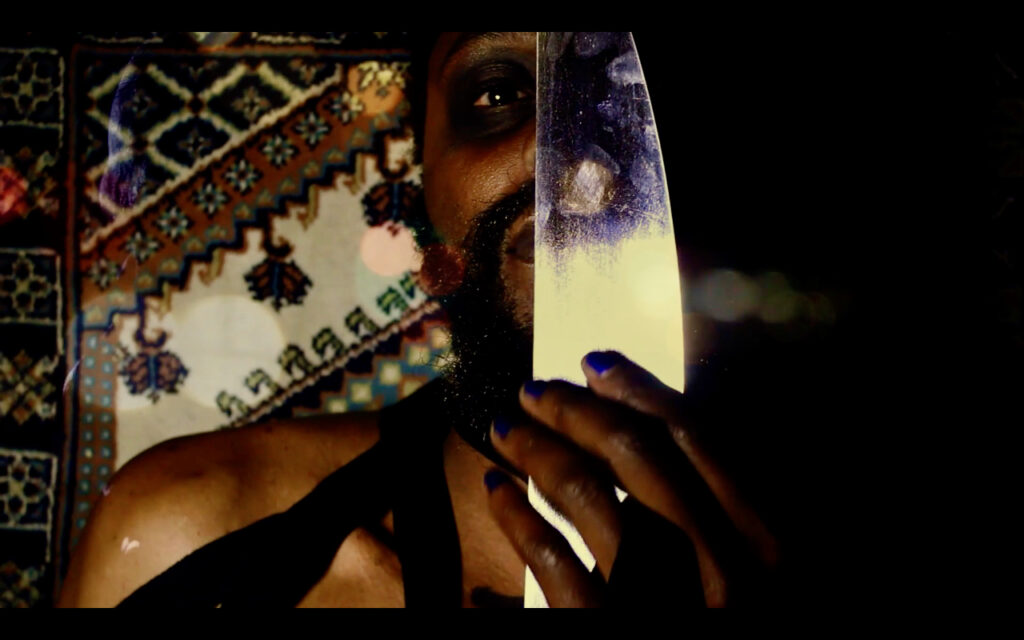
Johannesburg feels present in the work, even when it is abstract. How does the city shape your creative language?
Johannesburg is a canvas to my work and personally served as a rite of passage. I am inspired by this city built on grit, grind, hustle, tension, instability, reinvention and contradiction. We underestimate the impact Johannesburg has on our identities as a city with a foundation of gold. Literally.
That alchemy is embedded in the work.
Even when the imagery is abstract, the pressure of the city remains present.
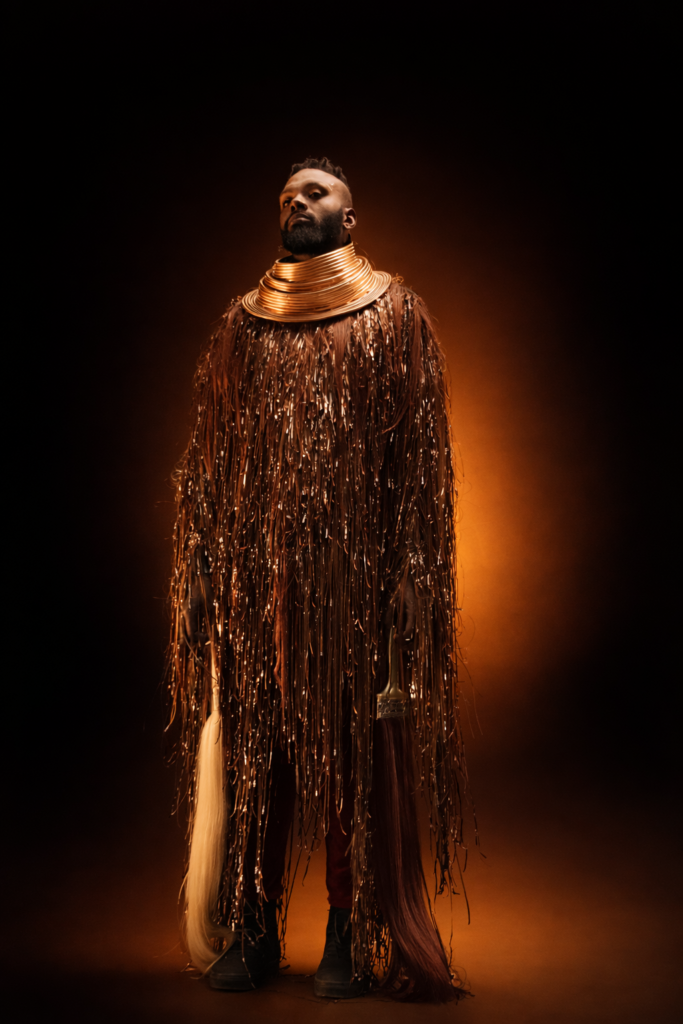
There is a sense of discomfort and unease throughout the project. What role does discomfort play in your practice?
Discomfort is a tool. It is a reminder that the world is not here to make us happy. Every now and then we ought to invite discomfort as a dress rehearsal for the next challenge.
Discomfort slows the viewer down.
It prevents passive consumption.
Without discomfort, the work becomes meaningless decoration.
What does “the purpose of art is revelation” mean to you in this moment?
Not revelation as clarity.
Revelation means that I intuitively cultivate an inner sense of unlearning, to invite moments of wonder through creative acts.
The work doesn’t provide answers. It reveals structures that are usually suppressed. How identity is formed, how meaning is imposed, how perception is controlled.
Watch the film
Purpose of Art is available to watch now.