




When I arrived at Nouveau in Rosebank on 11 June for the screening of SONDER, I knew very little about what I was about to witness beyond the film’s premise. What drew me in was the subject matter. A film exploring queerness within Johannesburg’s men’s hostels immediately sparked my curiosity.
Growing up in South Africa, and particularly being familiar with the ways traditional masculinity is often performed and protected within Black communities, I could not help but wonder how filmmaker Thuthuka Sibisi would navigate such a complex and often misunderstood subject. Men’s hostels are spaces that carry a heavy history. They are often associated with labour migration, violence, masculinity, and survival. They are not spaces many would immediately associate with tenderness, vulnerability, intimacy or queer love.
As the lights dimmed and the film began, I found myself entering a world that felt both familiar and entirely unknown.
SONDER takes viewers into the Denver Men’s Hostel in Johannesburg, one of many hostels originally built during apartheid to house Black migrant workers who were separated from their families and communities in service of a brutal economic system. Decades after democracy, many of these structures remain standing, carrying the weight of histories that continue to shape the lives of those who inhabit them.
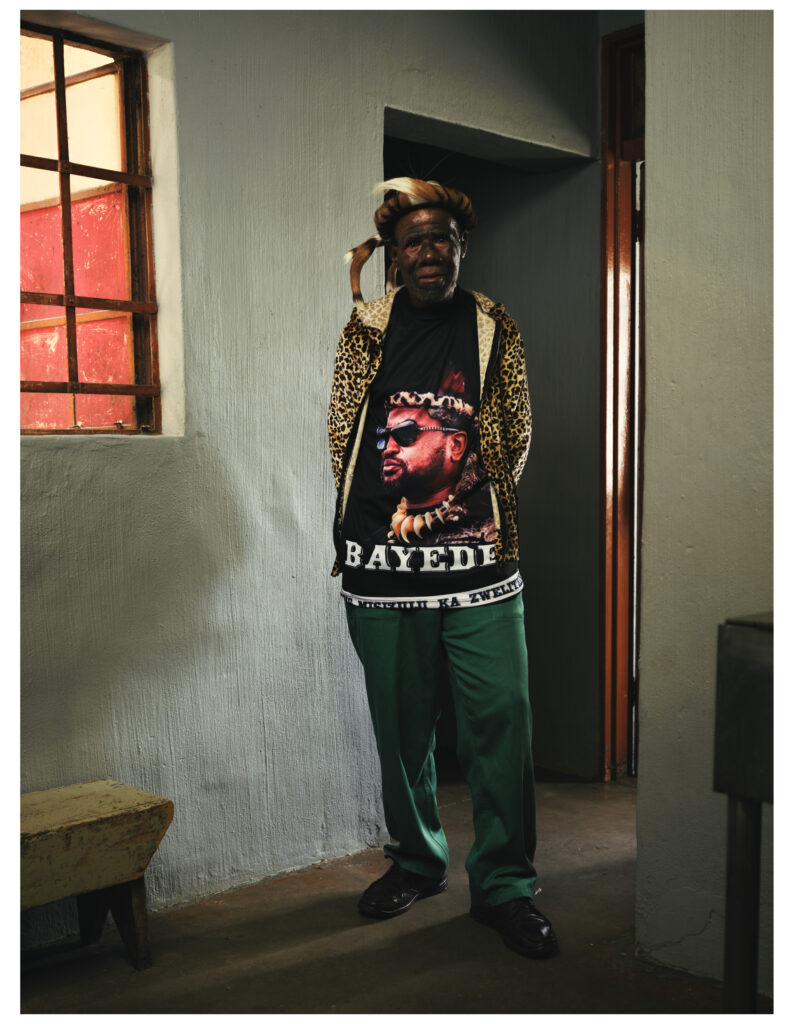
Yet Sibisi’s gaze is not fixed solely on the architecture of apartheid or the physical decay of these spaces. Instead, he turns his attention to the people who move through them every day. The men who love, fight, grieve, desire and survive within walls that were never designed with their humanity in mind.
What struck me most about SONDER was the care with which it was told.
This could easily have been a film that sensationalised its subject matter. It could have focused solely on the violence often associated with hostels or reduced queer experiences to trauma. Instead, Sibisi approaches his subjects with softness. There is a deep sense of respect embedded in every frame. Through movement, conversation, silence and touch, the film invites viewers to sit with the emotional realities of men whose stories are rarely centred.
Throughout the screening, I found myself returning to the same thought: how remarkable it is that tenderness continues to exist in spaces designed to suppress it.
There are moments of physical intimacy throughout the film that feel both ordinary and revolutionary. Men lean on one another. They embrace. They share stories. They reveal fears and desires often hidden beneath the expectations of masculinity. These moments are not presented as spectacle. They are treated as human.
One interviewee speaks candidly about the realities of being queer within hostel culture. At one point, an elder explains that if a man was perceived as gay, he would often be chased away because the hostel was seen as a place for men. The statement lands heavily because it reflects a reality many queer South Africans continue to navigate. Yet SONDER does not stop there. It pushes beyond exclusion and asks a deeper question. What happens when queer people refuse to disappear? What happens when they continue to exist, love and build community in places that insist there is no room for them?
The answer unfolds quietly throughout the film.
Queerness emerges not as an exception but as a reality. It exists in the corridors, in conversations, in memories and in relationships. It exists despite social expectations. It exists despite hostility. It exists because, as one audience member reflected during the post-screening discussion, queer people exist everywhere.
That comment stayed with me long after the credits rolled.
The attendee, who identified as queer, described the film as an awakening. Watching SONDER reminded him that queer existence cannot be confined or erased. It survives through cracks in systems that attempt to contain it. It appears in places where society least expects it. Even within the walls of a men’s hostel.
Perhaps that is what makes SONDER so powerful.
The film does not attempt to present easy answers. Instead, it reveals contradictions. It shows violence alongside affection. Brotherhood alongside exclusion. Strength alongside vulnerability. It presents masculinity not as a fixed identity but as something constantly negotiated by the people living it.
By the end of the screening, I found myself thinking less about queerness as a disruption to traditional spaces and more about how limited our understanding of those spaces often is. The hostel, as portrayed in SONDER, becomes more than a symbol of apartheid’s legacy. It becomes a site of possibility. A place where people continue to imagine themselves beyond the roles assigned to them.

Through his careful and deeply compassionate approach, Sibisi reminds us that even within structures built to fracture communities, people continue to create connection. They continue to seek love. They continue to dream. And perhaps most importantly, they continue to find one another.
SONDER is not simply a film about hostels or queer identity. It is a meditation on survival. It is a story about the emotional worlds that exist beneath the surface of everyday life. It asks us to look closer, listen harder and recognise the humanity that has always been there.
In doing so, it leaves viewers with something rare: a sense of hope.