


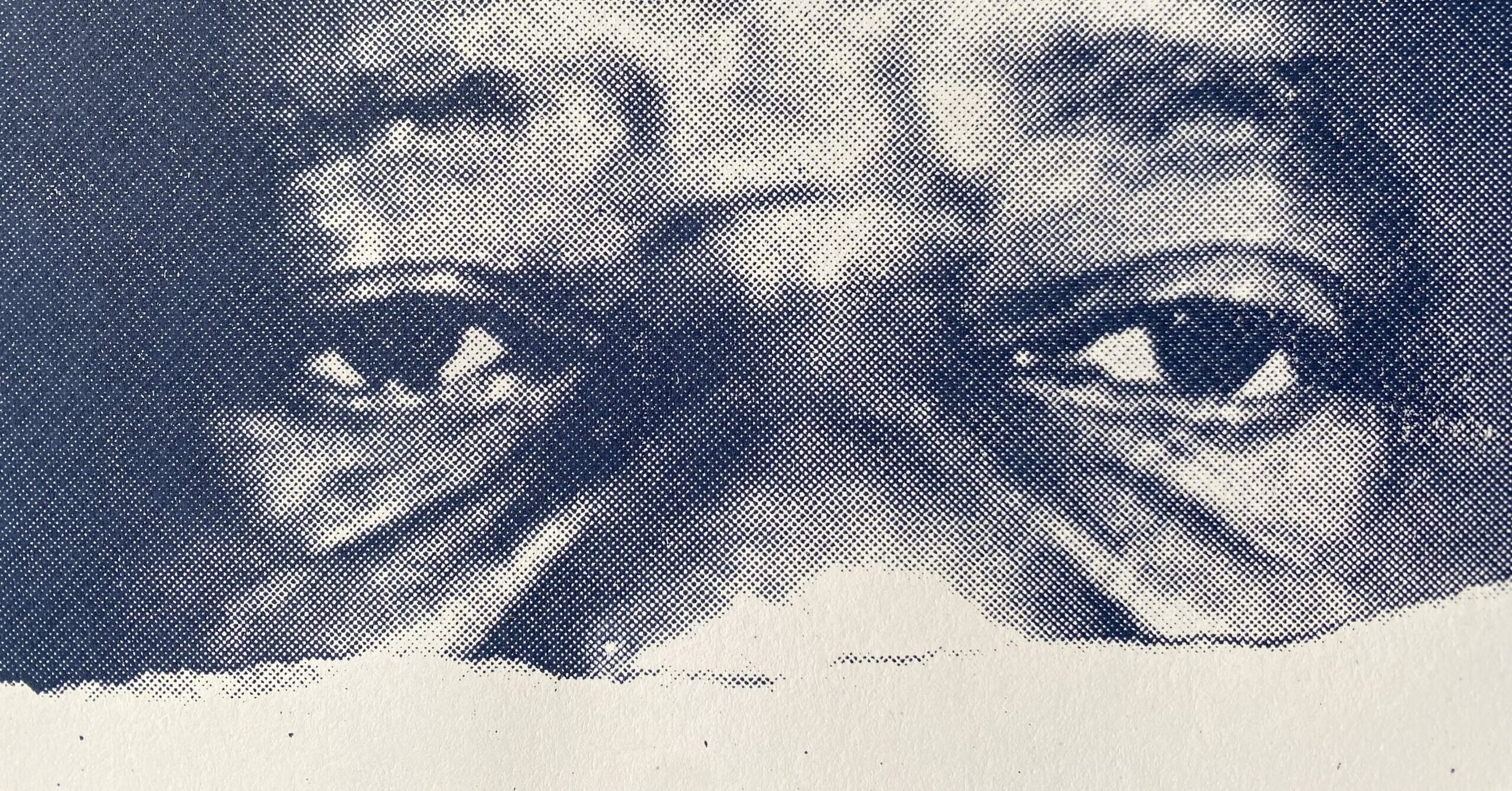

Minenkulu Ngoyi turned maize meal packaging into a mirror held up to power and the reflection isn’t pretty. We sat down with Ngoyi to talk about the work, the scandal, and why silkscreen printing might be one of the most political choices an artist can make.
Nowadays, political art is a bit of a rarity. Not because artists don’t care, but because putting your name on something that directly takes aim at the people in power takes a particular kind of nerve. It’s one thing to make work that suggests something. It’s another to stare a scandal in the face and make it the whole point.
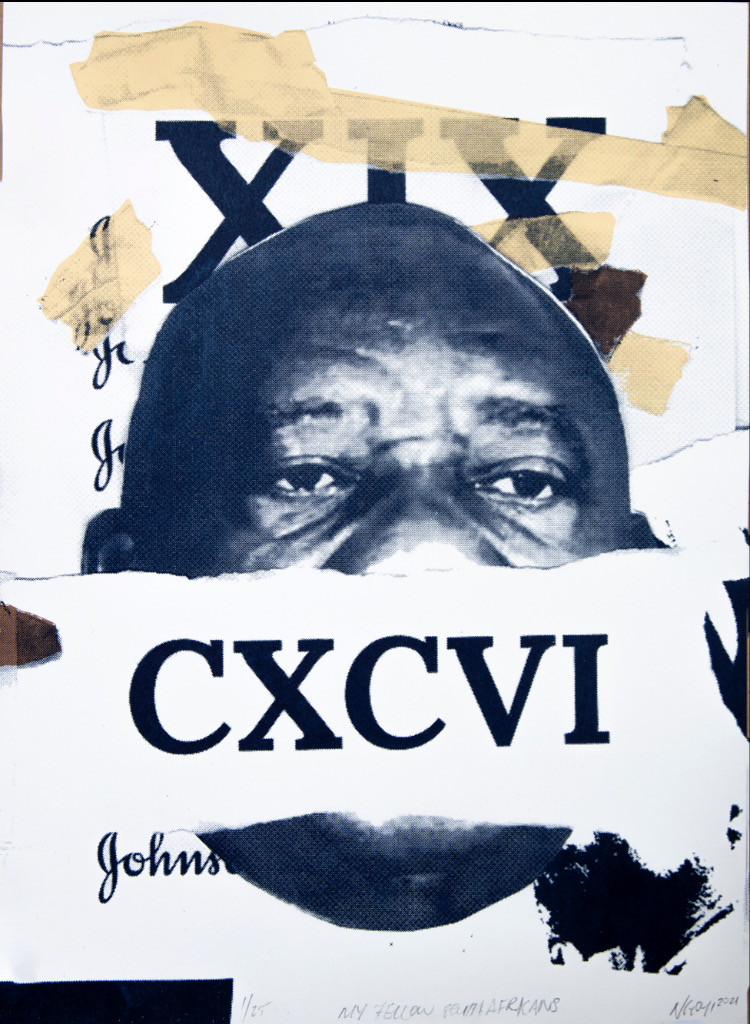
Johannesburg-based printmaker and multidisciplinary artist Minenkulu Ngoyi did exactly that. His latest body of work, PHALA PHALA, takes on one of the most talked-about political scandals in recent weeks — the Phala Phala farm scandal involving President Cyril Ramaphosa — and turns it into something you can hang on a wall. Or paste on a street corner. That’s the beauty of printmaking.
Ngoyi borrowed the visual language of something you’d find in almost every South African kitchen, the Impala maize meal brand, and used it to ask some uncomfortable questions about power, trust, and what “liberation” actually looks like in 2026. One of the work’s central phrases, “A-looter continues”, twists the liberation slogan “Aluta continua” into a reflection on political disappointment in post-apartheid South Africa.
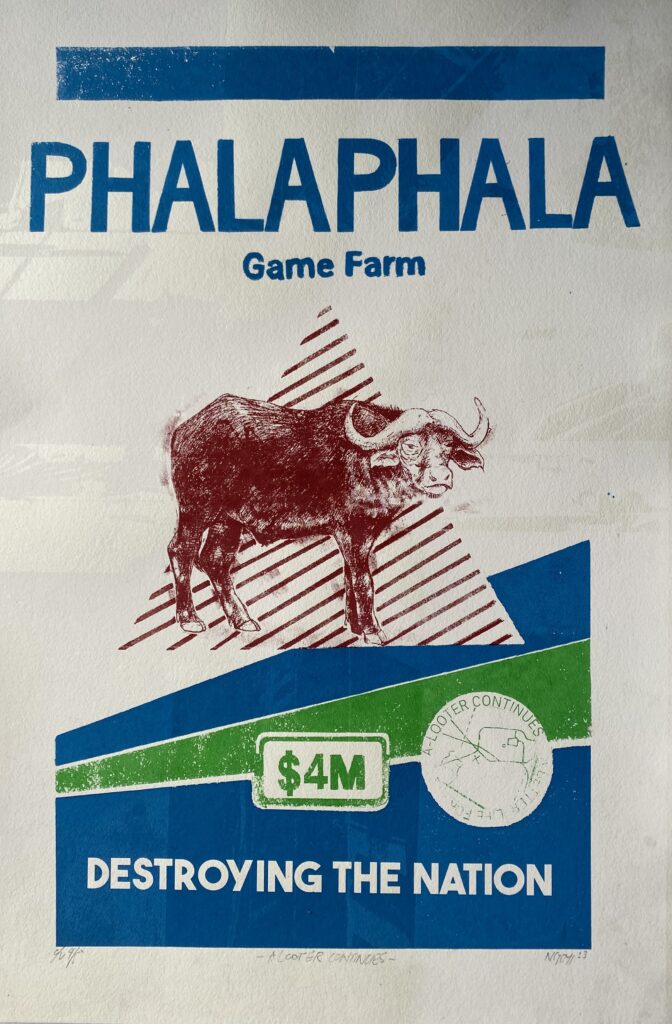
The series also taps into the long history of political printmaking and protest art in the country. Through silkscreen, a medium tied to activism and mass communication, Ngoyi explores how scandals today are consumed less as isolated events and more as ongoing media performances shaped by memes, repetition and social media cycles.
For Ngoyi, it’s about art as a vehicle for making people see what they’ve been trained not to notice. We spoke to him about collective memory, political spectacle and why the Phala Phala scandal became the starting point for this body of work.
What was the catalyst or moment that pushed you to make PHALA PHALA, especially knowing how politically charged the subject matter is?
The Phala Phala scandal stayed in the public conversation for a long time, and I became interested in how it evolved beyond politics into something visual and symbolic within South African culture. I was less interested in documenting the event itself and more interested in how scandals become part of collective memory through headlines, memes, conversations, and media repetition. As an artist working through printmaking, I saw it as an opportunity to reflect on power, spectacle, and public trust in contemporary South Africa.
Your work borrows from the visual language of the Impala maize meal brand. What drew you to using familiar advertising and packaging imagery to tell this story?
I’m interested in how branding shapes memory and identity. The Impala maize meal packaging is something many South Africans immediately recognise, so it already carries emotional and historical associations linked to nourishment, empowerment, and everyday life. By appropriating that visual language, I wanted to create tension between familiarity and discomfort. The work uses something associated with national growth and transforms it into a commentary on political power, corruption, and spectacle.
The phrase “A-looter continues” reworks a well-known liberation slogan. What conversations were you hoping to open up through that wordplay?
The phrase reflects on the gap between the ideals of liberation and the realities many South Africans experience today. “Aluta continua” historically carried hope, resistance, and collective struggle, but by shifting it to “A-looter continues,” I wanted to question what liberation means within a society still dealing with inequality, corruption, and political disappointment. It’s both satirical and critical, but it also speaks to public frustration and disillusionment.
Is this your first real engagement with overtly political themes in your work, and how does this series connect to or differ from your previous practice?
Politics has always existed within my practice, even in works that may appear spiritual or cultural on the surface. My earlier works often explored themes of identity, ritual, spirituality, and colonial influence within Black South African experiences. With PHALA PHALA, the political references are more direct and immediate, but the core concerns remain similar: power, systems of belief, public symbolism, and how history is visually constructed and remembered. ‘PHALA PHALA’ forms part of an ongoing socio-political series of prints I have been developing over time, including works such as “ASIWI,” inspired by IWISA maize meal, and “BLANKES,” inspired by NYALA maize meal. Across these works, I use familiar commercial branding and consumer imagery as a way to examine systems of power, race, politics, identity, and collective memory within contemporary South Africa.
“Political events quickly become memes, slogans, visuals, and public performances online. Sometimes scandals feel less like isolated events and more like ongoing entertainment cycles.”
The work speaks a lot about media spectacle and collective memory. Do you think South Africans process political scandals differently today because of social media and constant news cycles?
Definitely. Social media has changed the speed at which scandals circulate and how people interact with them. Political events quickly become memes, slogans, visuals, and public performances online. Sometimes scandals feel less like isolated events and more like ongoing entertainment cycles. I think this changes how collective memory is formed because people remember certain images, phrases, or moments more than the actual details. That visual repetition became important to the work.
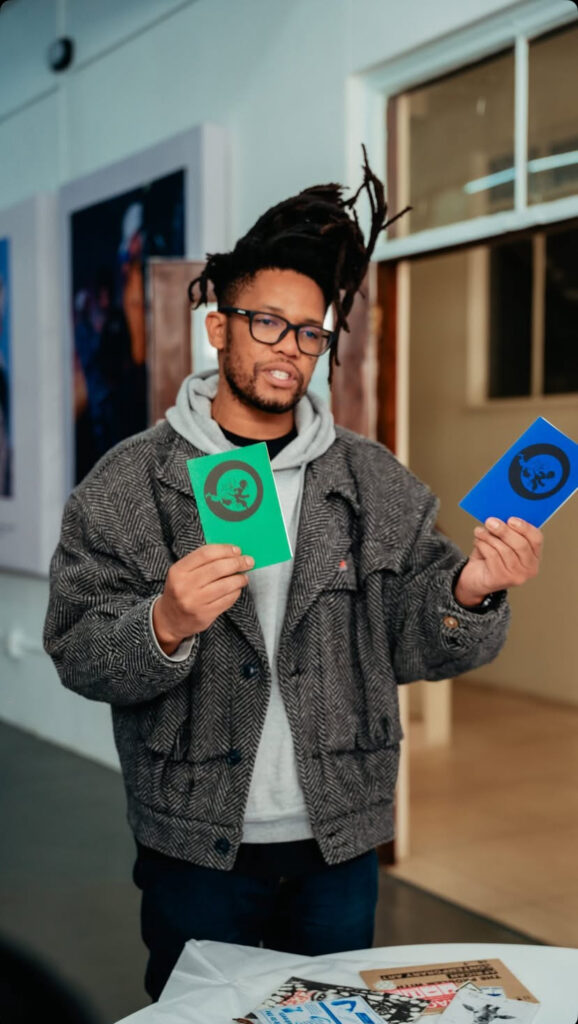
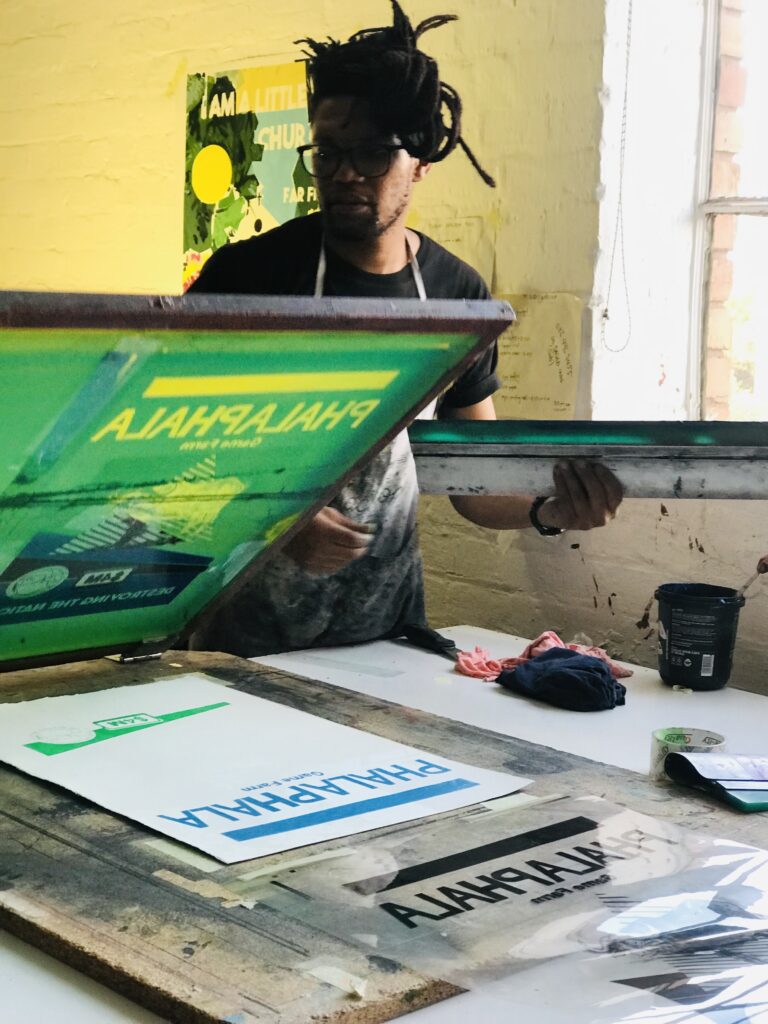
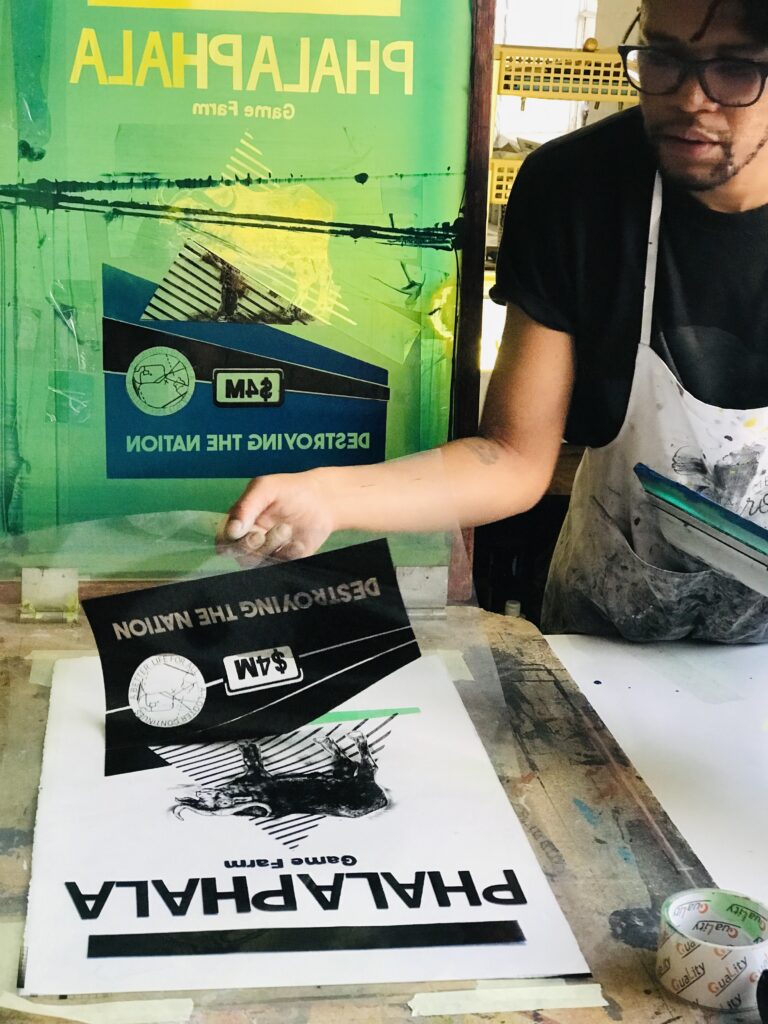
Silkscreen printing has a long history tied to protest posters and political communication. How important was the medium itself in shaping the message of this work?
The medium is central to this work. Silkscreen printmaking carries a strong history of activism, protest culture, and public communication, particularly in South Africa. The legacy of collectives such as the Medu Art Ensemble and the OSPAAAL poster movement has had a significant influence on my printmaking practice and its messaging. I wanted the work to feel accessible, bold, and reproducible — something that could exist both inside and outside the gallery space. Printmaking allows for layering, repetition, and controlled imperfections, which reflects the instability often found in political narratives and how they are constructed, circulated, and remembered.
When people leave the exhibition or spend time with PHALA PHALA, what questions or reflections do you hope stay with them afterwards?
I hope the work encourages people to think about how political power is constructed visually and how scandals become part of our collective culture. I also want viewers to reflect on the relationship between media, leadership, memory, and public trust in South Africa today. More than providing answers, the work asks viewers to question what happens when political spectacle becomes normalised within everyday life.
ABOUT THE ARTIST: MINENKULU NGOYI
Born 1987, Ngoyi is a Johannesburg-based multidisciplinary artist and printmaker whose work explores identity, spirituality, resistance, and collective memory through traditional and experimental printmaking. He is a co-founder of Alphabet Zoo, a self-publishing zine collective focused on collaboration and visual activism. His practice is shaped by lived experience, indigenous belief systems, and postcolonial critique and his commitment to printmaking as a genuinely public art form.