


Guest columnist Tandekile Mkize explores how community, culture and belonging are reshaping the future of South African fashion, arguing that Ubuntu offers more than a philosophy, it could become the industry’s next design code.
When Between 10and5 tapped me on the shoulder to contribute to The Art of Style series, powered by G-Star, I was asked to reflect on fashion’s growing shift from products towards experiences. Increasingly, international fashion brands are creating spaces where fashion intersects with music, art, food, hospitality and community, recognising that people are looking for deeper and more meaningful ways to connect.
It was a timely brief, arriving as I find myself thinking about many of these questions already. Recently, I’ve been working alongside two business partners on a new venture that is challenging us to think about what it means to create a fashion retail experience that places people and culture at the centre. It’s still early days, so I’ll save the details for another time. But the process has left us asking much bigger questions.
There is a difference between talking about community and cultivating it. Fashion has become remarkably fluent in the language of connection. We speak of collaboration, belonging, creative ecosystems and cultural exchange. Across the industry, there is a growing recognition that people are looking for more than beautiful garments and products. They are looking for places where they can gather and feel part of something bigger.
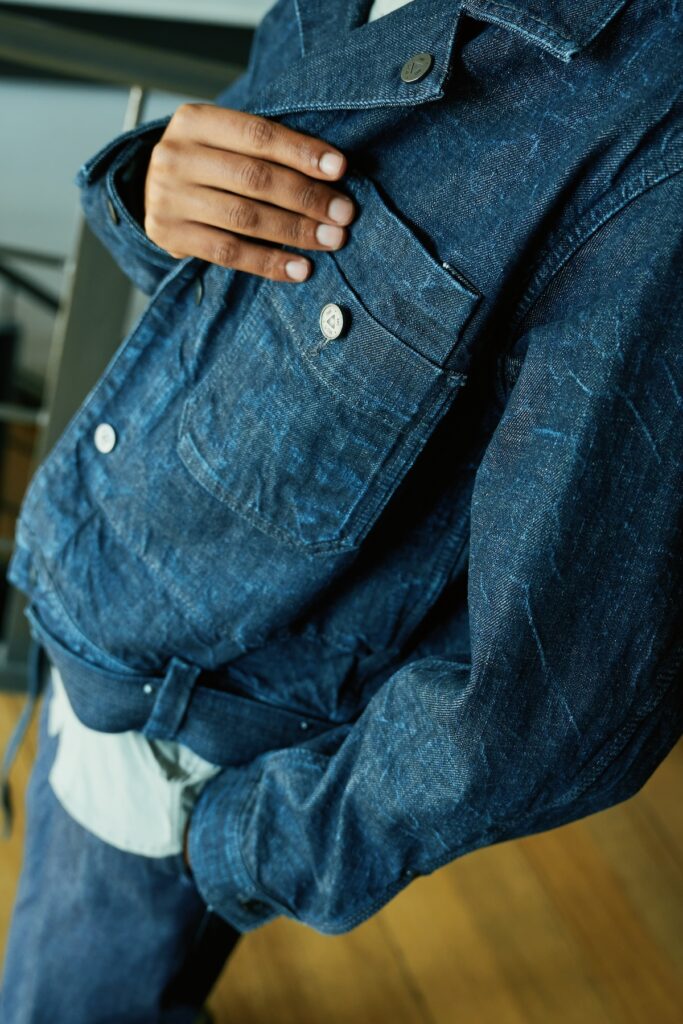
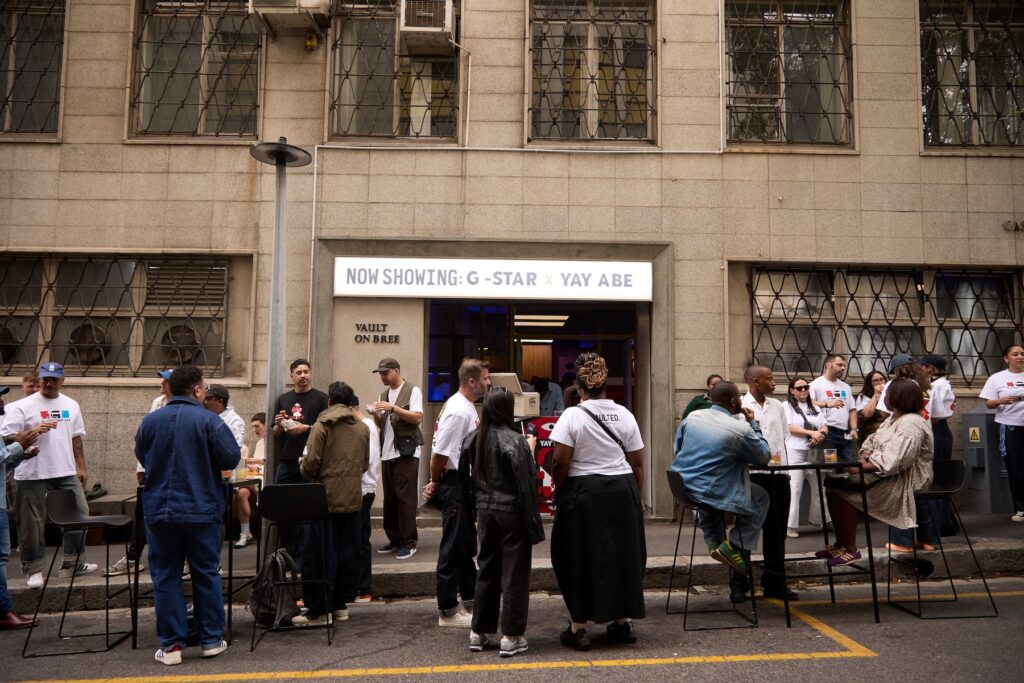
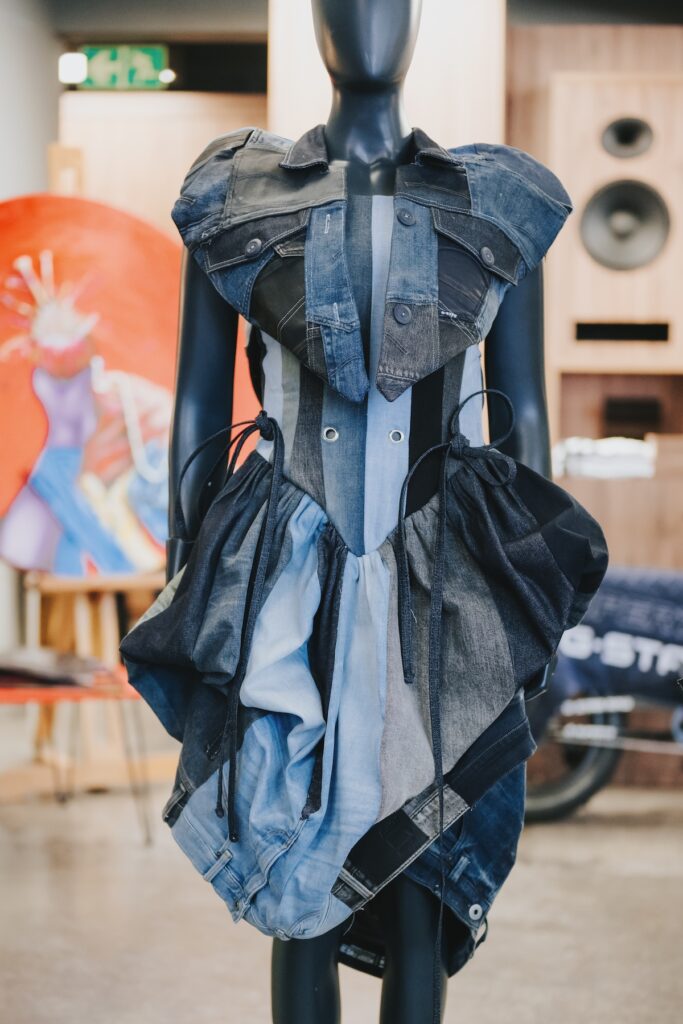
This shift is one that G-Star has embraced. The brand is increasingly positioning fashion as a medium of cultural exchange. Using collaborations with South African creatives to place the global denim brand within a local cultural context. From its limited-edition collaboration with Cape Town-based artist Russel Abrahams, aka Yay Abe to Fuata Moyo’s (Re)Love exhibition, these moments have been catalysts for conversations and sparked ideas by bringing together artists, designers, cultural practitioners and fashion enthusiasts. Their significance lies beyond the collaborations themselves, but in how fashion’s value is shaped by the relationships it cultivates as much as the products it creates.
Lately I’ve been wondering what it would look like if community were not a campaign and buzzword but a design practice. As I was thinking this through, I found myself laughing at the thought of a quote by the internet’s most unlikely philosopher, Tokyo Toni, “What happens when the talk isn’t cheap and it is what it is?”
TikTok will be the death of me, but the reference rings true while reflecting on the future of South African fashion. Beneath the humour lies a surprisingly pertinent provocation. What happens when we move beyond intention and begin designing for the values we so readily proclaim?
Perhaps that’s the question South African fashion should be asking itself: not how we talk about community, but how we design for it.
We already have a language for thinking about relationships and reciprocity. We call it Ubuntu. Often reduced to a familiar proverb, Ubuntu is perhaps more useful when understood as a way of practising rather than merely describing community. It invites us to ask different questions that reassess how fashion is produced and what kinds of relationships it makes possible.
Seen this way, the global shift towards experiential fashion becomes more than a trend report. It’s an opportunity to think differently about the role fashion can play in our social and cultural lives. South African fashion has an opportunity to contribute something of its own – a model in which community is intentionally designed and sustained.
The encouraging thing is that we don’t have to imagine what this looks like. Across the country designers and creative practitioners are already pointing us in that direction.
Take Mamakashaka in Braamfontein. It isn’t necessarily a fashion space, yet it offers one of the most compelling lessons for the fashion industry. What I think Nandi Dlepu, founder of Mamakashaka understands is that culture is built through repeated acts of gathering. One week, the space might host a fashion pop-up introducing audiences to emerging designers; the next, a lecture or conversation led by cultural practitioners unpacking questions of identity, memory or creative practice. On another occasion, it becomes a dance floor, where a DJ set lingers long into the night and strangers leave as friends or collaborators. People return because they trust that something meaningful might happen when the right people share the same space.
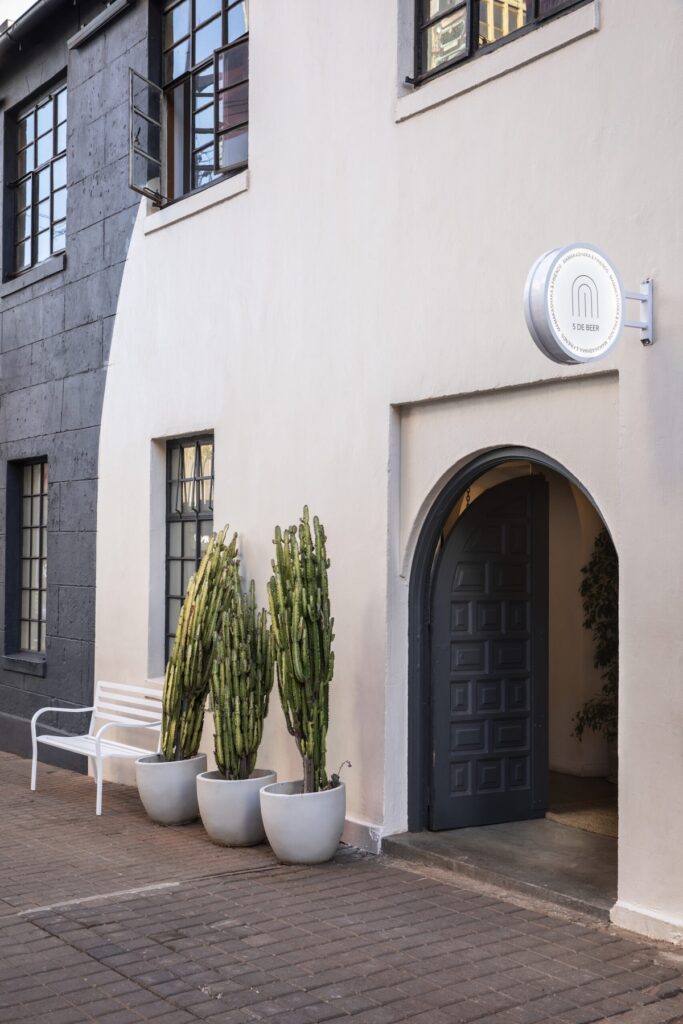
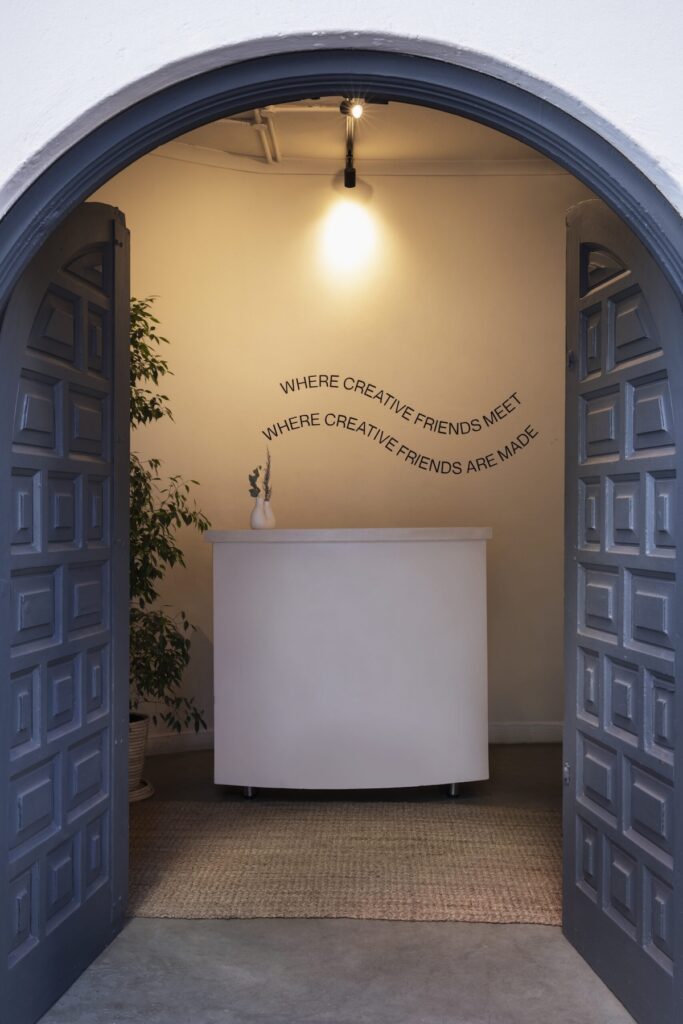
Fashion has much to learn from places like this. I’m not saying every brand should become a cultural venue, but brands can think more intentionally about creating the conditions for connection – where discovery happens organically and belonging is cultivated over time rather than promised through a campaign.
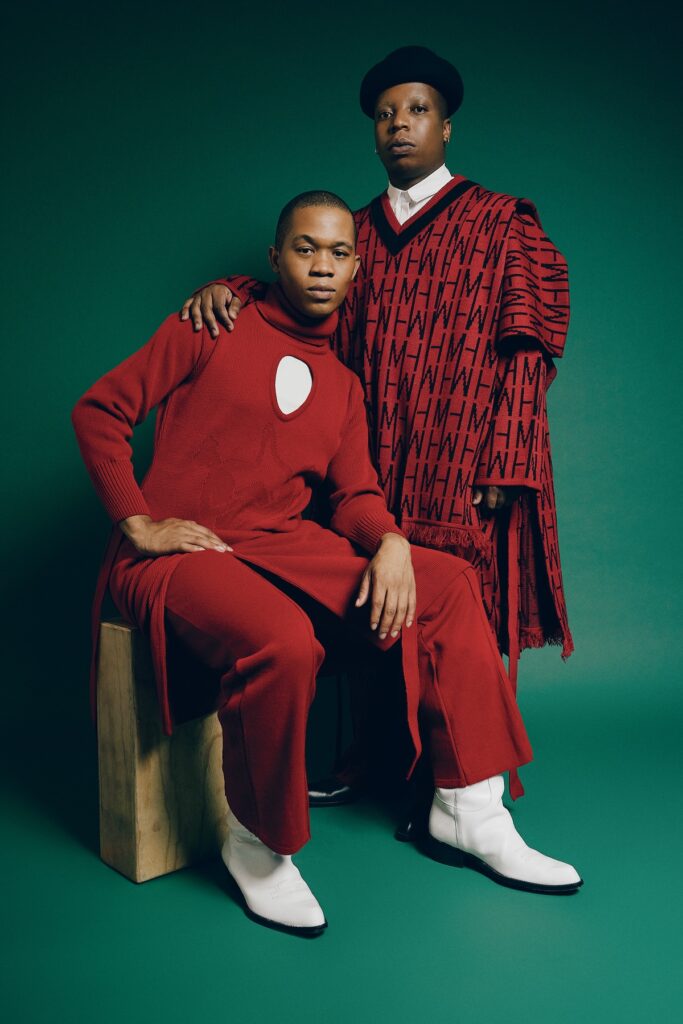
Thebe Magugu and Wanda Lephoto’s Everyday Resistance collaboration offers another expression of this practice. For me, it remains one of the most significant collaborations we’ve seen in South African fashion in recent years. In an industry that often rewards singular creative vision, Everyday Resistance offers a different proposition – solidarity can be a creative force.
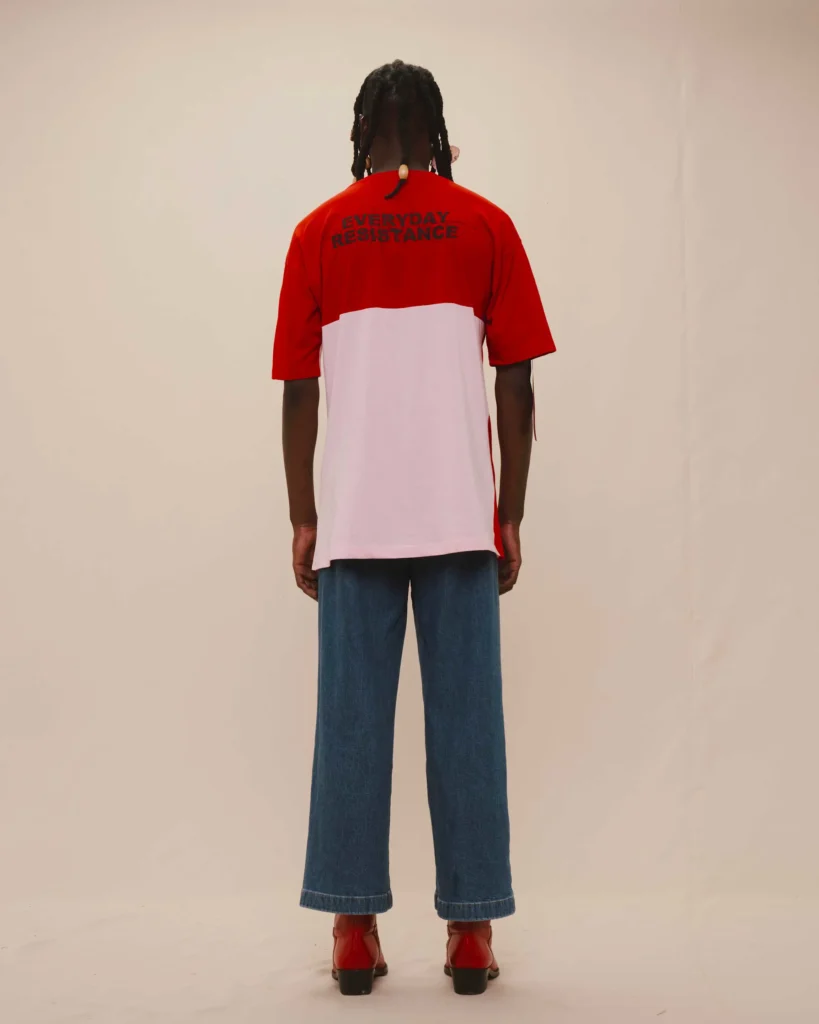
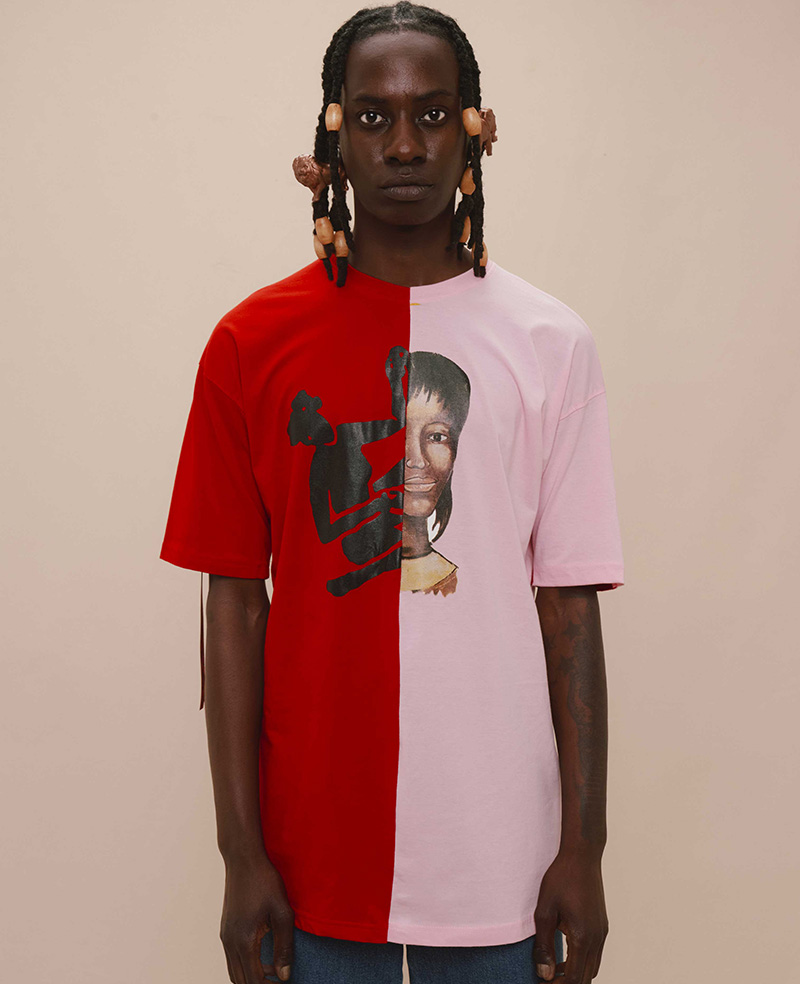
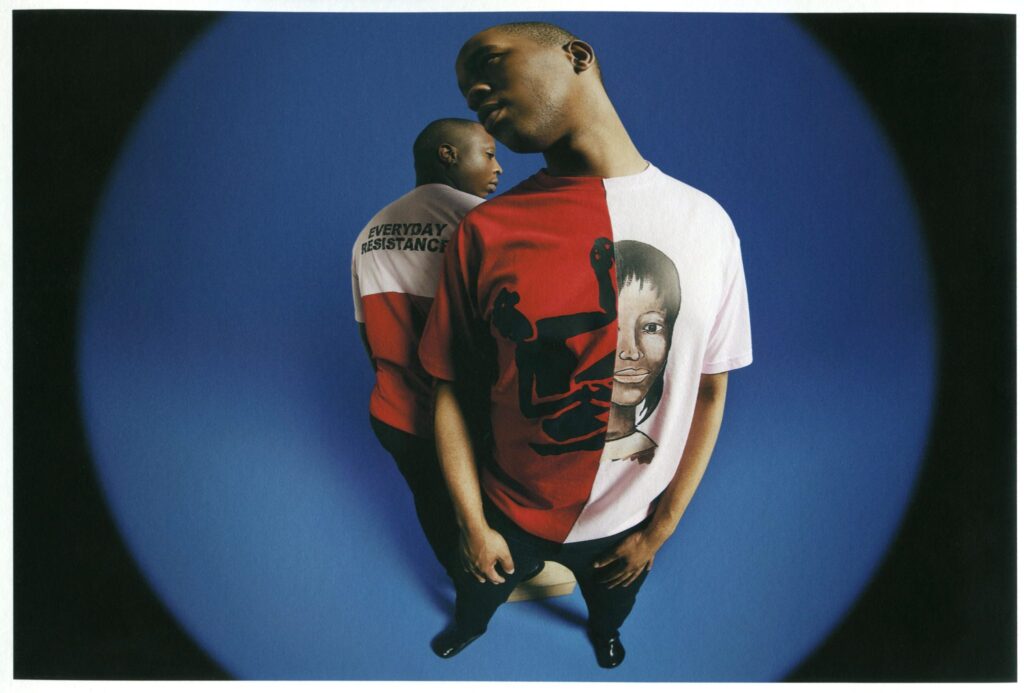
The collaboration demonstrates that fashion becomes richer when it embraces dialogue. Reflecting on the project, Wanda Lephoto remarked, “This collaboration means so much to me. Besides getting to collaborate with Thebe, who I love, respect and inspired by, it means so much that we get to collaborate on freedom, something that means so much to the both of us.”
If community is a design practice, one of the ways it manifests might be like this – how designers choose to show up for one another. Everyday Resistance is a shining example that solidarity amongst designers is not only possible, but also essential because meaningful cultural work is created not in isolation, but in relation to each other.
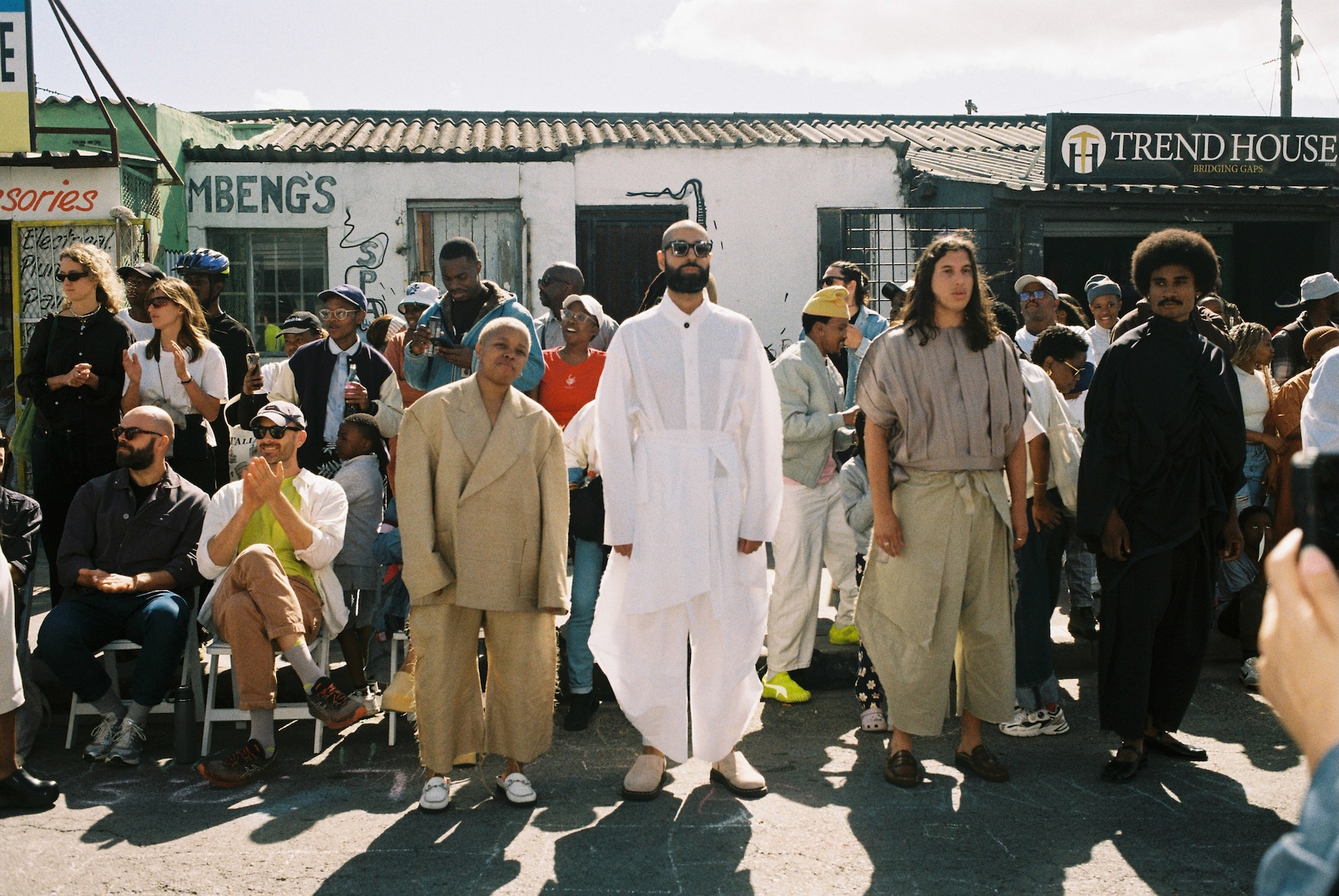
Designer Onesimo Bam asks a different question altogether: Who gets to experience fashion? His work consistently dissolves the boundaries that have separated fashion from everyday public life creating encounters that feel accessible and alive. From the streets of Langa and Bree Street to the monumental St Georges Cathedral, his work reassures us that fashion doesn’t lose its value when it leaves exclusive spaces. If anything, it gains cultural relevance because it becomes part of everyday life rather than something observed from a distance.
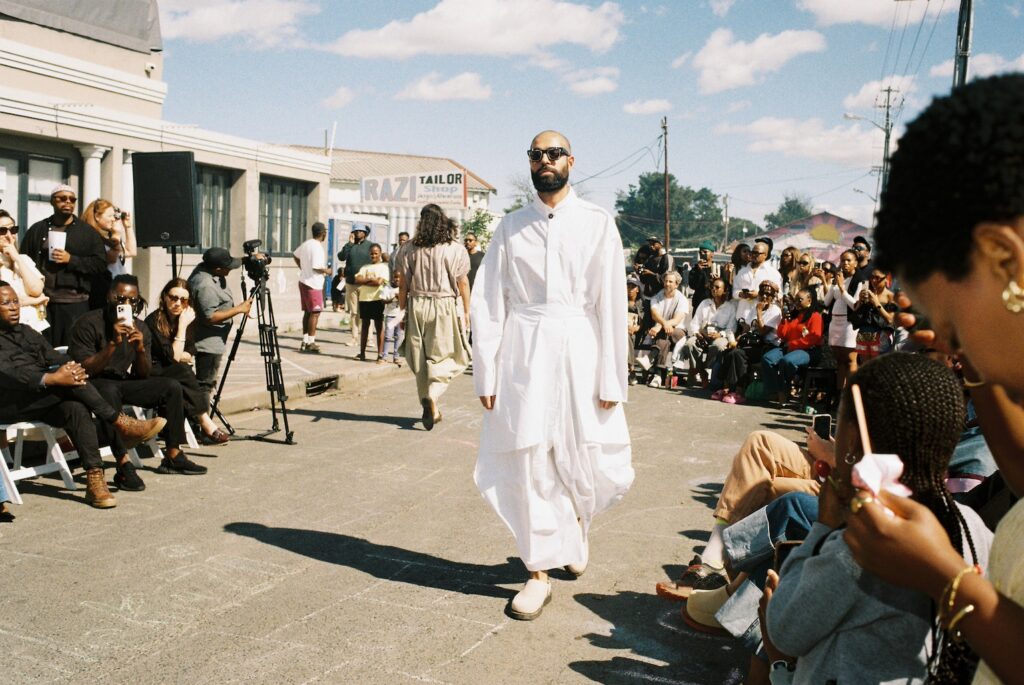
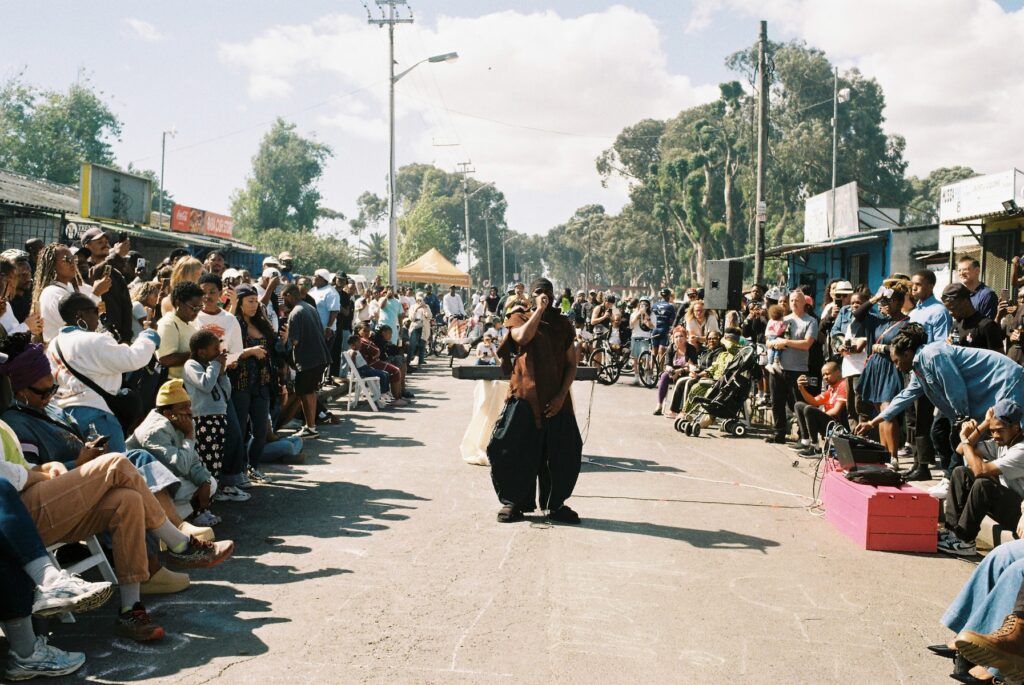
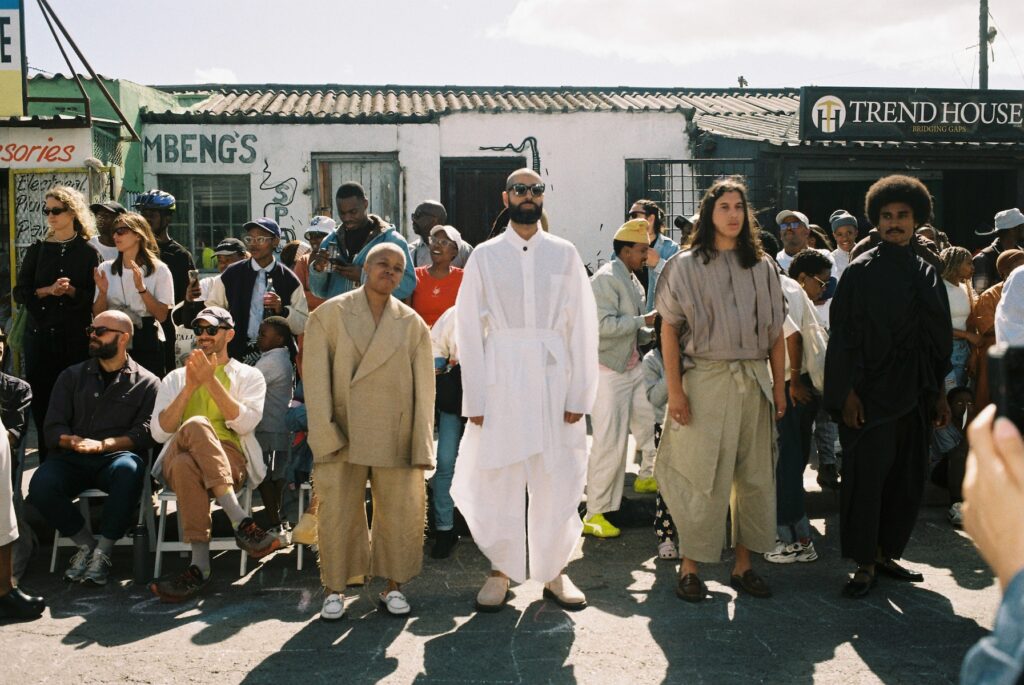
These examples are different in form and intention, yet they share a common instinct: bringing people together around shared values and cultural participation. They remind me that fashion is at its most meaningful when it creates the conditions for people to not only consume culture but actively contribute to it.
What interests me now is what might happen if we stop treating these as isolated examples of good practice and begin seeing them as signals of something larger. What if designing for community became more than an ethos embraced by individual designers or creative spaces? What if Ubuntu is embraced as one of the guiding codes through which we imagine the future of South African fashion?
Perhaps that is the next frontier – cultivating a fashion ecosystem intentionally designed around care and participation.
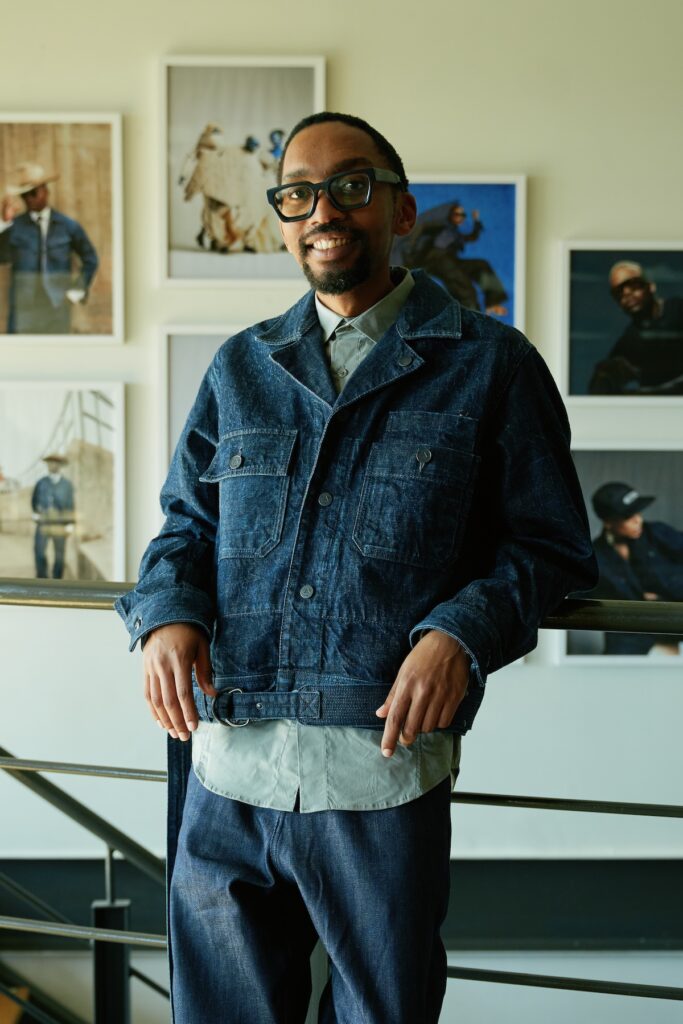
This story was written by contributor: Tandekile Mkize, a Cape Town-based fashion editor and stylist. His work blends contemporary fashion and cultural elements, creating worlds that emphasize the diversity and richness of African fashion. His approach not only highlights the aesthetic aspects of fashion but also integrates sustainable practices and cultural storytelling. Through his roles, he aims to amplify the stories of emerging African designers and visionaries, showcasing the vibrant and dynamic nature of African fashion and bringing it to a broader audience while promoting sustainability and cultural appreciation.