


Melany Ismail’s exhibition Die Bruin Mense was only supposed to run for a month. Now in its third at Youngblood Gallery in Cape Town, the response says everything about why this work matters. We caught up with the documentary photographer to talk identity, intimacy and what it really means to be seen.
There is a particular kind of seeing that only comes from the inside. For Cape Town-based documentary photographer and filmmaker Melany Ismail, that insider perspective is not just a creative choice but the entire point.
Her project Die Bruin Mense is an ongoing visual document of coloured life across Cape Town and the Western Cape. Melany describes her intent plainly: “I use my lens to challenge societal stereotypes of coloured people and give an authentic portrayal, celebrating our resilience, culture and humanity.”
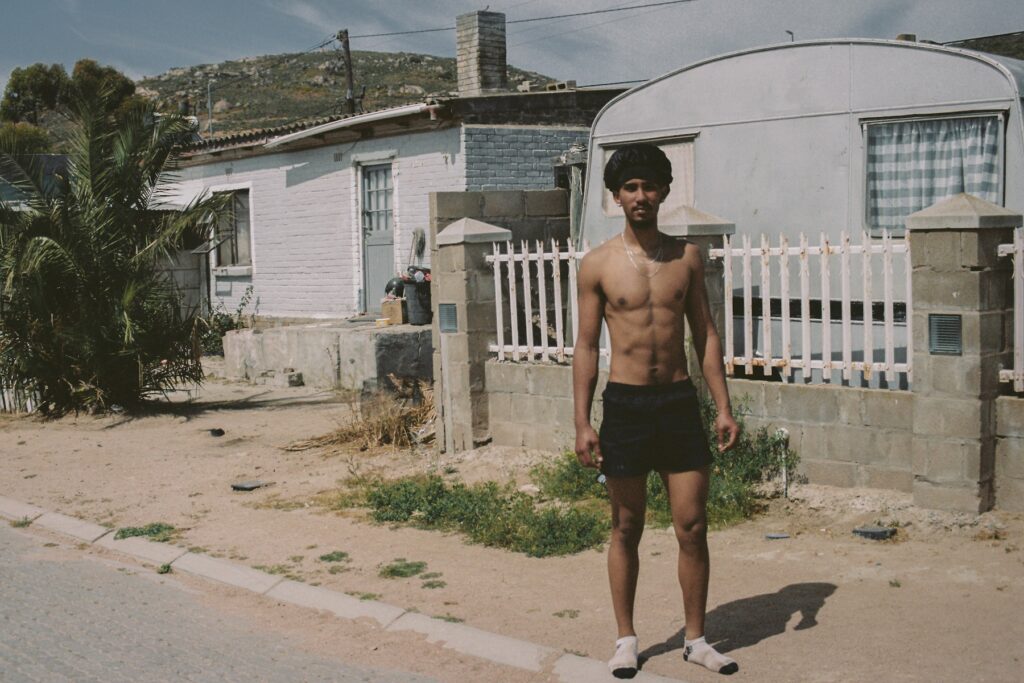
In a media landscape that has long documented coloured communities from the outside in, Melany’s images do something different. In a quiet and powerful way, her work holds up a mirror and creates a body of work “made by one of us, for us”.
Born and raised in Cape Town, she photographs exclusively within her own community. Her current exhibition at Youngblood Gallery has been extended into its third month, a testament to how deeply the work is resonating with audiences across cultures.
In a country where coloured stories remain largely underrepresented in photography, Melany is changing that quietly and deliberately, one honest image at a time.
We sat down with her to talk about identity, intimacy, and why representation means nothing without recognition.
Can you tell us a bit about yourself and how you first got into photography?
I am a documentary photographer and filmmaker. Working in advertising I really value the level of production and craft in the industry but I wanted to tell stories that felt more personal and meaningful to me, honestly exclusively about coloured people. A few years ago I just casually started documenting friends and family, and I realised that my approach to photography is very influenced by my filmmaking background and the images I captured said what I could in a film and that motivated me to continue.
How has growing up in Cape Town shaped the way you photograph people and spaces?
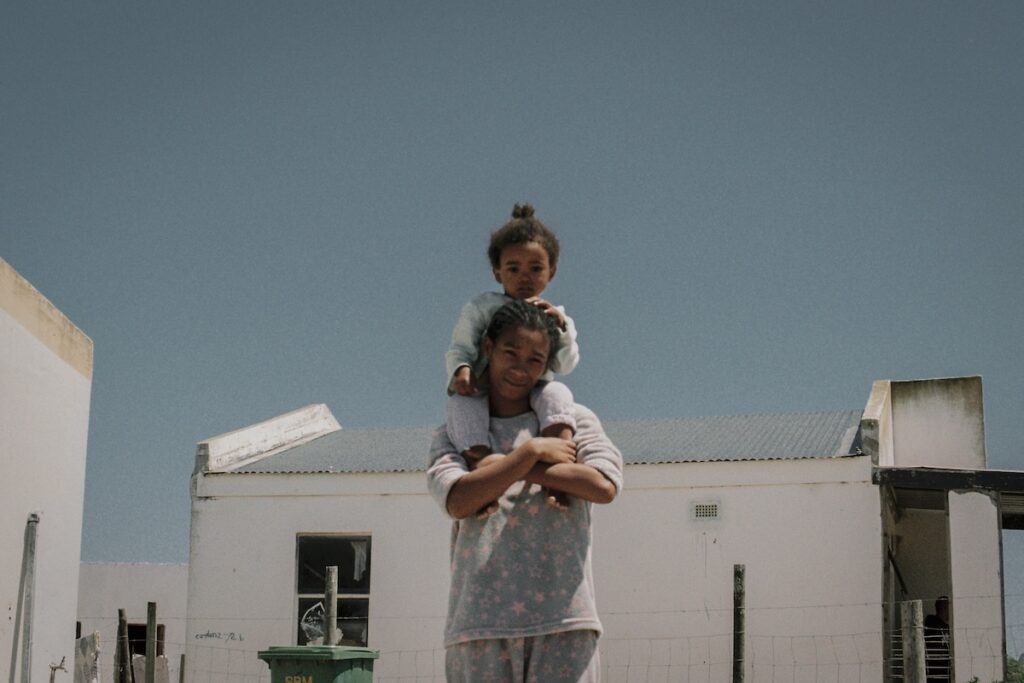
Growing up in Cape Town means you see coloured people everywhere and as an essential part of the landscape. Coloured people are embedded throughout Cape Town and the Western Cape, beyond the stereotypes people often see in the media, there are so many different kinds of coloured communities and ways of living that exist across different towns and spaces. Because I’ve spent my life in these environments I can show the reality of how we actually live and thrive across all these different spaces.
What does the title Die Bruin Mense mean to you?
I’ve been looking a lot into the origins of the coloured classification, the fact that they lazily classified people from different parts of South Africa and the world, different ethnic backgrounds and grouped them together and then from that a rich and distinct culture evolved to who we are now. We ourselves often don’t see eye to eye about our identity but it’s undeniable what we share and how we relate to each other. Die Bruin Mense to me is an observance of who we are.
You mentioned that coloured people feel “seen” through the work. What kinds of reactions or conversations have stayed with you most and have any responses from viewers surprised you?
The most rewarding part of this is coloured people’s reaction, there’s a difference between being documented and being seen, and the most surprising is how they are moved by it and make a point to tell me so, the gist is that they aren’t looking at a photograph, they are seeing a mirror. I love us, and I want to project my affection through my work, I want coloured people to see themselves in my photographs and on gallery walls, the way I see them and their response tells me it resonates, and that it’s something we truly share.
Your work challenges stereotypes often attached to coloured communities. What are some of the misconceptions you feel still exist?
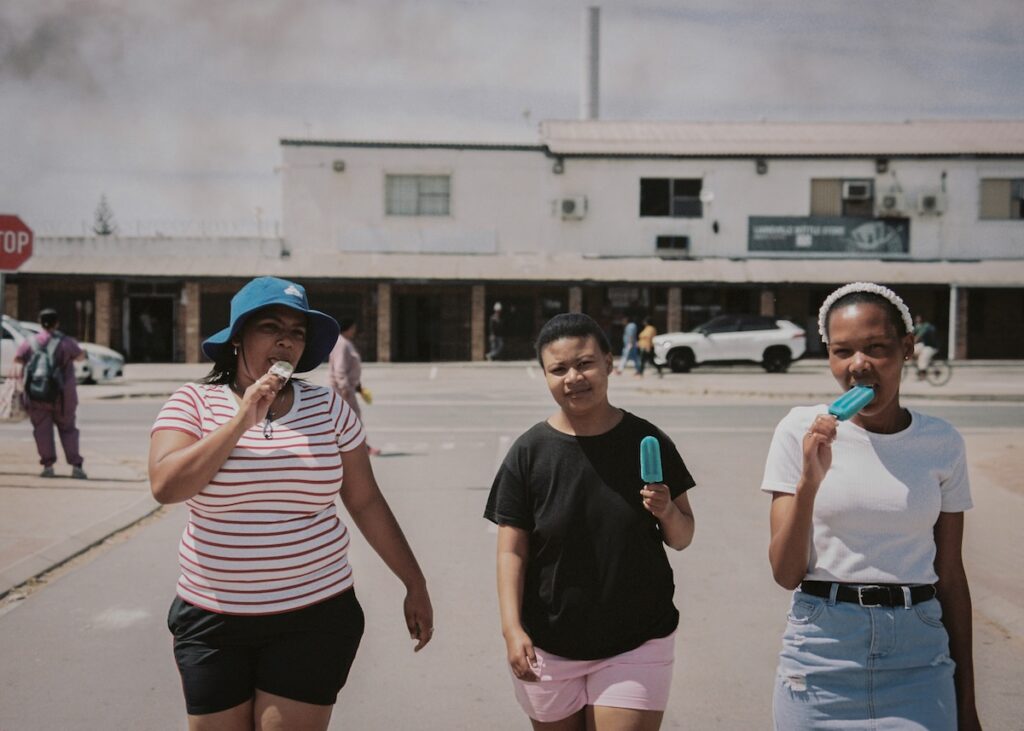
I don’t want to mention those misconceptions because I don’t want to reinforce them. I also don’t set out to challenge stereotypes, my work is more an honest reflection and that happens when we’re documented by one of our own.
Your work feels very intimate and personal. How do you build trust with the people you photograph?
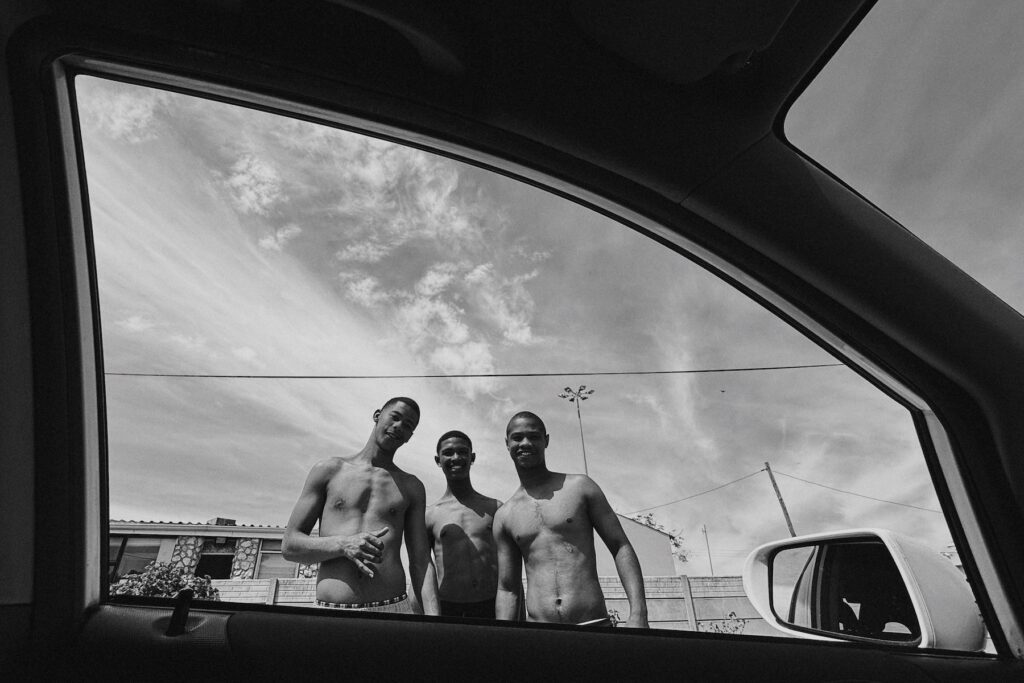
The intimacy in my work comes from the fact that I am one of them, that allows for both the people I photograph and myself to show up in a way that is real and true. They don’t pose for me because I am not there to extract a specific image, it’s more like something we are creating together. Our shared culture already makes us familiar with one another, there is a connection felt on both sides that drops all pretence and that allows me to capture moments that are honest.
Your work speaks a lot about resilience and identity. What aspects of coloured culture are most important for you to document?
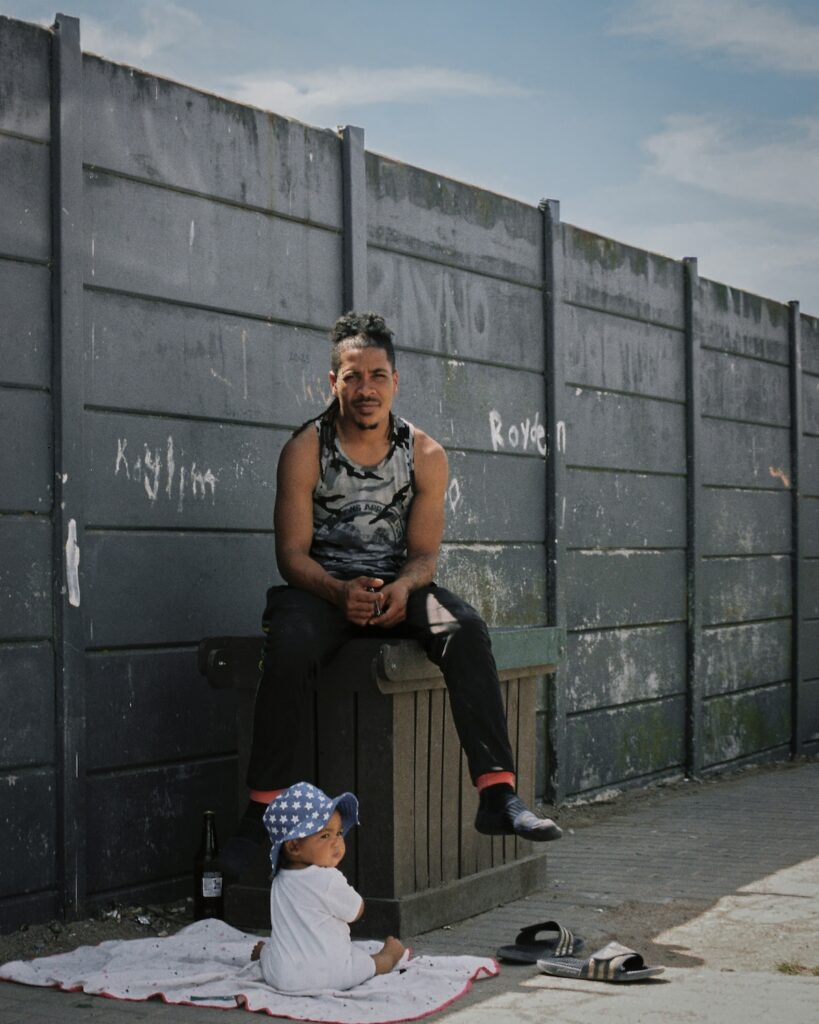
Even though coloured communities was formed through what was really a double displacement, people from different backgrounds being grouped and then placed in designated areas, we didn’t just stay a mixture instead we created a culture that belongs to us. I find so much beauty in that ‘adapt and survive’ spirit and it comes across in the way we carry ourselves. I capture the everyday lives because I see a beautiful, quiet dignity in it, a people that persists despite labels forced upon us, both then and now.
You describe coloured identity as a blend of many cultures and histories. How does that complexity show up in your work?
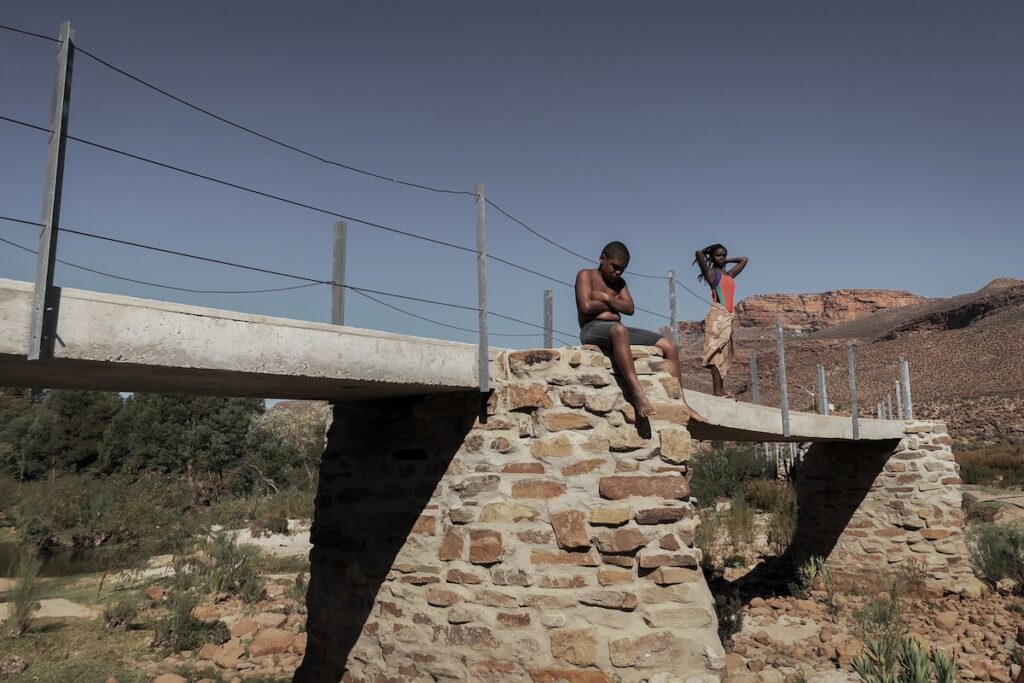
It’s in everything, the features of the people’s faces, how the homes are decorated and the different spaces and landscapes coloured people live in throughout Cape Town and the Western Cape.
In your view, what role can photography play in reshaping how communities are understood?
Our communities have been documented by outsiders that shows a version of us that feels one-dimensional. When we document ourselves, we’re not capturing a subject, we’re reflecting a shared reality. I just want enough of us to do it so we can change those stereotypes with something true.
* Catch Melany Ismail‘s Die Bruin Mense at Youngblood Gallery in Cape Town, running until the end of May.