


Through intricate lace surfaces, sculptural details and visions of unapologetic luxury, the South African artist is creating worlds in which Black women are not merely present, but entirely at home.
What does it mean to see yourself in a world that has rarely made room for you? For South African artist Buqaqawuli Nobakada, the answer begins with painting Black women into futures defined by beauty, freedom and abundance.
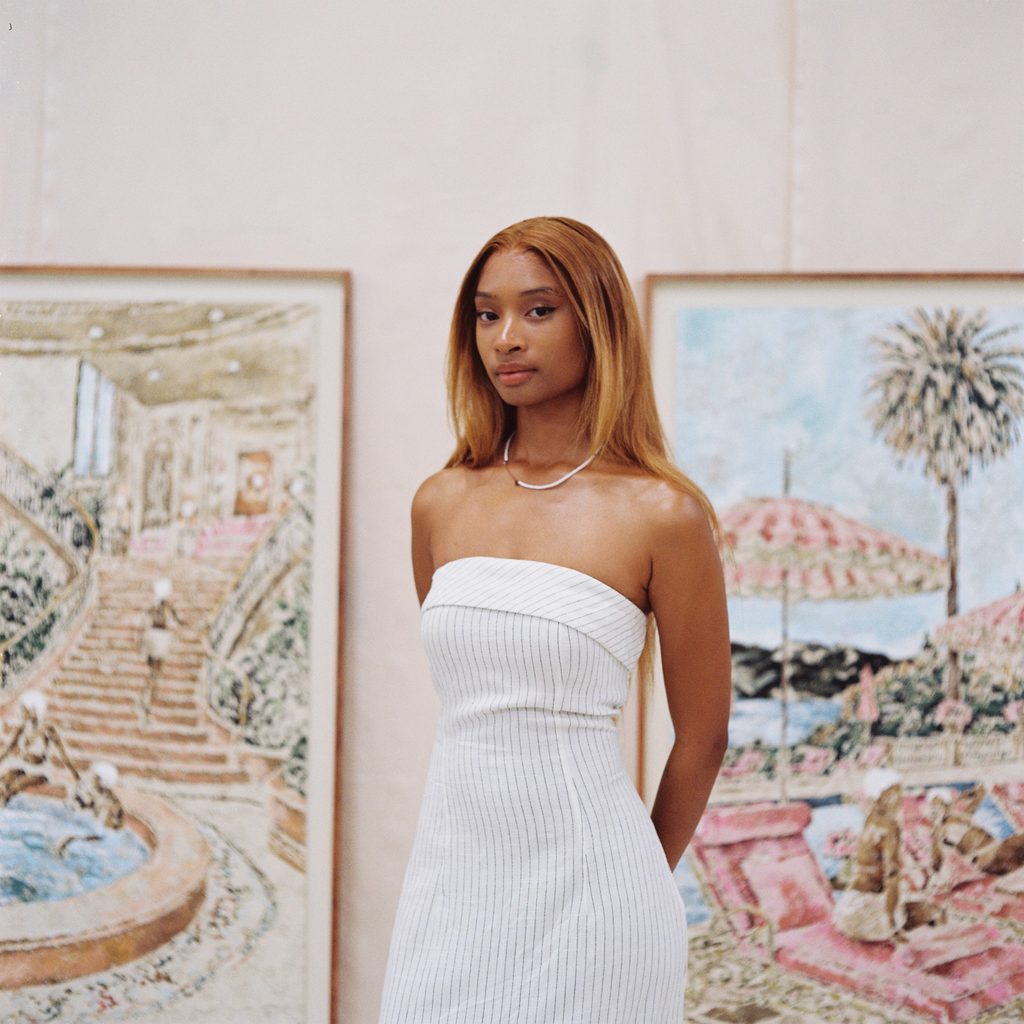
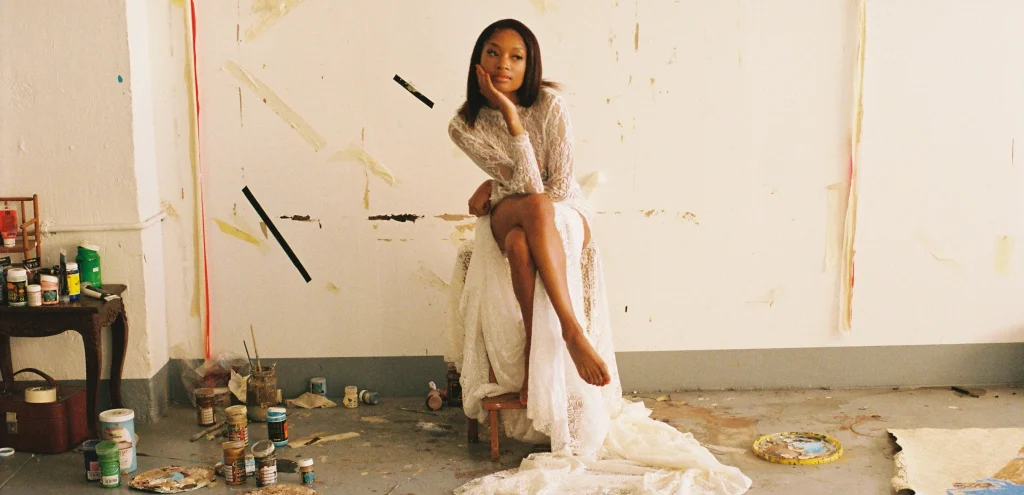
IMAGE: Buqaqawuli Nobakaba [Instagram @nda.lo]
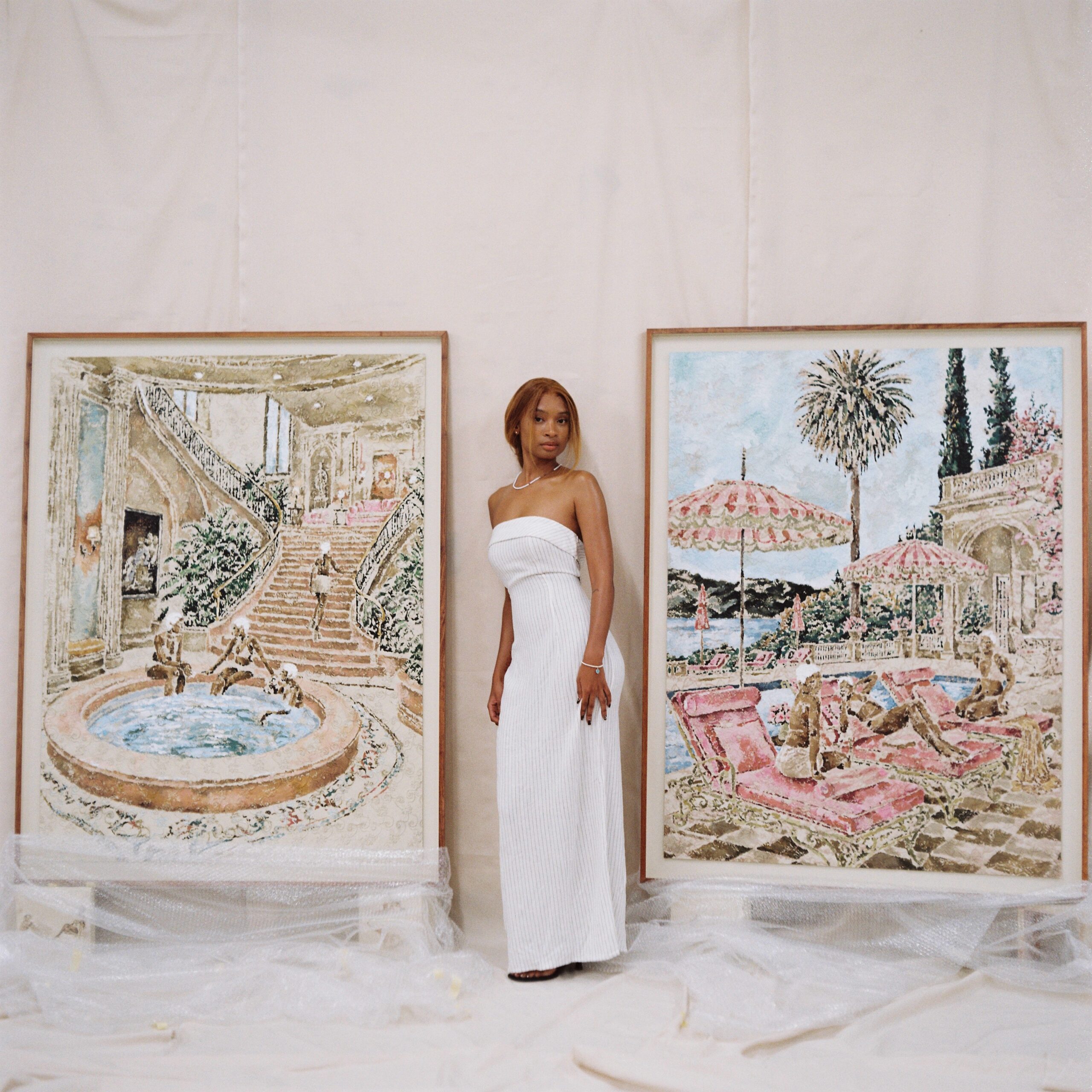
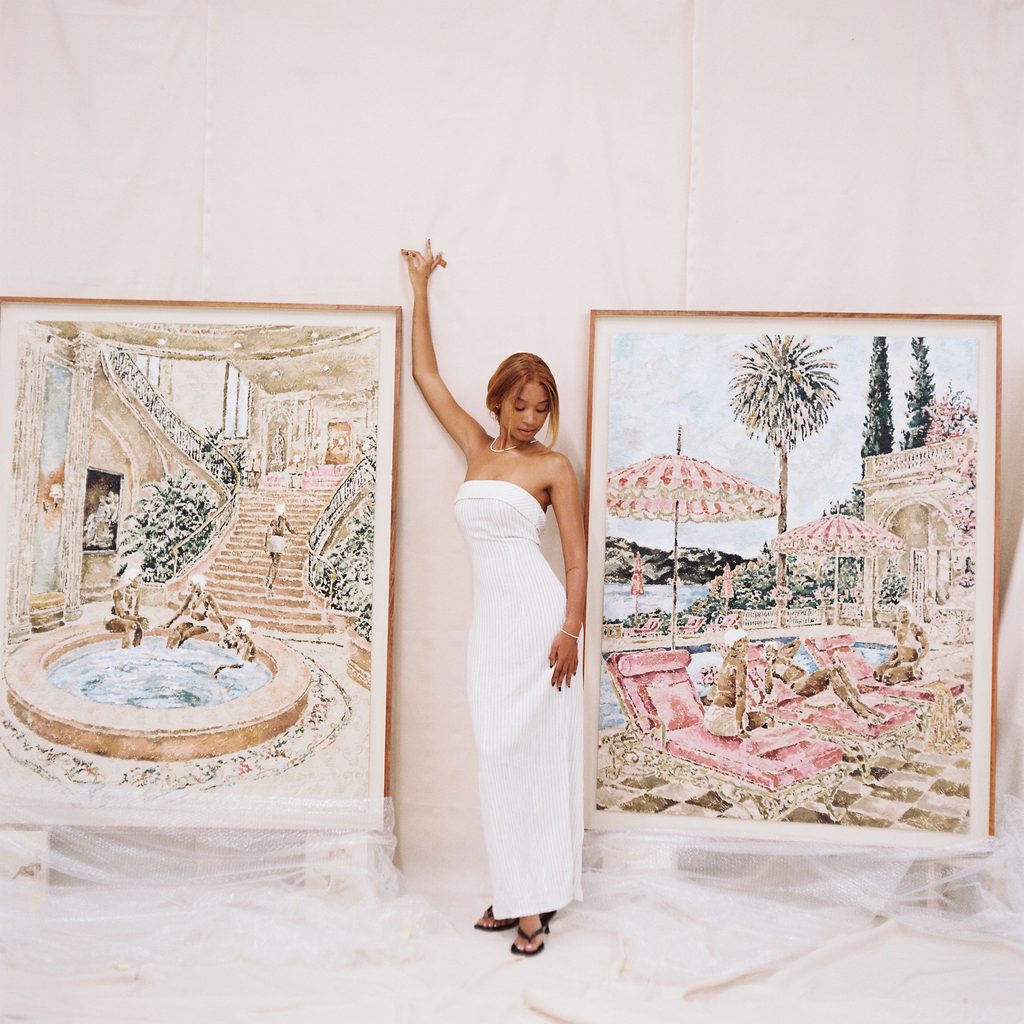
Her paintings present Black women reclining beside swimming pools, moving through lush gardens and inhabiting grand interiors with an effortless sense of belonging. These are not scenes of aspiration from a distance. They are imagined realities in which Black women occupy space on their own terms, surrounded by the luxury, ease and possibility they have too often been denied.
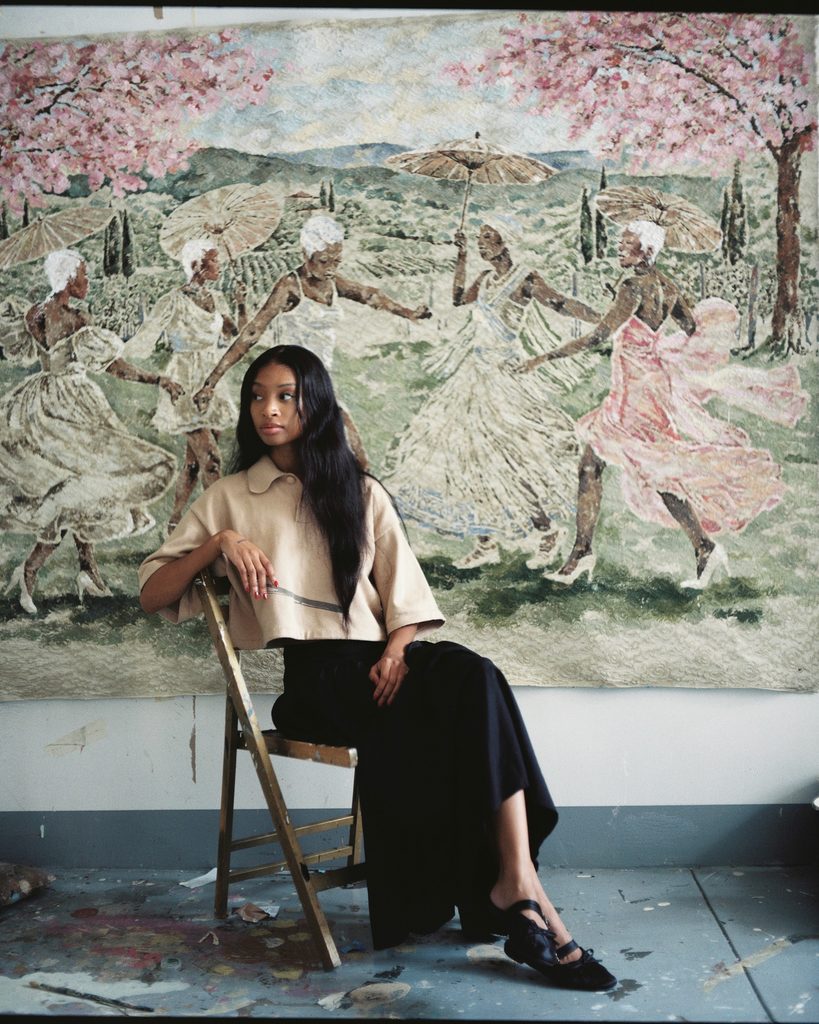
IMAGE: Buqaqawuli Nobakaba [Instagram @nda.lo & @theartbystander]
Born in the Western Cape in 2000 and raised between Philippi and the rural village of Lady Frere, Nobakada is building a distinctive visual language that draws from personal history, domestic craftsmanship and the politics of representation. Now working between Johannesburg and London, her practice explores how the everyday materials, rituals and aesthetics of Black womanhood can become the foundation for something monumental.
Reimagining The Familiar
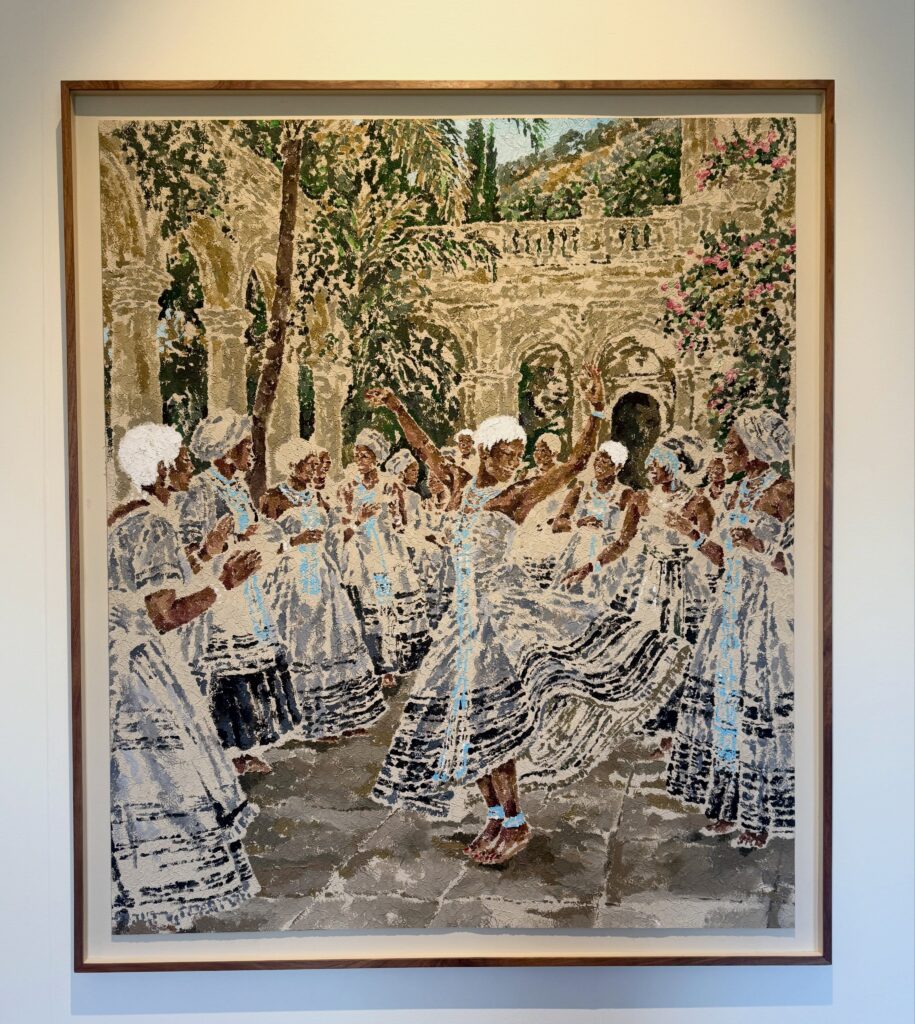
One of the most distinctive elements of Nobakada’s practice is her use of lace paper, which she prepares by hand and works with acrylic paint. Some pieces are further embellished with sculpted clay or gold jewellery, introducing texture and dimension to surfaces that are already rich with detail.
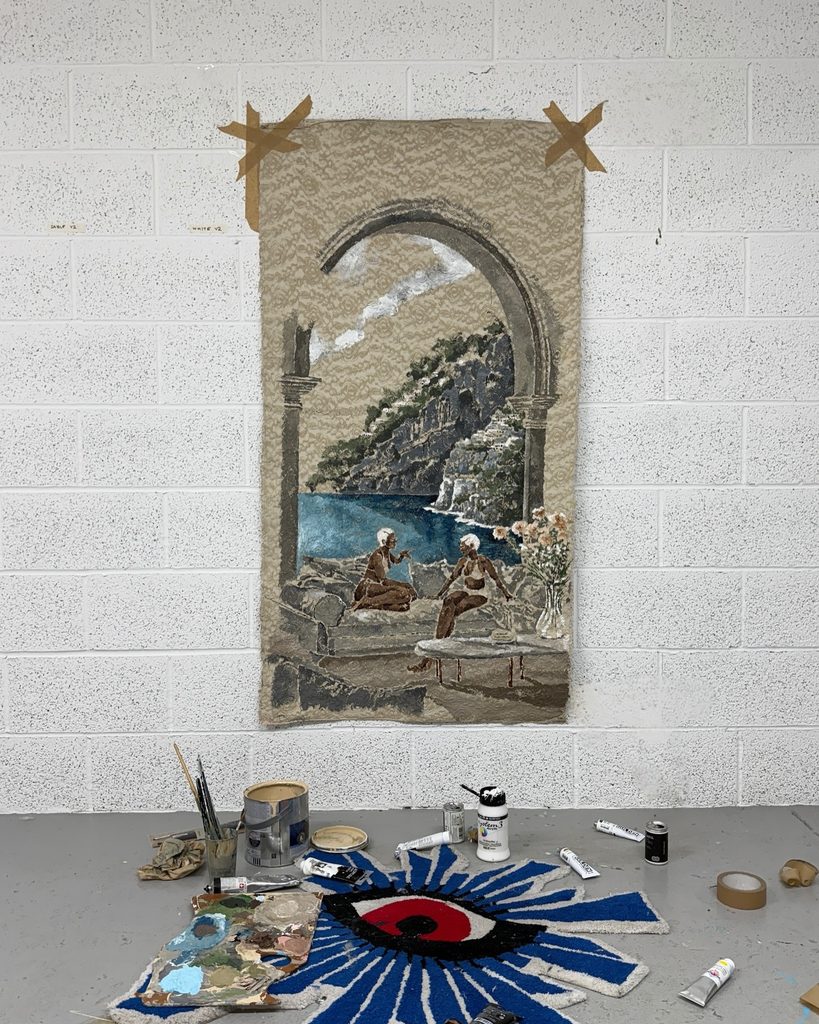
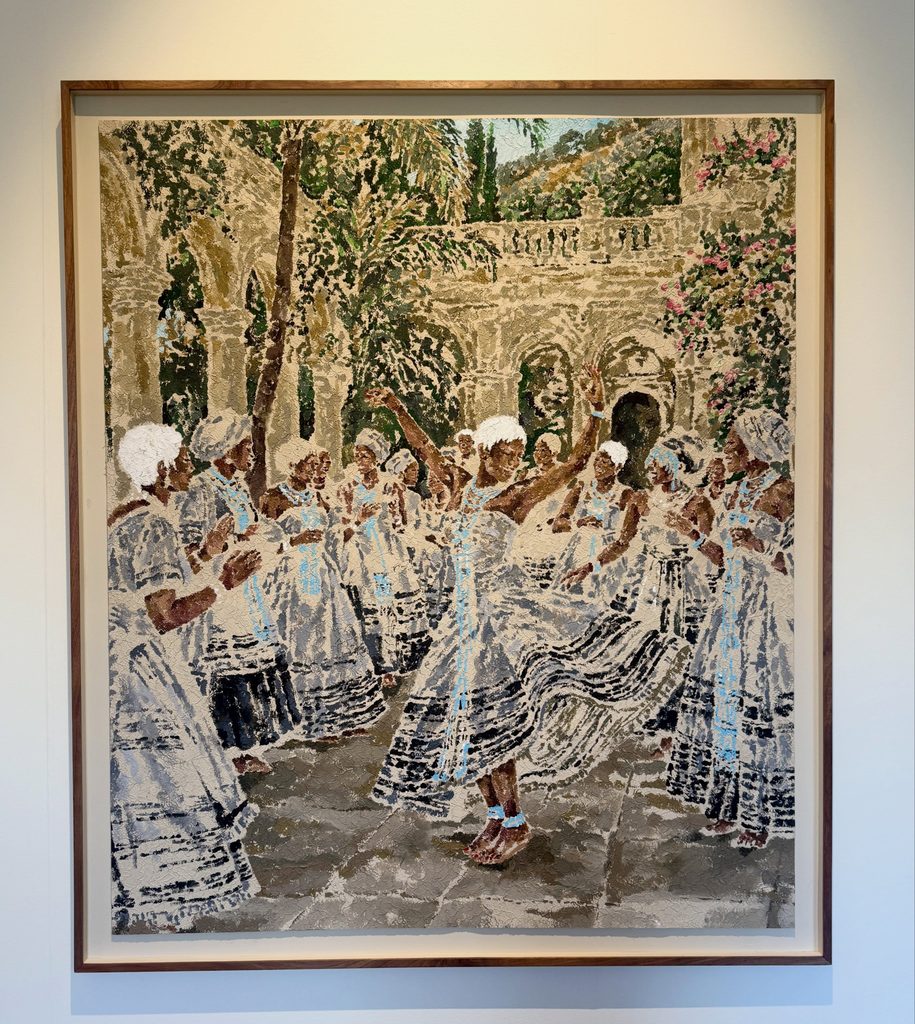
IMAGE: Buqaqawuli Nobakaba [Instagram @nda.lo]
The choice of lace is deeply personal. It recalls the curtains in her maternal grandmother’s home, which the women in her family were responsible for maintaining and repairing. What might otherwise be understood as an ordinary domestic object becomes a point of departure for examining gender, labour, craftsmanship and the ways knowledge is passed between generations of women.
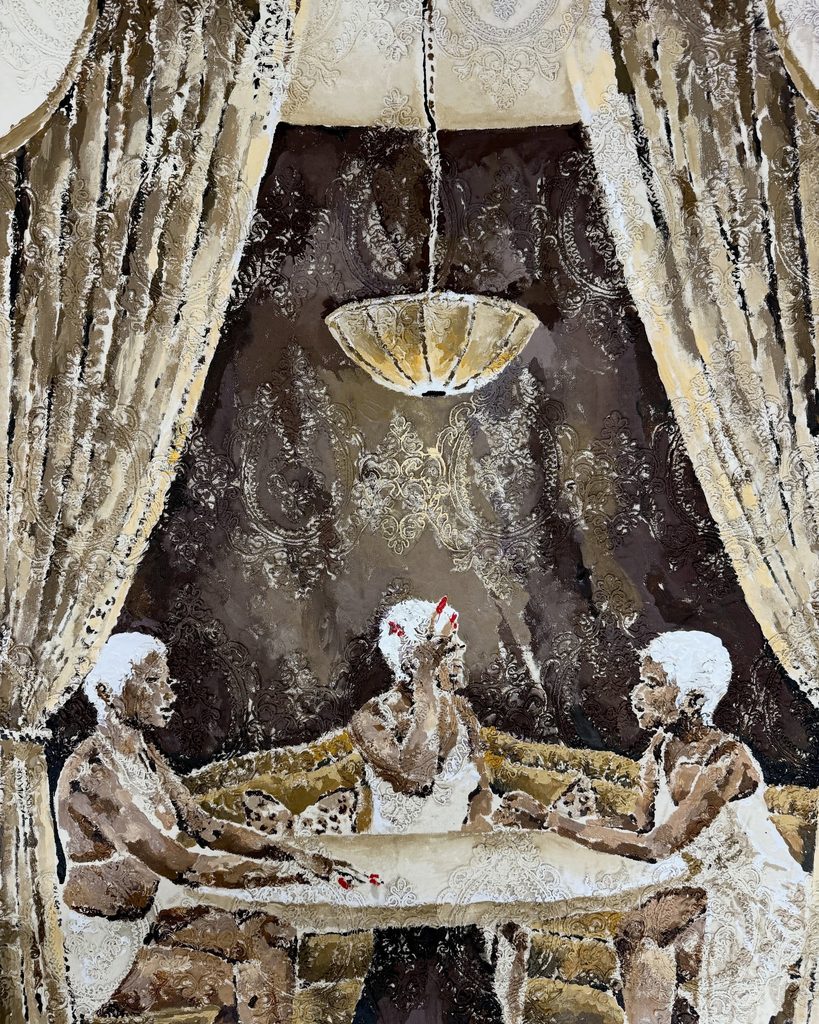
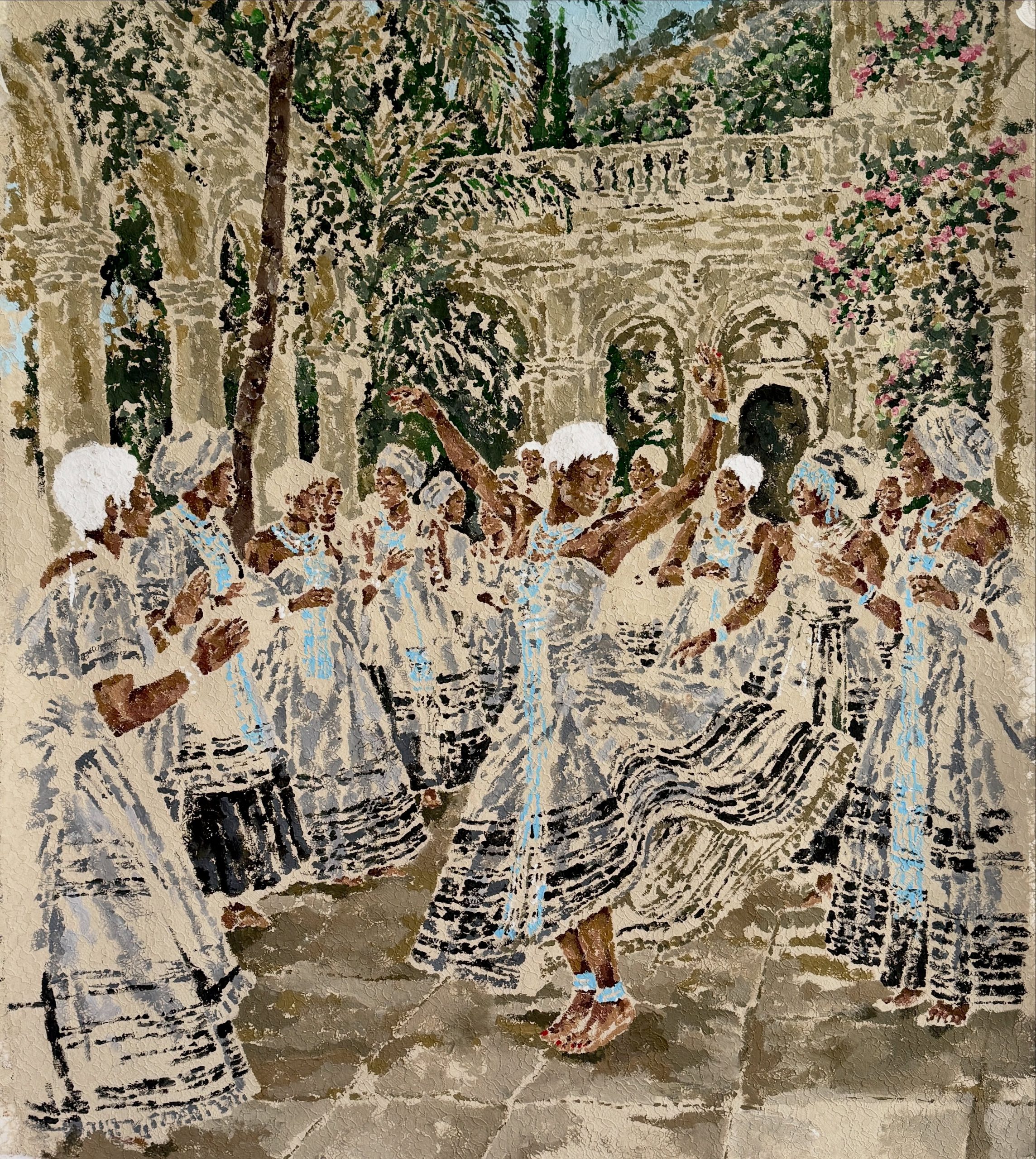
IMAGE: Buqaqawuli Nobakaba [Instagram @nda.lo]
In Nobakada’s hands, this inherited material takes on an entirely different scale. It becomes landscape, architecture, clothing and skin. The domestic is transformed into the monumental, and the traditions embedded in the home become part of a broader visual conversation about Black identity and self-definition.
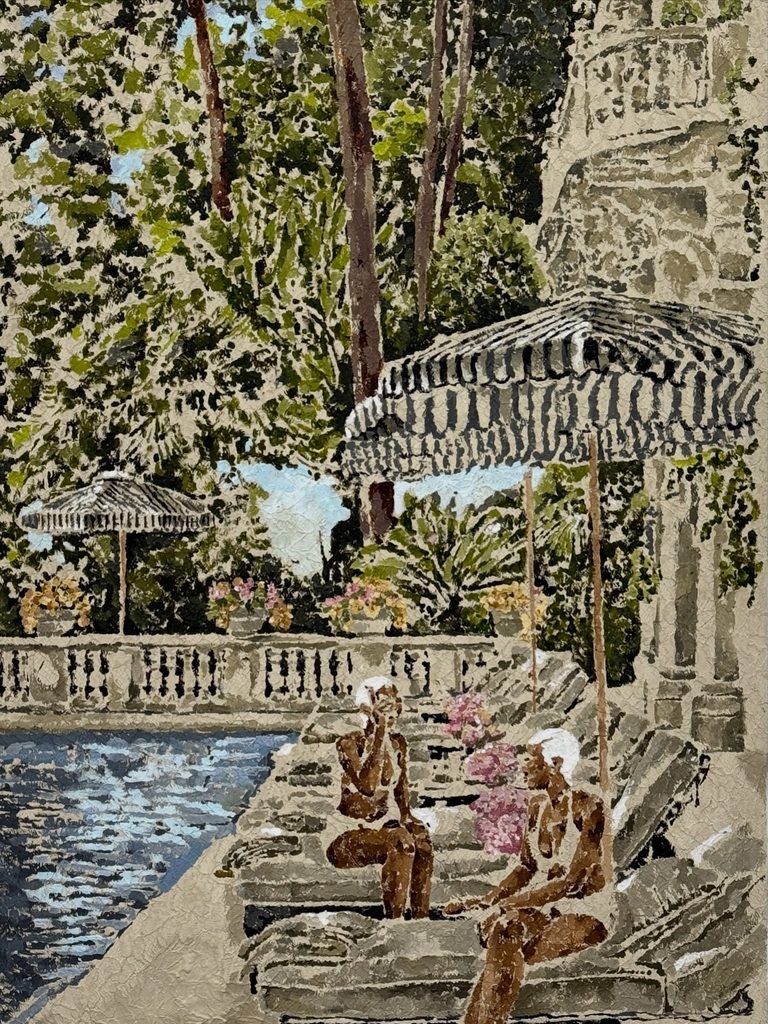
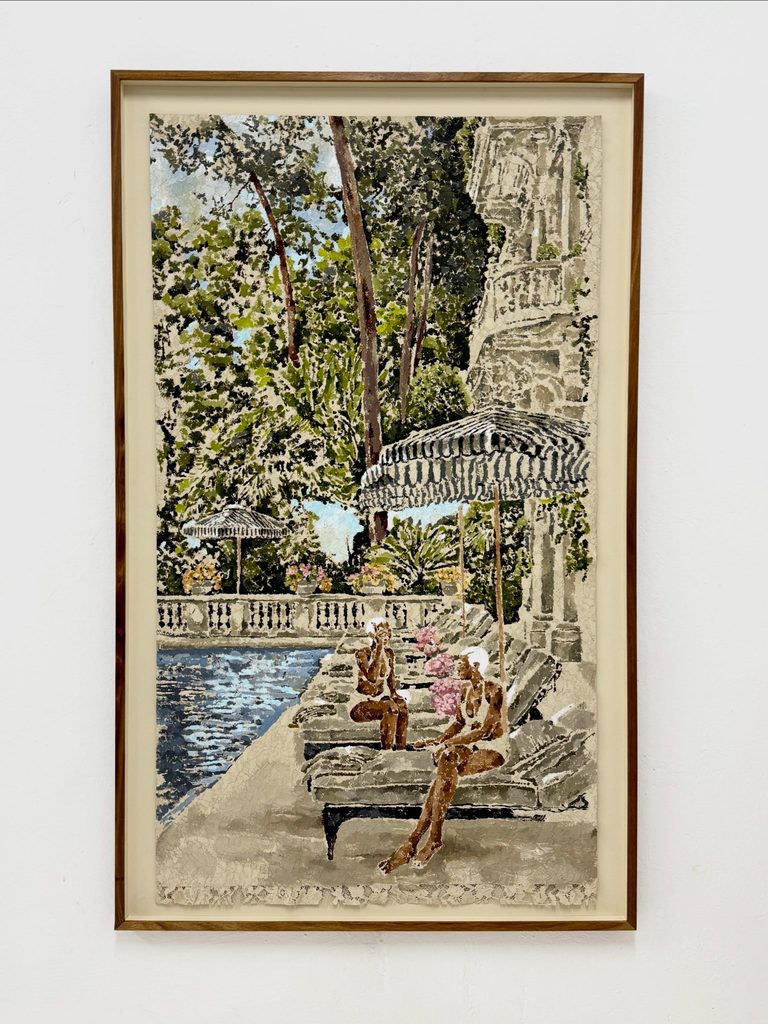
IMAGE: Buqaqawuli Nobakaba [Instagram @nda.lo]
There is a quiet power in this transformation. By bringing a material associated with domestic life into contemporary painting, Nobakada creates a connection between the women who came before her and the worlds she is now imagining.
The Power Of Being Seen
At the centre of Nobakada’s work is what she describes as performative visuality: the meticulous ways Black women style, dress and present themselves to the world. Beauty, in these paintings, is not superficial. It is a form of intelligence, agency and self-determination. Fashion, adornment and hyper-femininity become ways of asserting identity, while luxury becomes more than a marker of material wealth. It becomes a psychological space in which different futures can be imagined.
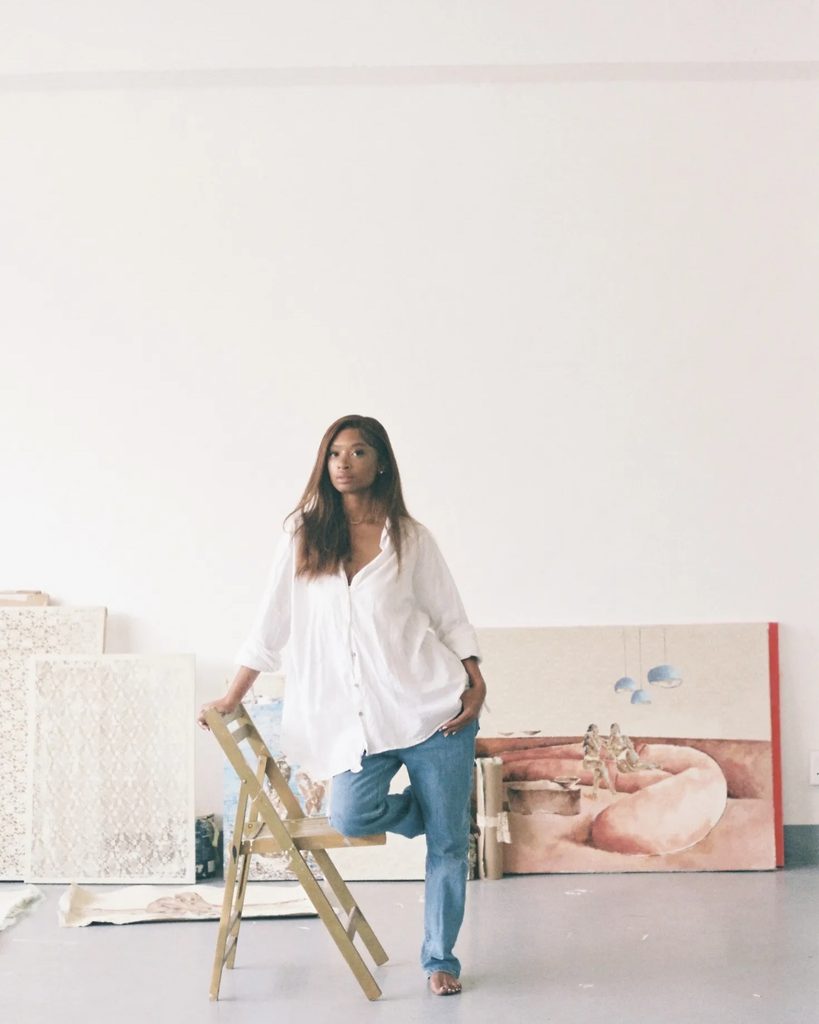
IMAGE: Buqaqawuli Nobakaba [Instagram @nda.lo]
Her subjects are not positioned as visitors to these spaces, nor are they waiting for permission to belong. They move through them with confidence and ease. Their presence challenges familiar visual narratives that have too often limited the ways Black women are represented in art, culture and popular imagination.
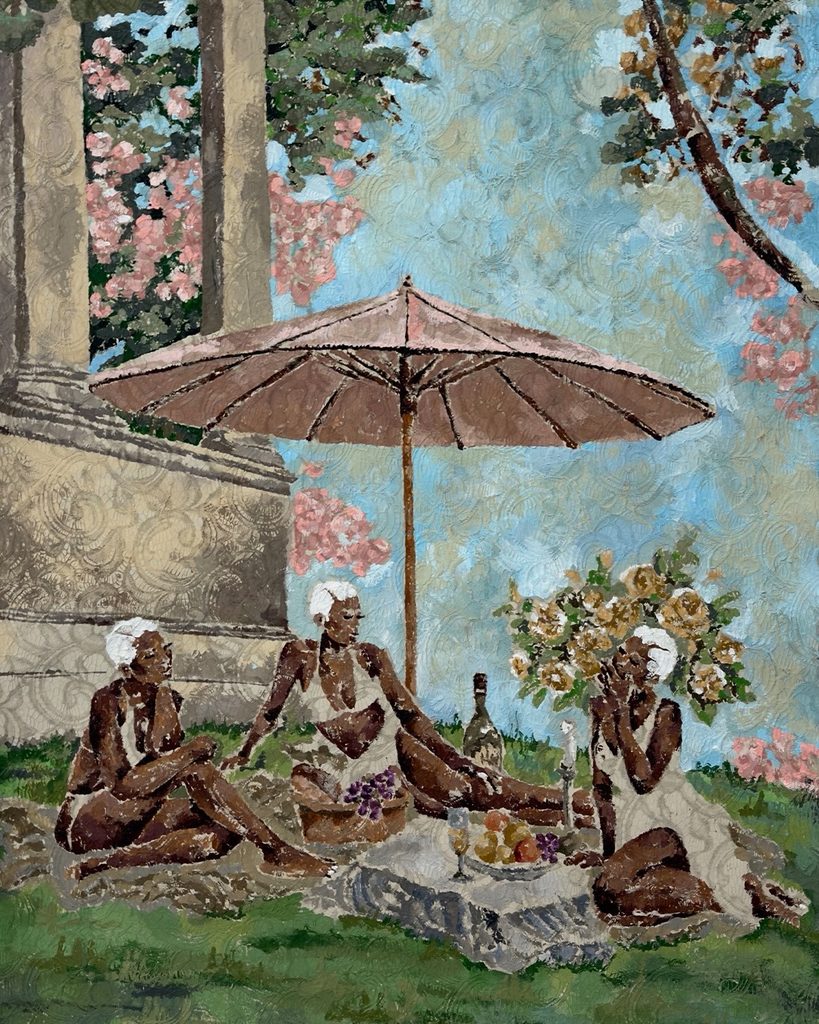
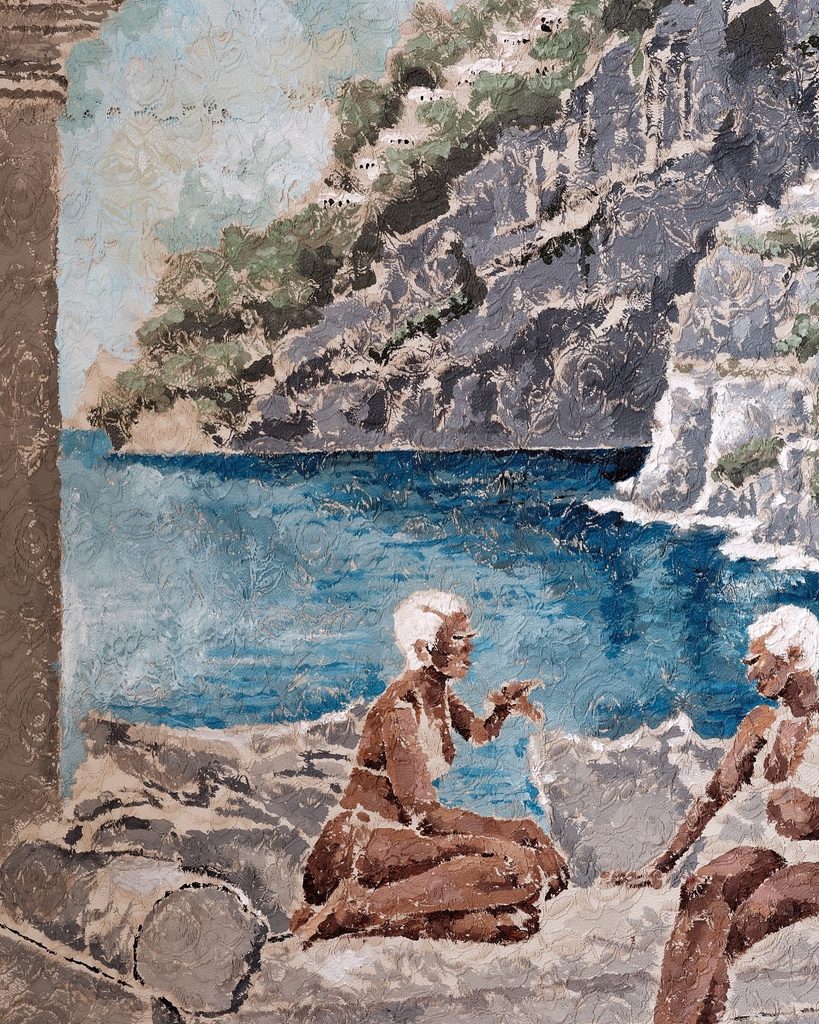
The result is work that is visually seductive while carrying a more profound proposition. Representation is not simply about being seen. It is also about expanding what becomes possible once you are visible.
Imagining Abundance
There is a particular kind of freedom in imagining a life beyond the limits of what you have been shown. Nobakada’s paintings invite viewers to consider what happens when beauty, comfort and abundance become part of the visual vocabulary through which Black women are imagined.
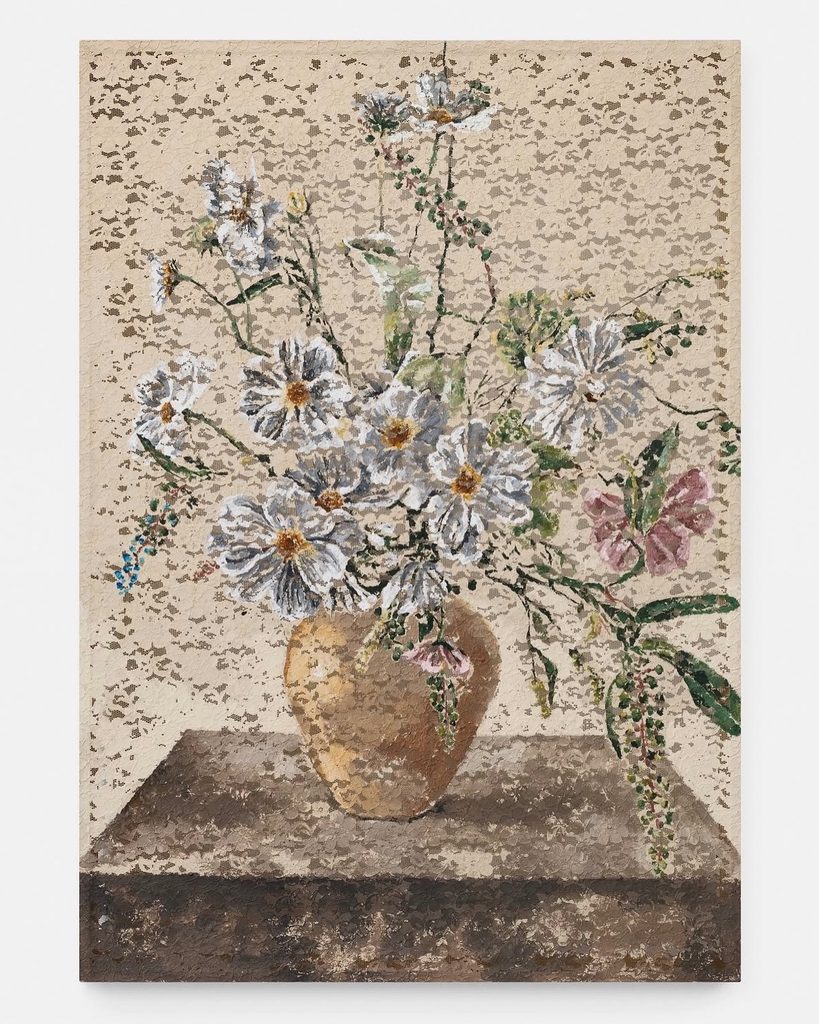
Her work asks a series of questions that extend beyond the canvas. Who grows up seeing people like themselves surrounded by beauty and freedom? What changes when those images become more visible? And how might the act of imagining a different world influence the ways we understand our place within the one we inhabit? These questions give Nobakada’s work its emotional weight. Her paintings are not simply depictions of luxury lifestyles; they are exercises in possibility. They propose a world in which Black women are free to define beauty for themselves, to take pleasure in their surroundings and to imagine lives that are not dictated by inherited limitations.
A Practice Finding Its Place
Nobakada’s growing international recognition reflects the resonance of this vision. In 2023, she received the ANNA Audience Award. In 2025, she presented her first solo museum exhibition in the United States at the Albany Museum of Art, which subsequently acquired two of her works.
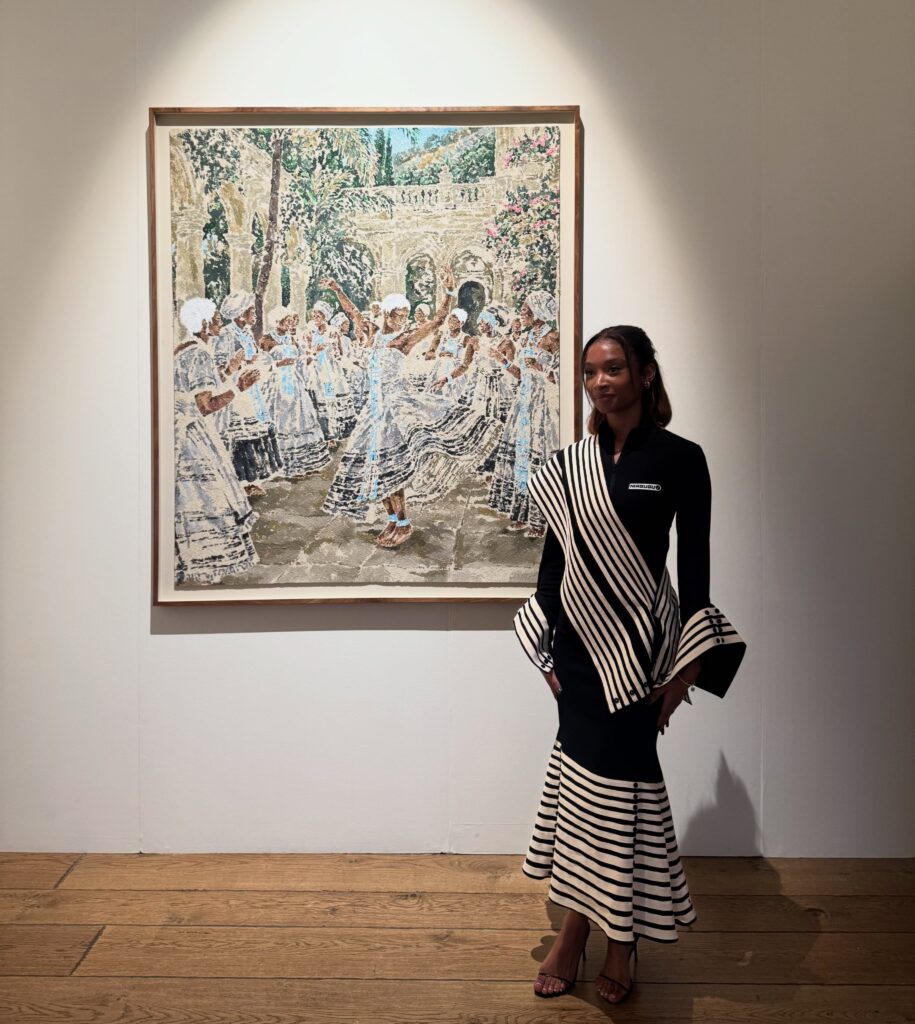
These milestones mark an important moment for an artist whose practice brings together personal memory, material experimentation and a considered engagement with the representation of Black women. Yet the significance of Nobakada’s work lies not only in where it is being exhibited or collected, but in the worlds it makes available to its viewers. Through lace, paint, adornment and carefully constructed scenes of abundance, she is developing a visual language that honours the women who shaped her while creating space for new generations to imagine themselves differently.
In Nobakada’s world, Black women do not have to wait to be invited into the future. They are already there, occupying it with beauty, confidence and intention.